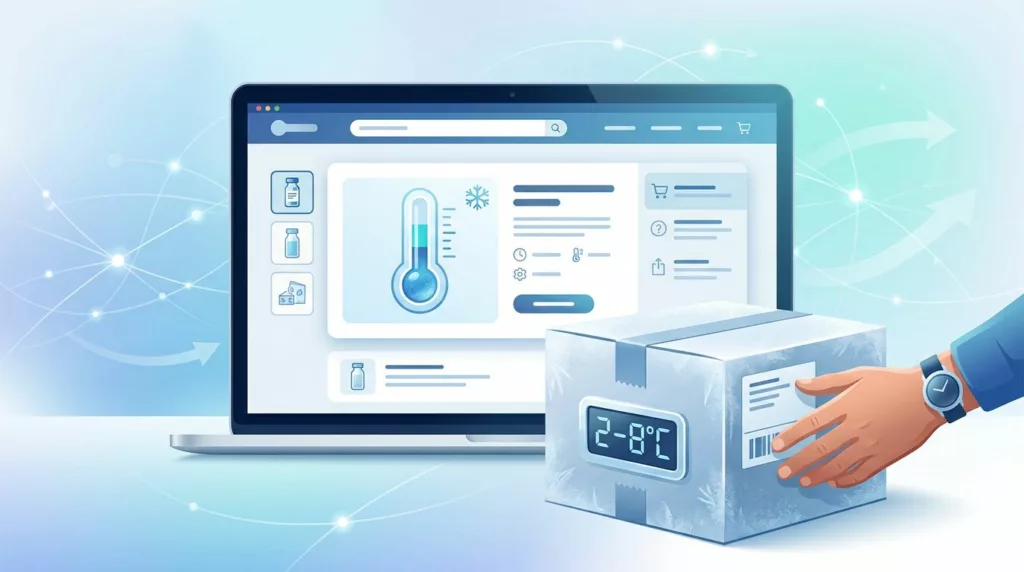
Temperature-sensitive products lose trust fast when shipping details stay vague. For cold chain shipping UX, the product page has to answer the shopper’s real questions before they ask support.
That matters on pages for biologics, meal kits, specialty foods, and premium cosmetics. People are not only buying the product, they are buying confidence that it will arrive in good condition.
What shoppers need to know before they trust the product
The first thing a buyer wants to know is simple, will this arrive at the right temperature? After that comes the practical stuff, including when it ships, where it ships, and what happens if no one is home.
That sounds basic, but many product pages bury these answers below long descriptions or leave them to policy pages. The result is avoidable hesitation. Temperature-sensitive products carry more risk than a standard item, so the page needs to reduce that risk early.
If the product needs temperature control, silence on shipping feels like risk.
Shoppers also scan for signs that the seller understands the category. They look for delivery windows, packaging details, and any restrictions that affect their address. On mobile, that information needs to sit close to the price and add-to-cart button, not three scrolls away.
A good page answers four questions in plain language:
- How is the product kept cold?
- When will it ship?
- Where can it be delivered?
- What should I expect on arrival?
If those answers are clear, the page feels competent. If they are missing, the page feels uncertain.
Build a clear message hierarchy on the product page
The best cold chain product pages do not dump every detail at once. They put the most useful facts in the right order, then let the shopper dig deeper only if needed.
Start with the core promise. That might be “Ships in insulated packaging” or “Delivered cold in 1 to 2 business days.” Then add the constraint, such as shipping zones or weekday cutoffs. After that, give proof, like a brief note about cold packs, refrigerated handling, or tracking. Finally, offer the next step, which is usually the add-to-cart action.

The page hierarchy should feel calm, not crowded. Small badges can help, but too many of them make the page look nervous. One strong shipping message beats six scattered labels.
A simple layout often works best:
| Page area | What the shopper needs | Example copy |
|---|---|---|
| Price block | Whether the product ships cold | “Ships in insulated packaging” |
| CTA area | Timing and order cutoff | “Order by 2 PM ET for Monday dispatch” |
| Nearby detail | Delivery rules and zones | “Available in select delivery areas” |
| Policy link | Return and storage terms | “See shipping and storage details” |
The takeaway is clear. Put the highest-risk information closest to the decision point. Then support it with short, readable details.
Make delivery estimates feel real
Vague timing creates doubt. “Fast shipping” sounds nice, but it does not help a buyer who needs a product to stay within a narrow temperature range.
Use exact ranges whenever you can support them. “Arrives Tuesday to Wednesday” feels more believable than “ships soon.” If the product only ships on certain days, say so. If orders after noon ship the next business day, say that too.
For zone-based products, a live shipping estimate matters even more. A shopper who sees the cost and delivery window before checkout is less likely to abandon the page. That is why how to display shipping costs on product pages matters so much for temperature-sensitive items. The estimate does not need to be perfect, but it does need to feel honest.
Good estimate copy often includes four elements:
- Delivery window
- Shipping cutoff
- Service area or zone note
- Tracking expectation
For example, “Order by Thursday at 1 PM for Friday dispatch. Delivery window is Saturday to Monday in eligible zones. Tracking is sent when the label prints.”
That reads like operations, not marketing. Buyers trust it because it sounds specific.
Avoid lazy phrases such as “quick delivery” or “cold arrival guaranteed.” Those lines create more questions than they answer. If weather, holidays, or rural routes can affect delivery, say that in plain words. Clarity beats polish here.
Reduce support tickets with policy snippets near the buy button
Most support tickets come from the same missing facts. People want to know what happens during delays, whether a box can be left outside, and what their options are if the product arrives warm. If the page answers those questions up front, support volume drops.
A detailed shipping and returns policy page still matters, but it should not carry all the weight. Product pages need short snippets that point to the policy without forcing the shopper to hunt for it.
Use short, direct copy near the price or under the CTA. For example:
- “Keep refrigerated on arrival.”
- “Signature may be required for some deliveries.”
- “If your order is delayed, contact us before opening the package.”
- “See shipping and return details for storage and claim rules.”
Those lines do two jobs. They set expectations, and they filter out the wrong orders before checkout.
Common support questions are easy to anticipate:
- “Will this stay cold through the weekend?”
- “What if I miss the delivery?”
- “Can I change the delivery date?”
- “What if the package looks damaged?”
Answer the questions that match your operation. If a policy depends on carrier cutoff times, say that. If refunds require photos, say that too. Customers get frustrated when they discover those rules after purchase.
A practical rule helps here. If the answer affects the buying decision, it belongs on the product page. If it only explains a process, link to the policy page. That split keeps the page clean while still giving shoppers a path to details.
Regulated and high-risk categories need stricter copy
Some categories need a tighter tone. Pharmaceuticals, biologics, and clinical products need shipping language that is precise and compliant. Specialty foods and meal kits need language that is clear about freshness, handling, and timing. Cosmetics may need a lighter touch, but temperature-sensitive formulas still need real instructions.
In these categories, avoid writing like a brand story when the shopper needs operational facts. A sentence such as “Packed to protect product integrity in transit” is fine if it is true. A sentence such as “Always arrives perfect” is not.
Use this filter for every shipping claim: can the team support it, repeat it, and prove it? If the answer is no, the copy should change.
A few practical rules help across regulated and high-risk products:
- Use exact temperature ranges only when your process can support them.
- Separate compliance facts from promotional claims.
- Mention age checks, signatures, or delivery limits in plain language.
- Avoid broad promises like “safe,” “fresh,” or “fully protected” unless the page explains why.
- Keep warning text short, so it does not drown out the product benefits.
For high-risk items, the page should still feel friendly. It just needs to sound careful. A buyer does not want legal jargon, but they do want proof that the seller knows how the product moves through the cold chain.
The copy also needs to match the UI. If the page says “ships next day,” the cart should not reveal a longer window. If the page says “select zones only,” the shipping checker should reflect that before checkout. When the message, the calculator, and the policy page agree, trust goes up.
Conclusion
Cold chain shipping UX works when it removes uncertainty at the point of purchase. The page should answer how the product is packed, when it ships, where it can go, and what happens if something goes wrong.
That does not require a wall of text. It needs a clear message hierarchy, honest delivery details, and short policy snippets that support the decision. When those pieces line up, the page feels dependable, and the buyer feels safe enough to move forward.