


The e-commerce sector is experiencing explosive growth as we approach 2026, creating a fiercely competitive environment for every e shopping website owner. Rapid shifts in technology and consumer expectations mean that standing out is more challenging, but also more rewarding, than ever before.
Success in this fast-evolving digital landscape requires more than just a storefront. You need to master design, technology, user experience, and modern marketing strategies to truly thrive.
This essential guide delivers actionable strategies, future-focused insights, and a clear step-by-step process to help you build and optimize an e shopping website that excels in 2026 and beyond.
Understanding the 2026 E-Shopping Landscape
The e shopping website landscape is evolving rapidly as we approach 2026. Online retailers face not only explosive growth but also new challenges and shifting consumer expectations. To stay ahead, businesses must understand the market forces, regulatory shifts, and technological advances shaping digital commerce.

Key Market Trends and Consumer Behaviors
Global e-commerce is forecast to surpass $8 trillion in sales by 2026, indicating the immense opportunity for any e shopping website. According to recent projections, this market surge is fueled by expanding internet access and innovative retail strategies. For more on these figures, see the Global e-commerce sales forecast to exceed $8 trillion by 2026.
| Trend | 2026 Projection |
|---|---|
| Global E-commerce Sales | Over $8 trillion |
| Mobile Commerce Traffic | 70%+ of e-commerce traffic |
| Social Commerce | Major driver of online purchases |
Mobile commerce dominates, with over 70% of e-commerce traffic now originating from smartphones and tablets. Consumers expect seamless, fast, and personalized experiences from every e shopping website they visit.
Shoppers are also prioritizing:
- Sustainability and ethical sourcing
- Transparent business practices
- Speedy and flexible delivery options
AI-driven personalization is now standard. For example, Amazon tailors recommendations in real time, while Shopify’s mobile-first innovations set new benchmarks for user experience. Social commerce and shoppable content, especially on platforms like Instagram and TikTok, are becoming essential for engaging digital shoppers.
Regulatory, Security, and Privacy Considerations
As the e shopping website landscape grows, so do concerns about data privacy and security. Emerging regulations such as updated GDPR, CCPA, and new regional laws require businesses to handle personal data with care.
Key compliance areas include:
- Implementing robust cybersecurity to prevent breaches
- Using secure payment gateways and displaying trust badges
- Ensuring SSL encryption for all transactions
Consumer trust is a critical differentiator. A major data breach can significantly damage a brand’s reputation and lead to loss of sales. Businesses must prioritize transparent privacy policies and regular security audits to maintain user confidence and protect their e shopping website.
The Role of Emerging Technologies
Emerging technologies are redefining what is possible for an e shopping website in 2026. Augmented reality (AR) and virtual reality (VR) enable immersive shopping, allowing customers to visualize products in their own space. IKEA’s AR app is a prime example, letting users see furniture in their homes before buying.
Voice commerce and smart assistants are streamlining the path to purchase, making shopping more accessible. Blockchain technology is enhancing supply chain transparency and securing transactions, building trust with consumers.
Together, these innovations set a new standard for the e shopping website experience, pushing brands to continually adapt and embrace the future of digital commerce.
Step 1: Strategic Planning and Niche Selection
Strategic planning forms the backbone of any successful e shopping website in 2026. With competition intensifying, a deliberate approach to market research, value proposition, business model, and KPIs is essential for long-term growth.

Market Research and Opportunity Analysis
Thorough market research is the first step in building an e shopping website that stands out. Start by identifying profitable niches using tools like Google Trends and SEMrush. Look for areas with steady demand, manageable competition, and clear market gaps.
Evaluate seasonality trends and use SWOT analysis to benchmark competitors. Understanding these factors helps you anticipate consumer needs and position your e shopping website for success. For a comprehensive overview of effective research and setup strategies, see these e-shopping site best practices.
- Use Google Trends to spot emerging categories
- Analyze competitor strengths and weaknesses
- Identify underserved customer segments
Solid research ensures you target opportunities with real growth potential.
Defining Your Unique Value Proposition (UVP)
Your unique value proposition is what makes your e shopping website memorable. In 2026, consumers expect more than just products; they seek brands with clear values and benefits.
A compelling UVP might focus on sustainability, exclusive products, or superior customer service. For example, Allbirds emphasizes eco-friendly materials, while Warby Parker offers home try-on. Clearly communicate your UVP across your website and marketing channels.
To craft a strong UVP:
- Identify what sets your brand apart
- Align messaging with 2026 consumer expectations
- Highlight your UVP on your homepage and product pages
A focused UVP attracts loyal customers and differentiates your e shopping website from competitors.
Business Model Selection and Monetization Strategies
Choosing the right business model is crucial for your e shopping website’s sustainability. In 2026, popular models include direct-to-consumer (DTC), dropshipping, subscription boxes, and hybrid approaches.
Each model has advantages. DTC offers control and brand loyalty, dropshipping lowers overhead, and subscriptions encourage repeat business. Consider supplementing sales with affiliate marketing or digital products.
| Model | Pros | Cons |
|---|---|---|
| DTC | Brand control, loyalty | Higher fulfillment costs |
| Dropshipping | Low startup costs | Less control on quality |
| Subscription | Recurring revenue | High churn risk |
Select a model that aligns with your resources and the needs of your e shopping website’s audience.
Setting Clear Goals and KPIs
Setting measurable goals ensures your e shopping website stays on track. Define clear objectives such as conversion rate, average order value, and customer retention.
Use data-driven methods from the outset. Track performance using analytics tools, and regularly review progress to make informed adjustments.
Common KPIs include:
- Conversion rate (percentage of visitors who buy)
- Average order value (AOV)
- Customer retention rate
Establishing these metrics early empowers your e shopping website to adapt quickly, optimize strategies, and achieve sustainable growth in a fast-evolving market.
Step 2: Designing for Conversion and User Experience
Creating an e shopping website that turns visitors into loyal customers requires a sharp focus on both conversion and user experience. As digital shopping habits evolve, every design choice can influence how users interact with your store and whether they complete a purchase.
Core Principles of High-Converting E-Shopping Design
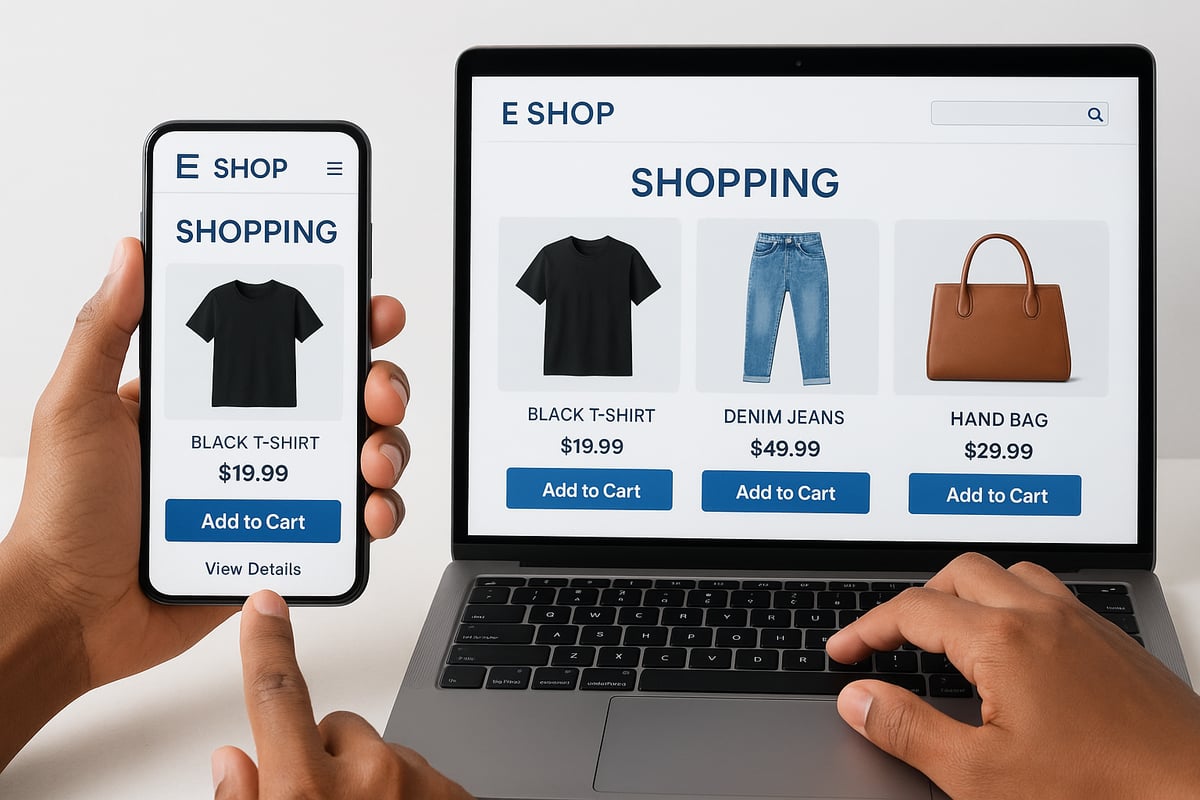
A successful e shopping website always starts with a mobile-first, responsive layout. Most shoppers now browse and buy on their phones, so your site must adapt seamlessly to any screen size. Simplified navigation makes it easy for users to find products quickly, while a frictionless checkout process helps reduce cart abandonment.
Visual hierarchy and strategic use of whitespace guide the eye toward key elements, such as clear call to action buttons. For instance, ASOS’s mobile checkout process is renowned for its speed and clarity, setting a benchmark for the industry. To dive deeper, explore these design tips for e-commerce websites to see how top brands optimize for conversions.
Personalization and AI-Driven Experiences
Modern shoppers expect an e shopping website to know their preferences and anticipate their needs. Leveraging AI for personalized product recommendations, dynamic content, and predictive search can dramatically increase engagement. Amazon’s “Customers who bought this also bought” feature is a classic example of AI enhancing the shopping journey.
Data shows that 80 percent of consumers are more likely to buy from brands offering a personalized experience. By integrating machine learning algorithms, your e shopping website can deliver relevant suggestions in real time, boosting both satisfaction and conversion rates.
Accessibility and Inclusivity
Designing an e shopping website with accessibility in mind is no longer optional. Implementing WCAG 2.2 guidelines ensures that users with disabilities can navigate and purchase with ease. Multilingual and multicultural options also help your store connect with a global audience.
Zalando’s approach to inclusive design demonstrates how color contrast, readable fonts, and alt text for images make a site welcoming to all. Prioritizing accessibility not only broadens your reach but also builds brand loyalty among diverse customer groups.
Visual Content and Product Presentation
Shoppers rely on visuals to make confident buying decisions. High quality, 360 degree product photos and videos allow users to examine items from every angle. Incorporating AR for virtual try ons or product demos can set your e shopping website apart from competitors.
Research reveals that 58 percent of shoppers prefer product pages with video content. By offering detailed visuals and interactive experiences, you reduce uncertainty and encourage more users to add items to their carts.
Building Trust and Credibility
Trust is a critical factor in the success of any e shopping website. Displaying customer reviews, testimonials, and trust badges reassures shoppers about the legitimacy of your store. Transparent return policies and responsive customer service are equally important.
Zappos is well known for its customer first approach, using clear policies and accessible support to foster loyalty. Make sure your e shopping website highlights these trust signals at every step of the buyer’s journey.
Ecom Design Pro: Expert E-Commerce Design Services
If you want your e shopping website to excel in 2026, consider partnering with specialists who understand the latest trends. Ecom Design Pro offers tailored services to help businesses implement cutting edge user experiences, AI integration, and sustainable design practices.
Their guides, tutorials, and professional services are built for future focused e-commerce success. By leveraging holistic strategies and industry best practices, Ecom Design Pro empowers your e shopping website to achieve higher conversions and long term growth.
Step 3: Technology, Platform, and Integration Choices
Selecting the right technology is the backbone of a high-performing e shopping website. Your choices today will determine your store’s scalability, security, and user satisfaction tomorrow. Let’s explore the essential tech decisions that set your online store up for long-term success.
Choosing the Right E-Commerce Platform
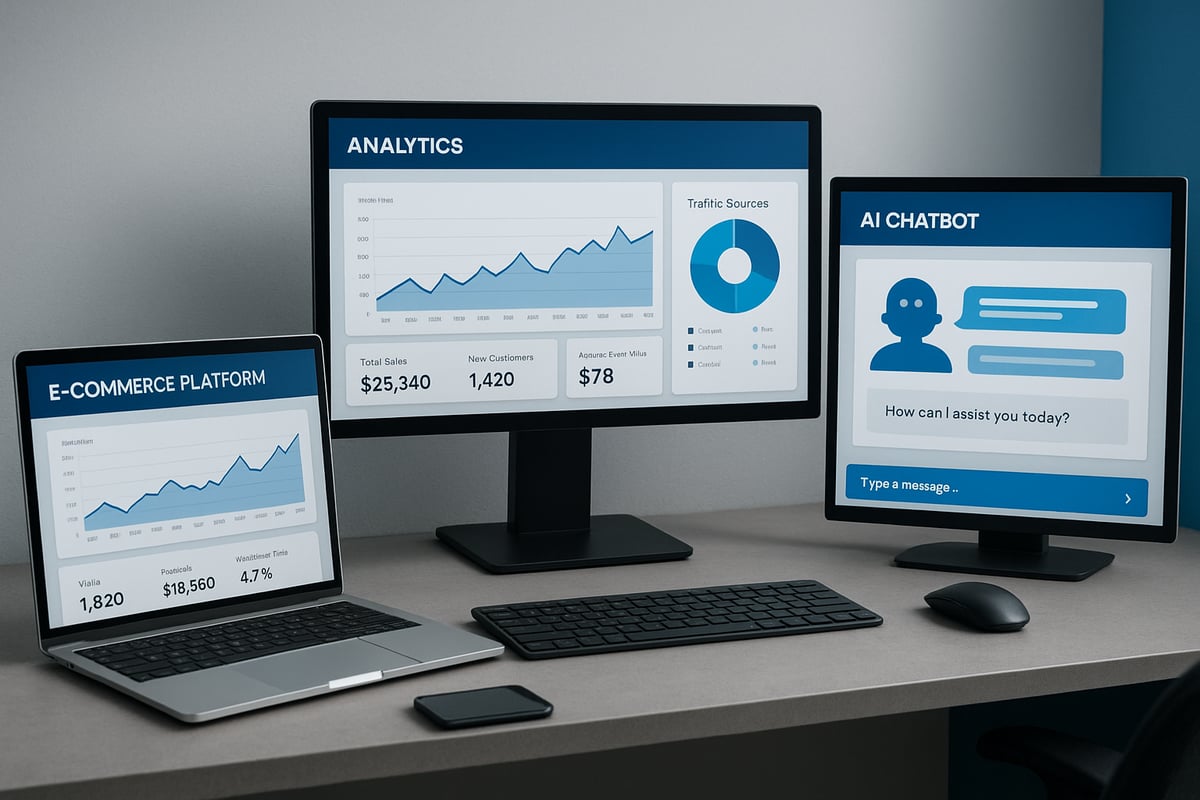
The foundation of any successful e shopping website is the platform. Shopify, WooCommerce, Magento, and BigCommerce are the leading choices in 2026. Each offers unique strengths. Shopify stands out for its ease of use and AI-driven features, while WooCommerce provides deep WordPress integration. Magento is preferred for large-scale operations needing customization, and BigCommerce excels at omnichannel selling.
| Platform | Strengths | Ideal For |
|---|---|---|
| Shopify | AI features, simplicity | Fast launch, SMBs |
| WooCommerce | Flexibility, WordPress integration | Content-driven stores |
| Magento | Customization, scalability | Large enterprises |
| BigCommerce | Omnichannel, B2B features | Growth-focused brands |
When choosing a platform, consider scalability, support, costs, and the ability to integrate with other tools. Make sure your e shopping website is built on a solution that can grow with your business.
Essential Integrations and Tools
Robust integrations are vital for the smooth operation of an e shopping website. Payment gateways like Stripe, PayPal, and Apple Pay ensure secure, seamless transactions. Emerging crypto payment options are gaining traction for added flexibility.
Inventory management tools automate stock tracking, while fulfillment solutions streamline order processing. Marketing automation and CRM platforms help you nurture leads and retain customers. Integrate live chat and helpdesk software to provide real-time support, creating a frictionless experience for every e shopping website visitor.
Leveraging AI and Automation
Artificial intelligence is transforming the e shopping website experience. AI chatbots provide 24/7 support, answering customer questions instantly. Automated email marketing delivers personalized product recommendations, increasing conversion rates and operational efficiency. According to AI transforming customer expectations in e-commerce, AI not only streamlines operations but also raises consumer expectations for fast, tailored service.
Smart automation frees up your team to focus on strategy, while predictive analytics identify trends and opportunities. In 2026, leveraging AI is not optional but essential for any e shopping website aiming to compete at the highest level.
Security, Compliance, and Data Protection
Security is non-negotiable for every e shopping website. Implement SSL certificates and two-factor authentication to safeguard customer data. Ensure PCI DSS compliance for payment processing and routinely conduct security audits to spot vulnerabilities. Blockchain technology is increasingly used for secure, transparent transactions, providing additional peace of mind.
Consumers trust sites that display trust badges and clear security measures. Prioritize privacy by staying up to date with evolving regulations and transparent policies. A secure e shopping website builds lasting customer relationships.
Future-Proofing Your Tech Stack
To remain competitive, your e shopping website should rely on modular, API-driven solutions. This approach enables easy upgrades and integration of new technologies. Prepare for the adoption of AR, VR, and voice commerce, as these innovations are rapidly shaping the online retail landscape.
Evaluate your tech stack regularly to ensure compatibility with emerging tools. Stay agile so your e shopping website can adapt to changing consumer behaviors and industry demands. Investing in future-ready technology today means your business will thrive in 2026 and beyond.
Step 4: Driving Traffic and Building a Loyal Customer Base
Competing in the fast-paced world of e shopping website management means mastering how to attract visitors and keep them coming back. In 2026, successful online stores rely on a multi-channel approach, blending technical SEO, compelling content, social engagement, personalized communication, paid advertising, and robust loyalty programs. Let’s explore proven strategies to drive targeted traffic and foster lasting customer relationships for your e shopping website.
Search Engine Optimization (SEO) for 2026
SEO remains a cornerstone for any e shopping website aiming for visibility. By 2026, search engines prioritize Core Web Vitals, mobile responsiveness, and lightning-fast load times. Semantic SEO and voice search optimization are no longer optional, as more consumers use smart assistants for shopping queries.
Implementing structured data and product schema boosts your product’s chances of appearing in rich snippets and shopping carousels. Studies show that optimizing for “near me” searches can dramatically increase local e shopping website traffic. For a broader perspective on market expansion, see how the E-commerce market is set to triple by 2030.
Content Marketing and Storytelling
Content marketing is essential for establishing your e shopping website as a trusted resource. Create a mix of blog posts, buying guides, and visually rich video content tailored to your audience’s needs. Storytelling humanizes your brand, making it relatable and memorable.
Leverage user-generated content, such as reviews and testimonials, to build authenticity. Collaborate with influencers to extend your reach and tap into new customer segments. Data shows that UGC can increase conversion rates by up to 8.5 percent, giving your e shopping website a competitive edge.
Social Media and Community Building
Social platforms are powerful drivers of traffic for any e shopping website. Instagram, TikTok, and emerging networks offer shoppable content and direct purchase features that reduce friction in the buying process.
Brands like Glossier have demonstrated the impact of nurturing engaged online communities. Launch loyalty programs, run interactive polls, and encourage content sharing to foster brand advocacy. Building a vibrant community transforms casual visitors into loyal ambassadors for your e shopping website.
Email Marketing and Personalization
Email remains one of the highest ROI channels for e shopping website owners. Segment your audience and automate lifecycle campaigns to deliver personalized product recommendations and timely offers.
Personalized emails achieve up to six times higher transaction rates compared to generic blasts. Use analytics to refine messaging and optimize send times. Incorporating dynamic content based on browsing behavior ensures your e shopping website stays relevant in crowded inboxes.
Paid Advertising and Retargeting
Paid ads are crucial for scaling your e shopping website’s reach. Utilize Google Shopping, Facebook, Instagram, and TikTok ads to target high-intent shoppers. Dynamic retargeting brings back visitors who abandoned their carts, often achieving over 30 percent ROI.
For more on boosting sales, explore strategies in ecommerce conversion rate optimization. Combine retargeting with personalized offers to maximize conversions and stretch your ad spend further.
Customer Retention and Loyalty Strategies
Retaining customers is more cost-effective than acquiring new ones, making loyalty a priority for every e shopping website. Implement rewards programs, VIP tiers, and exclusive perks to incentivize repeat purchases.
Post-purchase engagement, such as follow-up emails and proactive customer service, deepens relationships. Research shows increasing retention by just 5 percent can boost profits by 25 to 95 percent. By focusing on these strategies, your e shopping website will build a sustainable, loyal customer base ready to champion your brand.
Step 5: Analytics, Optimization, and Scaling for Long-Term Success
Unlocking sustained growth for your e shopping website requires a sharp focus on data, optimization, and forward-thinking strategies. In this section, you will learn how to leverage analytics, streamline operations, and future-proof your business for ongoing success.
Setting Up Advanced Analytics and Tracking
Every successful e shopping website starts with robust analytics. Implement Google Analytics 4 to track user journeys, monitor conversions, and identify where visitors drop off. Supplement with heatmaps to visually assess where users engage most.
For mobile performance, regular audits are essential. Use resources like the mobile e-commerce optimization checklist to ensure your site is fast and user-friendly. Event tracking helps measure micro-conversions, such as add-to-cart clicks, so you can optimize each touchpoint.
Conversion Rate Optimization (CRO) Techniques
CRO is the science of turning visitors into customers on your e shopping website. Start by running A/B tests on product page layouts, checkout flows, and call-to-action buttons. Simple changes, such as refining headlines or adjusting image placement, can yield significant improvements.
Use personalization to enhance the user experience. Experiment with dynamic content and product recommendations based on browsing behavior. Brands that regularly test and optimize see up to 20 percent higher conversion rates, making CRO a non-negotiable strategy for sustainable growth.
Inventory, Fulfillment, and Logistics Optimization
Efficient inventory and logistics management are critical to scaling your e shopping website. Decide whether to handle fulfillment in-house, partner with third-party logistics (3PL), or leverage dropshipping for flexibility.
Automation reduces errors and speeds up processing. Many retailers are turning to AI to streamline supply chains and customer experience, using predictive analytics for demand forecasting and real-time inventory tracking. This approach minimizes stockouts and ensures timely delivery, directly impacting customer satisfaction.
Scaling Operations and Expanding Markets
Once your e shopping website achieves operational stability, consider expanding into new markets. Start by localizing your site for different languages, currencies, and regional preferences. Internationalization opens access to a broader customer base.
Utilize global marketplaces for reach and cross-border logistics partners for smooth fulfillment. Track performance by region and adjust marketing efforts based on local trends. A phased approach to scaling reduces risk and maximizes long-term returns.
Embracing Sustainability and Ethical Practices
Modern consumers expect their favorite e shopping website to prioritize sustainability. Adopt eco-friendly packaging, offer carbon-neutral shipping, and source products responsibly.
Clearly communicate your sustainability initiatives on product pages and in marketing materials. Transparency builds trust and loyalty, as 66 percent of global consumers are willing to pay more for brands committed to ethical practices. Sustainable operations are no longer optional but essential for long-term success.
Staying Ahead with Continuous Learning and Adaptation
The digital commerce landscape evolves rapidly. Stay informed by joining e-commerce communities, attending industry events, and subscribing to reputable publications. Encourage your team to upskill regularly, ensuring your e shopping website adapts to emerging trends.
Monitor competitor strategies and consumer behavior closely. Brands that embrace continuous learning and foster a culture of innovation consistently outperform peers and maintain higher growth rates.
Building a Resilient, Future-Ready E-Shopping Business
Resilience is the hallmark of every thriving e shopping website. Diversify marketing channels to reduce reliance on any single source of traffic. Invest in team development and upgrade your technology stack to stay current.
Prepare for economic shifts and new technologies by building flexibility into your operations. Regularly review performance metrics, set ambitious goals, and celebrate milestones. With a future-ready mindset, your e shopping website will be positioned for enduring success.