


The e-commerce world is becoming more competitive and evolving faster than ever as we approach 2026. Brands are constantly pushing boundaries to stand out in a crowded marketplace.
Today, how you design e commerce website can make or break your business. A strong design influences user trust, shapes brand perception, and directly impacts conversion rates.
To stay ahead, future-proofing is essential. Integrating AI, building mobile-first experiences, and prioritizing sustainability are now fundamental, not optional.
This guide will walk you through every step needed to design e commerce website for long-term success. You will learn to anticipate trends, plan strategically, create seamless user experiences, leverage advanced technology, optimize for SEO, ensure accessibility, and prepare for the future.
Get ready to explore 2026’s key e-commerce design trends, strategic planning, UX/UI best practices, technology integration, performance optimization, and actionable steps to make your online store thrive.
Understanding E-Commerce Design Trends for 2026
As we approach 2026, the landscape for those aiming to design e commerce website is rapidly changing. Staying ahead means understanding the trends shaping user expectations, technology, and business strategy. This section breaks down the most critical shifts you need to watch.

The Rise of AI and Automation in E-Commerce Design
Artificial intelligence is revolutionizing how you design e commerce website. AI-driven personalization tailors product recommendations, while automated chatbots enhance customer support around the clock. Machine learning powers dynamic pricing and smart inventory management, giving stores a competitive edge.
- Over 60 percent of top e-commerce sites are projected to use AI by 2026.
- Competitors are showcasing AI-driven interfaces on platforms like Dribbble.
- Automated design tools are streamlining workflows for faster launches.
For a deeper dive into foundational strategies that support these innovations, review the E-Commerce Design Best Practices guide.
Mobile-First and Omnichannel Experiences
Mobile commerce now dominates user engagement, making mobile-first design essential when you design e commerce website. Responsive layouts are a baseline, not a bonus, ensuring seamless experiences across phones, tablets, and desktops.
- 72 percent of users abandon sites that are not mobile-optimized.
- Brands like Vogueon are excelling with mobile app UI designs.
- Consistent integration between web, mobile, and even physical stores is now expected.
Omnichannel strategies mean customers can start shopping on one device and complete their purchase on another without friction.
Visual Storytelling and Immersive Media
To design e commerce website that stands out, brands are embracing immersive visuals. 3D product visualization and AR or VR shopping let users interact with products in lifelike ways. High-impact photography and video keep visitors engaged.
- Interactive galleries and shoppable content drive longer sessions.
- ThreadLab’s 3D fashion platform is a leading example of this trend.
- Session time and conversion rates rise when customers can explore products visually.
This shift is making rich media a core part of the online shopping journey.
Sustainability and Ethical Design
Sustainability is now a priority for anyone aiming to design e commerce website for long-term success. Eco-friendly UI elements, such as green badges and minimalist themes, signal a brand’s commitment to the environment. Transparency in supply chain and messaging around ethical practices builds trust.
- 45 percent of consumers prefer brands with visible sustainability efforts.
- Accessibility is both a moral and legal requirement.
- Minimalist design reduces digital waste and enhances user focus.
Ethical design choices are influencing both brand loyalty and compliance.
Data-Driven Design Decisions
Data is at the heart of how top brands design e commerce website for results. Analytics guide continuous UX improvements, from A/B testing layouts and CTAs to refining checkout flows. Customer feedback loops enable quick iteration.
- E-commerce dashboard UI kits are popular for visualizing sales insights.
- Data-driven redesigns can increase conversions by 20 to 40 percent.
- Leading sites benchmark against competitors and adapt quickly.
Leveraging data ensures your site evolves with user needs and market trends.
Step 1: Strategic Planning for Your 2026 E-Commerce Website
Strategic planning is the backbone of any successful initiative to design e commerce website projects for 2026. Before diving into visuals or technology, it is crucial to lay a solid foundation. Each step in this phase sets the direction for growth, user engagement, and long-term competitiveness.

Defining Your Brand Identity and Value Proposition
A strong brand identity is essential when you design e commerce website platforms that resonate in 2026. Begin by clarifying your mission, vision, and the unique value you offer. What do you want customers to remember about your store?
Align your brand’s visuals and messaging with your audience’s expectations. Consistency across web elements, from color schemes to tone of voice, builds trust. For example, NUMA Beauty maintains a cohesive look throughout its site, making it instantly recognizable.
Consider these elements for brand alignment:
- Logo and color palette
- Typography and design motifs
- Brand story and values
Consistency fosters loyalty and trust, which are vital for long-term success.
Conducting Competitive and Audience Analysis
To design e commerce website experiences that stand out, analyze both your competitors and your target audience. Study leading e-commerce sites for inspiration, but also look for areas where you can differentiate.
Identify gaps in your niche and explore opportunities for innovation. Use resources such as Figma’s community templates to benchmark against the best in your industry. Regular analysis ensures your approach evolves with market shifts.
Key steps include:
- Reviewing top competitors’ features
- Gathering audience feedback
- Benchmarking with design templates
Leading sites refresh their strategies based on these insights, staying ahead of the curve.
Setting Clear Goals and KPIs
Setting well-defined goals is crucial when you design e commerce website strategies for measurable growth. Outline objectives like increasing sales, improving retention, or boosting user engagement. Every design choice should connect to a business outcome.
For example, you might set a target to reduce cart abandonment by 15%. Use KPIs to track these outcomes and refine your approach. Linking design to performance is vital, as the Impact of UX Design on Conversion Rates illustrates—user experience can directly affect your bottom line.
Typical e-commerce KPIs include:
- Conversion rate
- Average order value
- Customer retention rate
Clear metrics drive continuous improvement.
Choosing the Right Platform and Tech Stack
Selecting the right foundation is a pivotal step to design e commerce website solutions that scale and adapt. Weigh the pros and cons of custom builds versus platforms like Shopify, Magento, or WooCommerce. Consider integration needs, scalability, and future readiness.
For instance, Shopify’s Dawn Theme offers flexibility and a modern approach for rapid deployment. A well-chosen tech stack ensures seamless integrations and supports growth as your business evolves.
Compare platform features in a table:
| Platform | Customization | Scalability | Integrations |
|---|---|---|---|
| Shopify | Moderate | High | Extensive |
| Magento | High | High | Advanced |
| WooCommerce | Moderate | Medium | Wide |
Choose based on your business model and future goals.
Planning for Scalability and Localization
Future-proofing is essential when you design e commerce website architectures for a global audience. Ensure your design supports easy product and category expansion. Multilingual and multi-currency features are vital for international growth.
Templates supporting internationalization, like those found on Figma, can simplify this process. Prepare for growth by building a flexible architecture and adaptable design system.
Strategies for scalability:
- Modular components for easy updates
- Support for multiple languages
- Local payment and shipping options
These steps equip your website for both immediate and long-term success.
Step 2: Crafting High-Converting UX/UI for E-Commerce
Creating a high-converting user experience is central to any effort to design e commerce website for the future. As online shoppers grow more discerning, every design choice impacts how users feel, trust, and ultimately convert. Let us break down the essential UX/UI strategies every e-commerce site must master for 2026.

Designing Intuitive Navigation and Search
Intuitive navigation is the backbone when you design e commerce website for today’s fast-moving shoppers. Mega menus and breadcrumbs help users find products quickly, while smart search features like predictive text and voice search make browsing effortless. Responsive navigation ensures consistency across devices, which is why optimizing for mobile is now a baseline.
Consider integrating tools from the Mobile E-Commerce Optimization Speed Checklist to enhance both navigation speed and usability.
Key features to include:
- Mega menus for large catalogs
- Smart, predictive search bars
- Voice search support
- Clear breadcrumb trails
Easy navigation is so critical that 80 percent of users identify it as their top priority.
Building Trust with Visual Hierarchy and Branding
Trust is earned through strong branding when you design e commerce website that stands out. Consistent use of color schemes, readable typography, and prominent logo placement signals professionalism. Visual hierarchy guides the eye, ensuring shoppers notice CTAs and important trust signals like reviews and security badges.
Key trust-building elements:
- Consistent brand colors and fonts
- Visible trust badges and security logos
- Prominent return policy and customer reviews sections
Sites like Beauty Studio use testimonial sections to reinforce credibility and encourage conversions. A unified visual identity not only builds trust but also fosters long-term loyalty.
Streamlining the Product Discovery and Selection Process
To design e commerce website for maximum conversions, streamline how users discover and select products. Offer robust filter and sort options, especially for stores with large catalogs. Advanced product cards with quick view and hover effects speed up the decision process and keep users engaged.
Consider these enhancements:
- Detailed filtering and sorting tools
- Product comparison checkboxes
- Quick view popups for faster browsing
Modern e-commerce UI kits often feature advanced product grids, enabling shoppers to find what they want with fewer clicks. This efficiency translates directly into higher satisfaction and conversion rates.
Optimizing Product Pages for Engagement and Conversion
A well-optimized product page is the heart of any effort to design e commerce website that converts. Use high-resolution images with zoom and 360-degree views to give shoppers a clear product understanding. Pair visuals with concise, benefit-driven descriptions and clear calls to action.
Best practices include:
- Multiple images and video demos
- Bullet points for key features and benefits
- Prominent, actionable CTAs
- Customer reviews and star ratings
Social proof, combined with interactive visuals, keeps users engaged and builds confidence to purchase.
Creating a Frictionless Checkout Experience
Checkout is a make-or-break moment when you design e commerce website for high conversions. Streamline the process with guest checkout, autofill, and clear progress indicators. Offer multiple payment options, including digital wallets and buy-now-pay-later, to reduce abandonment.
Key checkout optimizations:
- Guest checkout option
- Autofill for addresses and payment info
- Progress bars showing checkout stages
- Multiple payment methods
Minimalist checkout flows, like those found in modern Figma templates, can reduce abandonment by up to 35 percent.
Ensuring Accessibility and Inclusivity
True success comes when you design e commerce website accessible to all. Follow WCAG 2.2 guidelines, use ARIA labeling, and ensure sufficient color contrast. Enable keyboard navigation and allow users to adjust font sizes for readability.
Accessibility essentials:
- WCAG 2.2 and ARIA compliance
- Adjustable font size and strong color contrast
- Keyboard-friendly navigation
- Alt text for all images
With ADA lawsuits rising by 23 percent in 2023, accessibility is both a moral and legal necessity. Prioritizing inclusivity ensures your site serves every customer equally.
Step 3: Integrating Advanced Technologies for Future-Readiness
Integrating advanced technologies is essential to design e commerce website solutions that can stand the test of time. As digital commerce evolves, leveraging innovation is no longer a competitive edge—it is a necessity for survival and growth.
Leveraging AI for Personalization and Recommendations
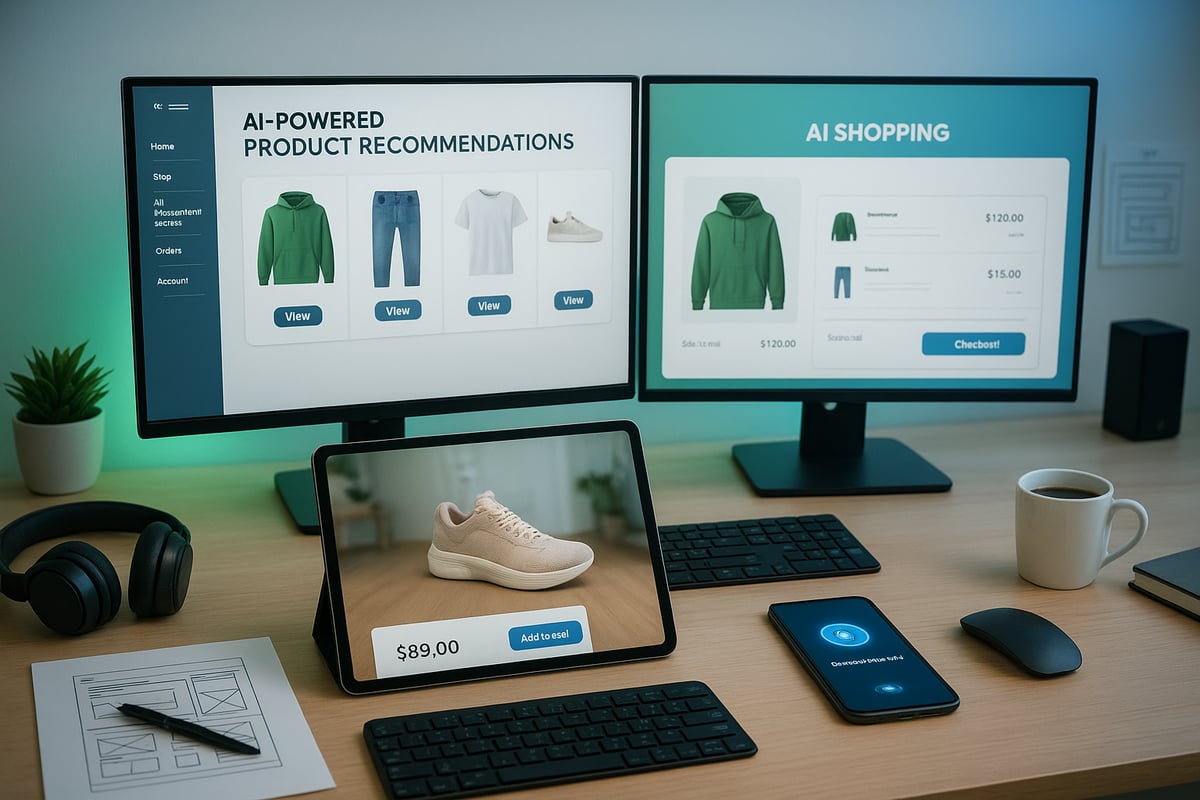
Artificial intelligence is revolutionizing how businesses design e commerce website experiences. AI enables dynamic personalization, offering product suggestions, tailored homepages, and custom promotions based on user data.
Modern AI-driven recommendation engines analyze browsing history, purchase patterns, and even real-time behavior. This results in higher engagement and conversion rates. In fact, personalization lifts sales by 10 to 15 percent on average.
The rise of “agentic shopping” is setting new standards, with companies like Google launching advanced AI shopping tools to automate and personalize the entire online buying journey. If you want to stay ahead, consider how Google’s AI Shopping Tools can be integrated into your strategy.
Supporting AR/VR and 3D Product Visualization
Immersive technology is rapidly transforming how consumers interact with products. To design e commerce website platforms that captivate shoppers, brands are adopting AR try-ons for apparel, 3D viewers for electronics, and virtual showrooms.
These experiences reduce purchase hesitation by letting users visualize products in their own environment or from every angle. For example, fashion retailers now offer 3D fashion platforms that allow customers to rotate, zoom, and even “try on” items virtually.
Gen Z shoppers are leading this trend, with 40 percent preferring brands that offer AR features. Integrating these technologies can set your store apart and keep users engaged longer.
Implementing Voice Commerce and Conversational Interfaces
Voice-driven interfaces are fast becoming a staple in modern e-commerce. To design e commerce website solutions for the future, you should integrate voice search optimization and conversational chatbots.
Voice assistants streamline product discovery, order placement, and customer support. As voice commerce grows, it is estimated that 30 percent of e-commerce searches will be voice-driven by 2026.
E-commerce apps with voice-enabled navigation make shopping more accessible and convenient. This not only improves user experience but also positions your brand at the forefront of digital innovation.
Automating Customer Support and Order Management
Automation is key to efficient operations in digital retail. When you design e commerce website systems with AI chatbots, you provide instant, 24/7 support for frequently asked questions and order updates.
Automated order tracking and notifications keep customers informed and reduce support tickets. Many leading brands now use templates and UI kits that integrate these features seamlessly.
Automating these processes frees up your team to focus on higher-level customer engagement and strategic growth initiatives. This results in better service and improved operational efficiency.
Ensuring Robust Security and Compliance
Security is a non-negotiable aspect when you design e commerce website infrastructure. Shoppers expect their data and transactions to be protected at every step.
Implement industry standards such as SSL encryption, PCI DSS compliance for payment processing, and GDPR/CCPA for data privacy. Two-factor authentication and visible security badges further build trust.
Displaying privacy notices and robust security features on product pages reassures customers. Prioritizing security not only protects your business but also enhances your brand reputation in a competitive market.
Step 4: Optimizing for SEO, Performance, and Conversion
Success in 2026 will demand more than just a beautiful storefront. To design e commerce website experiences that truly outperform, you need to blend technical SEO, site speed, engaging content, and ongoing optimization. Let us explore the critical pillars that drive traffic, boost conversions, and ensure your site stands out in a crowded digital marketplace.
Implementing Technical and On-Page SEO Best Practices
Start with the foundation: technical and on-page SEO. For any brand aiming to design e commerce website platforms that rank, clean URL structures, schema markup, and optimized meta tags are essential. Use descriptive product titles, keyword-rich descriptions, and accessible alt text for every image.
Structured data helps search engines understand your product catalog, enabling rich snippets and better visibility. As API-first and headless commerce become more prevalent, remember that 73% of businesses have adopted headless architecture, showing the importance of flexible, future-proof SEO strategies.
Regular audits and updates keep your site competitive, and well-structured markup ensures your content is both discoverable and relevant.
Enhancing Site Speed and Core Web Vitals
Speed is non-negotiable when you design e commerce website experiences for modern shoppers. Compress images, use lazy loading, and streamline code to keep load times fast on every device. Prioritize mobile-first performance, as even a one-second delay can reduce conversions by 7%.
Use tools like Google PageSpeed Insights to monitor Core Web Vitals, focusing on metrics such as Largest Contentful Paint (LCP) and Cumulative Layout Shift (CLS). Quick fixes like minimizing third-party scripts and leveraging browser caching can have an immediate impact.
A fast, responsive site not only pleases users but also signals quality to search engines, directly influencing your rankings and revenue.
Creating High-Quality Content and Visual Assets
To design e commerce website pages that engage and convert, invest in professional product photography, video demos, and lifestyle imagery. High-quality visuals foster trust and make products more tangible for visitors.
Consider interactive galleries and shoppable videos that allow users to explore features in detail. Well-crafted blog content and educational resources can boost SEO while guiding purchase decisions. For added value, explore strategies for Sustainable E-Commerce Website Design to align your content with modern consumer expectations.
Remember, compelling visuals are not just decoration—they are a key driver of engagement and conversions.
Leveraging Social Proof and User-Generated Content
Building trust is crucial as you design e commerce website interfaces for a discerning audience. Integrate customer reviews, ratings, and user-uploaded photos directly onto product pages. Authentic testimonials and social proof reassure shoppers, helping overcome hesitation.
Highlight user-generated content from social media to create a sense of community and authenticity. Fashion brands, in particular, thrive by showcasing real customers wearing their products. Statistics reveal that user-generated content can increase conversions by 8.5%, making it a powerful tool for growth.
Encourage users to share their experiences, and make it easy for them to contribute, amplifying your brand’s reach organically.
A/B Testing and Continuous CRO
Optimization does not stop at launch. To design e commerce website platforms that keep improving, implement A/B testing for layouts, calls to action, and checkout flows. Use analytics dashboards to track key performance indicators like click-through rates, bounce rates, and average order value.
Continuous Conversion Rate Optimization (CRO) means making small, data-driven changes based on real user behavior. Test everything from button colors to headline copy, and iterate quickly to find what resonates with your audience. Effective CRO is the difference between a site that stagnates and one that grows year after year.
By prioritizing experimentation, your site will adapt to changing trends and user expectations, ensuring ongoing success.
Step 5: Future-Proofing Your E-Commerce Website
To thrive in a rapidly evolving digital landscape, you must future-proof your approach as you design e commerce website experiences. This means embedding flexibility, responsibility, and adaptability into every stage of development.
Designing for Sustainability and Responsibility
Sustainability is no longer a trend but a necessity when you design e commerce website solutions for tomorrow’s consumers. Start by selecting eco-friendly hosting providers and using minimalist design principles to reduce digital carbon footprint.
Clearly display green badges and labels, and ensure your policies on shipping and returns are transparent. Leading brands now dedicate entire sections to sustainability, showcasing ethical sourcing and recyclable packaging.
By integrating responsible design choices, you build trust and appeal to the growing audience that prefers brands with a visible commitment to the planet.
Building for Scalability and Flexibility
Scalability is essential for long-term growth as you design e commerce website platforms that can adapt to changing business needs. Use modular design systems and reusable components, making updates and expansions seamless.
Opt for an API-first architecture, which allows easy integration with new technologies and partners. Innovative approaches, such as AI-generated items in e-commerce, enable businesses to test demand and launch products faster, reducing time and resource investment.
With these strategies, your website remains agile, ready for shifts in market demand or technology.
Preparing for Globalization and Localization
If you plan to design e commerce website experiences for a global audience, localization is key. Start with multilingual content, ensuring language and cultural nuances are respected.
Implement region-specific payment methods and shipping options to support local buyers. Templates catering to international markets can streamline the process, letting you scale quickly without sacrificing user experience.
By prioritizing localization, you maximize reach and build loyalty across diverse markets.
Monitoring Trends and Adapting Quickly
Future-proofing means staying ahead of industry shifts as you design e commerce website frameworks. Monitor news, competitor strategies, and emerging technologies regularly.
Rapid prototyping and user testing let you integrate new features quickly. For example, as AI-driven commerce standards evolve, keeping pace with initiatives like Mastercard’s AI Commerce Standards is critical for maintaining user trust and compliance.
Adaptability ensures your site remains relevant as consumer expectations and technologies change.
Investing in Team Training and Design Culture
Your team is your most valuable asset when you design e commerce website experiences built for the future. Invest in upskilling staff on the latest tools, accessibility standards, and design best practices.
Foster a culture of innovation and user-centricity, where continuous learning is encouraged. Companies with strong design cultures not only adapt faster but also achieve higher revenue growth compared to their competitors.
By prioritizing training and culture, you empower your team to deliver exceptional and resilient e-commerce solutions.