

Online retail is evolving at lightning speed, with every e shopping site striving to capture the attention of increasingly savvy consumers. Fierce competition means that simply having an online storefront is no longer enough. To stand out and thrive in 2026, businesses must embrace bold, innovative e shopping site ideas that anticipate future trends and consumer needs. In this post, discover seven brilliant concepts that break the mold, each uniquely designed to help brands succeed in a crowded marketplace. Get ready to be inspired by actionable insights that can redefine your approach to digital commerce.
Why Innovation Matters in E-Shopping
The world of e-commerce is evolving rapidly, with consumer expectations and technologies pushing the boundaries of what an e shopping site must deliver. To stay ahead, businesses need to understand what is driving this change and how innovation shapes the future of online retail.
The Changing Landscape of Online Retail
Today’s shoppers expect more from every e shopping site they visit. Personalization is now the norm, not the exception. Consumers want products and recommendations tailored to their preferences, delivered with speed and transparency. Sustainability is also top of mind, as more buyers seek eco-friendly options and ethical business practices.
Emerging technologies are setting new standards in online retail. Artificial intelligence and machine learning drive personalized experiences, while augmented reality allows customers to visualize products before buying. Blockchain technology is improving transparency and trust, especially in payments and supply chains.
Market data underscores the scale of this transformation. According to industry forecasts, global e-commerce sales are expected to exceed $8 trillion by 2026, fueled by these advancements and shifting consumer habits. For a deeper dive into these projections, see the Global e-commerce sales forecast to exceed $8 trillion by 2026.
Challenges Facing Traditional E-Shopping Sites
Despite the growth, traditional e shopping site models face significant challenges. Many struggle with high cart abandonment rates, often caused by complicated checkout processes or hidden fees. Lack of differentiation is another common pain point, as generic layouts and similar product offerings make it hard for sites to stand out.
User experience is critical. Sites that fail to deliver fast load times, intuitive navigation, or mobile optimization risk losing customers. Conversion rates for e shopping site platforms typically hover between 2% and 3%, while customer retention remains a hurdle due to limited engagement strategies.
Common pain points include:
- Abandoned shopping carts
- Generic site design
- Slow site performance
- Poor mobile usability
Addressing these issues is crucial for any e shopping site aiming to compete in a crowded market.
Opportunities for Forward-Thinking Entrepreneurs
For those willing to innovate, the e shopping site landscape offers exciting opportunities. Creative business models can capture new market segments by addressing unmet needs or delivering unique value. Disruptive e-commerce platforms, from live video shopping to hyperlocal marketplaces, are already setting new benchmarks in engagement and loyalty.
Niche targeting is a powerful strategy. By focusing on specific interests or communities, an e shopping site can build a loyal customer base less likely to be swayed by larger competitors. Examples like subscription box services and sustainable product marketplaces demonstrate how differentiation leads to success.
Embracing innovation not only attracts customers but also positions your e shopping site for long-term growth and relevance in 2026.
7 Brilliant E Shopping Site Ideas to Try in 2026
The future of e shopping site innovation is brimming with opportunity. As digital commerce evolves, entrepreneurs have the chance to capture new audiences and redefine how people shop online. Below, explore seven forward-thinking e shopping site concepts that are set to thrive in 2026.
Sustainable Product Marketplaces
Sustainable product marketplaces are setting a new standard for the e shopping site landscape. These platforms focus on eco-friendly product curation, carbon-neutral shipping, and transparent sourcing. Shoppers can easily verify a product’s environmental impact, creating a sense of trust that is often missing in traditional e shopping site experiences.

Key features:
- Curated selection of green and ethical products
- Carbon-neutral delivery options
- Detailed sourcing and impact reports
The main benefit is building loyalty with environmentally conscious consumers, especially Millennials and Gen Z. For example, The Sustainable Market offers a wide variety of curated green products and shares detailed sustainability metrics with every purchase.
| Pros | Cons |
|---|---|
| Stands out from mass retailers | Higher prices due to ethical sourcing |
| Builds brand trust | Complex supply chains |
| Supports ethical brands |
According to Nielsen (2023), 65% of global consumers prefer sustainable brands. While the e shopping site model may face supply chain challenges, its unique value proposition is clear.
Live Video Shopping Platforms
Live video shopping platforms are revolutionizing the e shopping site experience by merging entertainment and commerce. These sites offer real-time product demonstrations, live chat, and influencer-hosted events, creating a highly interactive environment.
Core features:
- Real-time product demos and Q&A
- Live chat with hosts and shoppers
- Influencer-led shopping events
This model appeals to social media users and trend-driven shoppers, particularly Gen Z. ShopShops, for instance, connects global consumers with hosts who showcase and sell products live, making shopping more engaging.
| Benefits | Challenges |
|---|---|
| High engagement and conversion | Requires tech investment |
| Instant feedback | Time zone coordination |
| Entertainment value |
Live commerce is projected to reach $35 billion in US sales by 2026 (emarketer). For any e shopping site, integrating live video features can dramatically boost conversion and customer retention.
AI-Powered Personalized Shopping
AI-powered personalized shopping is transforming the e shopping site industry by tailoring experiences to individual preferences. These platforms use data-driven recommendations, style quizzes, and automated product curation to reduce choice overload and increase satisfaction.
Highlights:
- Personalized product suggestions based on user data
- Interactive style or preference quizzes
- Automated curation for each shopper
Stitch Fix demonstrates how AI can drive success, offering customized clothing selections that keep users returning. This approach is especially beneficial for busy professionals and tech-savvy consumers who want efficiency in their e shopping site journeys.
| Pros | Cons |
|---|---|
| High satisfaction and retention | Data privacy concerns |
| Scalable personalization | Risk of algorithm bias |
A recent Epsilon study found that 80% of shoppers are more likely to buy from brands offering personalization. The e shopping site that leverages AI can gain a competitive edge, but must also address privacy and transparency.
Second-Hand & Circular Economy Marketplaces
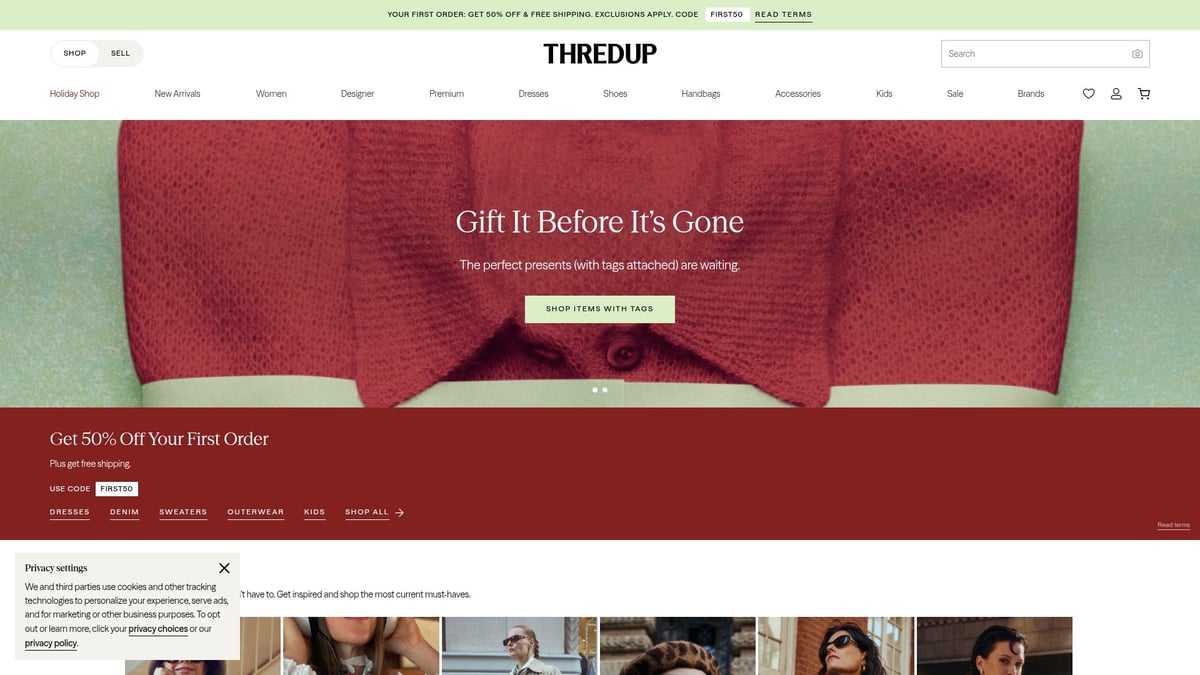
Second-hand and circular economy marketplaces are redefining the e shopping site model by focusing on sustainability and value. These sites enable peer-to-peer selling, quality checks, and eco-friendly packaging, making it easy for users to buy and sell pre-owned goods.
Key features:
- Peer-to-peer product listings
- Rigorous quality control
- Environmentally conscious packaging
Platforms like thredUP show how this e shopping site concept appeals to bargain hunters, students, and sustainability advocates. By supporting the circular economy, these marketplaces reduce waste and offer affordable options.
| Strengths | Weaknesses |
|---|---|
| Reduces waste, supports sustainability | Unpredictable inventory |
| Affordable for shoppers | Quality control challenges |
| Low inventory costs |
According to the ThredUp Resale Report, the resale market is projected to double to $77 billion by 2026. For an e shopping site, this segment offers both growth and a chance to make a positive impact.
Niche Subscription Box Services
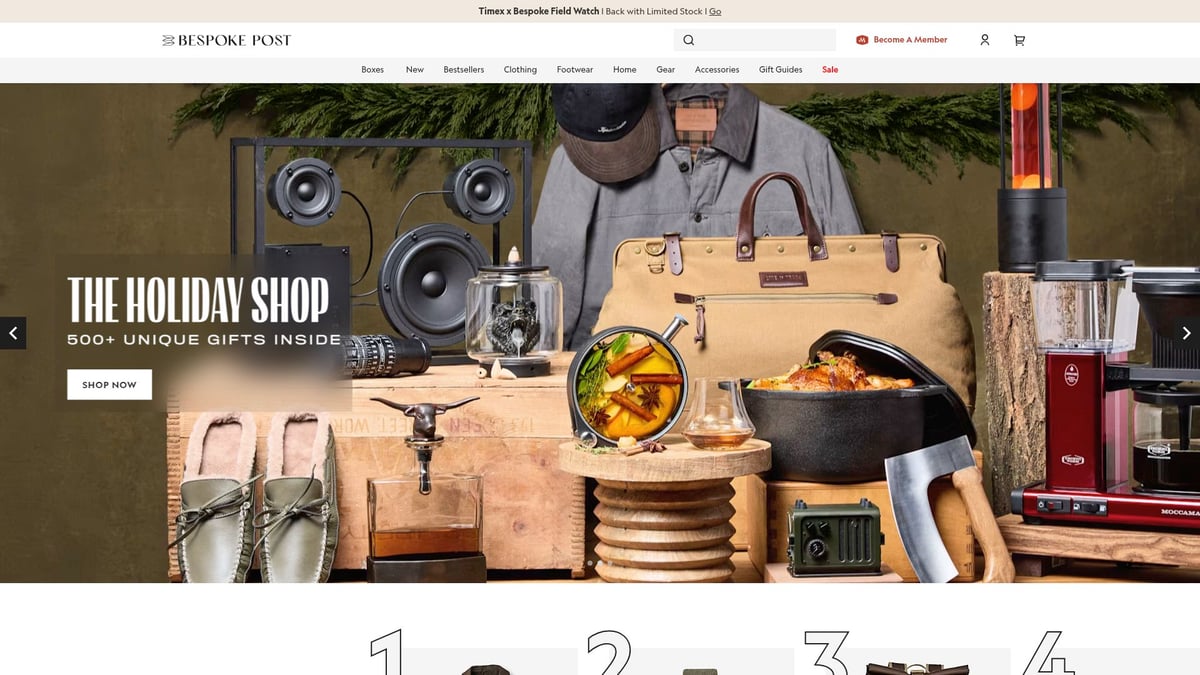
Niche subscription box services offer a unique twist on the traditional e shopping site. They deliver curated monthly boxes filled with exclusive products, building strong customer loyalty and predictable revenue streams.
What makes these sites stand out:
- Carefully curated and themed boxes
- Flexible subscription options
- Access to exclusive or limited-edition products
Bespoke Post is a leading example, offering themed boxes for lifestyle, grooming, and hobbies. This e shopping site model fosters a sense of community among subscribers and encourages repeat purchases.
| Advantages | Drawbacks |
|---|---|
| Recurring revenue | Churn risk |
| Strong brand identity | Logistics complexity |
| High customer engagement |
The subscription e-commerce market is expected to reach $38 billion by 2026 (McKinsey). For an e shopping site, this approach can create lasting relationships with niche audiences.
Augmented Reality (AR) Shopping Experiences
Augmented reality (AR) is elevating the e shopping site experience by allowing customers to visualize products before purchasing. With virtual try-ons, 3D visualizations, and interactive showrooms, shoppers can make more confident buying decisions.
Core AR capabilities:
- Virtual product try-ons (e.g., glasses, makeup, furniture)
- Interactive 3D product views
- Immersive online showrooms
Warby Parker’s AR-powered eyeglass try-on tool enhances the e shopping site journey for fashion and beauty shoppers. By reducing uncertainty, AR helps lower return rates and boosts satisfaction.
| Benefits | Limitations |
|---|---|
| Fewer returns, higher confidence | High development costs |
| Memorable, engaging experiences | Device compatibility issues |
A Snapchat report found that 63% of consumers believe AR improves their shopping experience. To learn more about how this technology is transforming e shopping site design, see Augmented reality in e-commerce.
Hyperlocal Online Marketplaces
Hyperlocal online marketplaces are reshaping the e shopping site landscape by connecting consumers with nearby vendors and products. These sites use location-based discovery, support small businesses, and often offer same-day delivery.
Key features:
- Localized product discovery
- Support for independent vendors and artisans
- Fast, local delivery options
Neighborhood Goods is a prime example, showcasing local brands and pop-ups online. This e shopping site model appeals to urban dwellers and those who want to keep their spending within the community.
| Pros | Cons |
|---|---|
| Supports local economies | Limited geographic reach |
| Unique, diverse inventory | Logistical coordination needed |
| Faster, eco-friendly delivery |
According to Accenture (2023), 46% of consumers prioritize shopping local after the pandemic. For an e shopping site, going hyperlocal means building strong community ties and offering distinct inventory.
Key Technologies Shaping E-Shopping in 2026
The future of any successful e shopping site relies heavily on adapting to technological advances. In 2026, several innovations are set to redefine how brands engage customers and operate online. Understanding these key technologies is crucial for anyone aiming to build a competitive e shopping site that delights users and drives growth.
Artificial Intelligence and Machine Learning
Artificial intelligence is revolutionizing the e shopping site landscape. AI enables smarter personalization, from tailored product recommendations to dynamic pricing and predictive inventory management. Machine learning algorithms analyze browsing and buying habits, helping each e shopping site present relevant products and improve conversion rates.
AI-powered chatbots handle customer queries instantly, enhancing support. Tools like recommendation engines drive engagement by suggesting items shoppers might actually want. For a deeper dive into how AI transforms personalization, see AI-powered personalization in e-commerce. As AI evolves, expect even more intuitive shopping journeys on every e shopping site.
Augmented and Virtual Reality
Augmented reality (AR) and virtual reality (VR) are transforming online product exploration. Modern e shopping site platforms now let users try on clothing, view furniture in their home, or see makeup on their face, all virtually. These technologies make shopping more interactive and reduce the uncertainty that can lead to returns.
Retailers using AR are seeing greater customer satisfaction and fewer product returns. For more insights, read Augmented Reality is the Future of Online Shopping. By 2026, expect nearly every leading e shopping site to offer immersive AR tools, making online purchases more confident and engaging.
Blockchain and Secure Payment Innovations
Blockchain is reshaping digital transactions for the modern e shopping site. This technology delivers unmatched transparency and security, recording every transaction on a decentralized ledger. It helps prevent fraud and builds consumer trust, especially for high-value or international purchases.
Secure payment methods, including cryptocurrencies, are gaining traction. Blockchain also enables faster settlements and lower transaction fees. As privacy concerns grow, an e shopping site that leverages blockchain will stand out as a safe, future-ready option for buyers.
Omnichannel and Mobile-First Experiences
Today’s shoppers expect seamless experiences across devices and channels. An e shopping site must integrate online and offline interactions, allowing customers to browse on mobile, purchase in-app, or pick up in-store. Mobile-first design is no longer optional, as over half of all e shopping site traffic now comes from smartphones.
Omnichannel strategies let shoppers start and finish their journey anywhere, increasing convenience and loyalty. Responsive layouts, fast load times, and intuitive navigation are essential features for any successful e shopping site in 2026.
How to Launch Your Own E-Shopping Site in 2026
Launching a successful e shopping site in 2026 requires a strategic approach and a keen understanding of evolving consumer demands. With competition intensifying, a thoughtful launch process increases your chances of long-term growth and relevance. Let’s break down the fundamental steps for building your future-ready e shopping site.
Market Research and Idea Validation
Begin by identifying gaps in the market and validating your vision for an e shopping site. Use tools such as Google Trends and SEMrush to analyze demand and spot emerging trends. Conduct competitor research to understand what works and where there are opportunities to differentiate.
Customer surveys and interviews can provide direct insights into shopper needs. For a detailed roadmap, review the essential steps for a successful e-commerce site launch. Gathering this information ensures your e shopping site is built on solid data and real-world demand.
Building the Right Tech Stack
Select a robust e-commerce platform that aligns with your e shopping site’s goals. Consider integrations for AI personalization, AR shopping, and secure payments. Mobile optimization is crucial, as most consumers shop via smartphones.
Invest in scalable infrastructure so your e shopping site can handle growth without performance issues. Evaluate hosting, security features, and third-party plugins for a seamless user experience. Prioritize platforms that adapt to future trends and technologies.
Marketing and Growth Strategies
Develop a comprehensive marketing plan to attract and retain users. Leverage SEO to increase your e shopping site’s visibility and tap into influencer partnerships for wider reach. Social commerce and targeted ads can drive initial traffic.
Personalization and customer engagement are key for loyalty. Use email campaigns, loyalty programs, and exclusive offers to keep shoppers coming back. Monitor analytics closely to refine your approach and maximize your e shopping site’s impact.
Legal, Ethical, and Sustainability Considerations
Stay informed about data privacy regulations, accessibility standards, and ethical practices for your e shopping site. Implement transparent policies for data collection and ensure your platform is accessible to all users.
Incorporate eco-friendly packaging and sustainable sourcing to appeal to conscious consumers. Regularly audit your operations to ensure compliance and to position your e shopping site as a responsible, future-ready business.