

How many times has your team updated the same brand story, material note, or FAQ across dozens of Shopify pages?
In many stores, that work still lives in page editors, product descriptions, and app blocks. Search updates become slow and messy.
That is why Shopify metaobjects SEO matters. Used well, metaobjects create a shared content layer for products, collections, and landing pages. The key is not adding more fields. It is building a clean structure that supports useful pages at scale.
Why metaobjects matter for SEO
Metaobjects let you create custom content types inside Shopify, such as ingredient libraries, size guides, author profiles, buying guides, or certifications. Unlike one-off page copy, each entry can be reused wherever it belongs.
For SEO, that shifts the job from writing page by page to designing a content system. A product can pull a material guide. A collection can pull a buyer FAQ. A landing page can pull the same brand or feature data without copy and paste.
According to Shopify’s Metaobject storefront docs, metaobjects are custom structured content that can connect to products and other resources. On renderable definitions, Shopify also exposes MetaobjectSEO fields for title and description data. Google only benefits when that content renders on an indexable page.
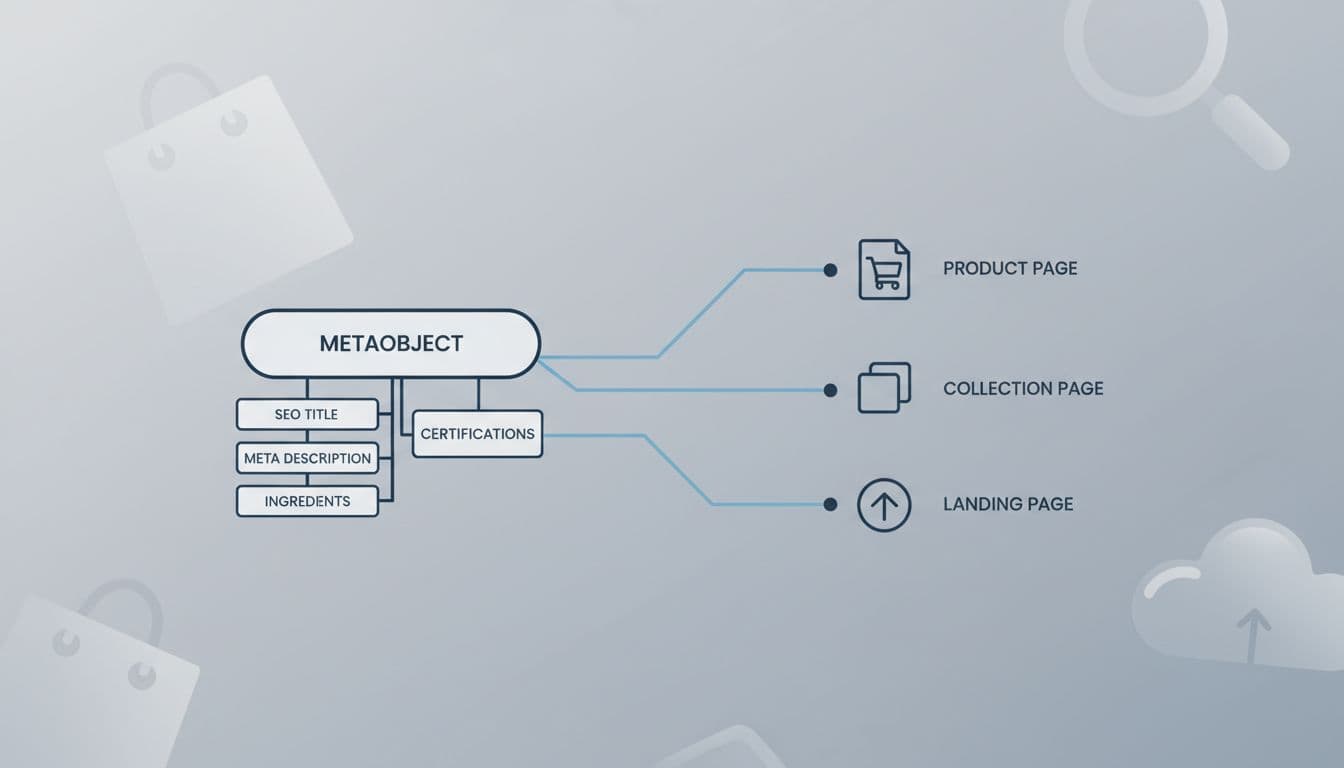
A simple rule helps here, treat metaobjects as reusable source content, not as a shortcut for thin pages. If your store creates fifty near-identical landing pages from the same block, rankings usually flatten instead of grow.
Use metaobjects to reduce duplication, not to mass-produce weak pages.
That is where Shopify metaobjects SEO pays off. Search engines get clearer page entities and cleaner copy. Your team gets fewer manual edits and fewer mismatched details across the catalog.
Build the content model before you touch templates
Most mistakes happen before any Liquid change. Teams create fields first, then realize later that nobody agrees on naming, ownership, or where the data should appear. Start with a small map.
For a modern Shopify store, the best metaobject types usually support repeatable search intent. Good examples include brand profiles, material records, fit guides, comparison rows, certification records, FAQ sets, and curated collection intros.
Make four decisions before build-out:
- Which page types will use the object
- Which fields are required
- Which entries can become standalone pages
- Who approves edits
If a “Material” metaobject only feeds product tabs, it may never need its own URL. If a “Brand” metaobject powers brand hubs with real search demand, it may deserve a landing page, internal links, and unique SEO fields.
For category architecture, keep the same rule you would use with filters, one page per clear intent. This Shopify faceted navigation SEO checklist is a useful reminder that parameter clutter and duplicated copy waste crawl budget. Metaobjects should support your taxonomy, not blur it.
This planning step also keeps reusable content blocks honest. A metaobject is worth creating when it improves many pages in a consistent way. If it only exists for one campaign page, a normal section or page template may be the cleaner choice.
Where metaobjects improve rankings and page quality
The strongest gains usually happen on products, collections, and supporting landing pages.
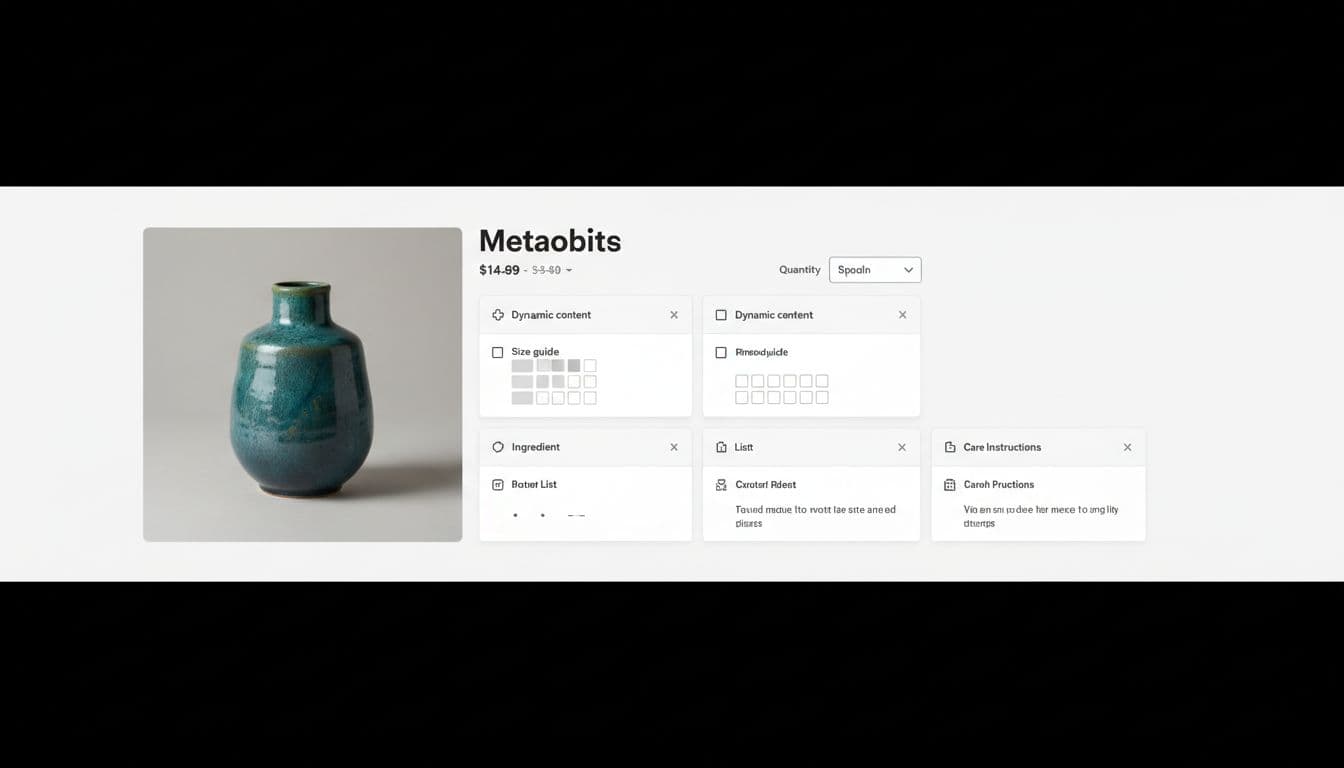
On product pages, metaobjects can add reusable blocks for specs, care steps, compatibility notes, ingredients, shipping facts, or sustainability claims. That gives you richer text without bloating the main description. It also helps large catalogs keep details consistent when many SKUs share the same source data.
Collection pages benefit too. A running shoes collection can pull a fit guide, show brand comparison notes, or surface a short FAQ set tied to that category. Those blocks help collections answer commercial questions, not only list products. If your store uses curated sub-collections and paginated grids, keep those pages distinct and readable, as shown in this collection pagination SEO guide.
Supporting landing pages are where many teams miss easy gains. Metaobjects can power brand hubs, ingredient libraries, fabric explainers, store locator entries, or buyer guides. Those pages often rank for mid-funnel searches and strengthen internal linking to products and collections.
Schema needs the same discipline. Use metaobjects as the source of truth, then make sure visible content and markup match. Shopify’s storefront SEO guidance and this ecommerce schema markup guide point back to the same rule, structured data should reflect what the shopper can actually see.
Governance keeps the system usable
Metaobjects age well only when the team treats them like shared infrastructure. Otherwise, fields multiply, entries drift, and nobody knows which object controls which page.
Set naming rules early. Keep field labels plain. Mark required fields. Decide which definitions are support content and which can publish as standalone pages. Then document where each object appears, who owns it, and what triggers a review.
In 2026, this matters more because stores publish faster, use more AI-assisted drafts, and localize more content. One bad field mapping can spread the same error across hundreds of URLs. Before launch, test theme support, app conflicts, and section rendering, especially on OS 2.0 builds. A practical Shopify theme audit checklist helps catch template issues before they hit production.
Also review orphaned entries, stale landing pages, and missing internal links every quarter. Fewer object types, stricter validation, and clear publishing rules usually beat a loose model that nobody can manage.
A better content system wins
Shopify metaobjects SEO works best when you stop treating content as page fill and start treating it as a reusable system. The stores that win with it in 2026 are not the ones with the most fields. They are the ones with cleaner models, stronger page intent, and tighter governance.
If one update still sends your team into a copy-and-paste sprint, your content architecture is asking for a reset.