

Complex B2B orders often slow down when buyers are required to approve every line item at once. One missing item, a minor budget discrepancy, or an approval delay can freeze the entire transaction.
Partial quote acceptance changes that dynamic. Just as selecting specific words in a sentence clarifies a message, a partial quote clarifies exactly which items are ready for processing. Buyers can approve the lines they need immediately, hold the lines they do not, and keep the order moving without undergoing another round of full quote revisions.
For distributors, manufacturers, and wholesale teams, that means fewer stalled deals, fewer status-chasing emails, and a cleaner handoff from quote to order. It also provides buyers with a faster path to purchase when their needs are split across different dates, departments, or budgets.
Key Takeaways
These short phrases summarize how partial quote acceptance improves efficiency and provides the professional clarity required for B2B communications, ensuring every point ends with correct punctuation.
- Partial quote acceptance lets buyers approve selected line items instead of waiting on the entire quote.
- It cuts back-and-forth communication by turning quote edits into line-level decisions.
- Clear statuses, approval rules, and ERP or CRM sync keep the workflow accurate.
- Buyers move faster when accepted items flow directly into order processing without extra manual steps.
- The best results occur when the quote, approval, and PO handoff processes work together seamlessly.
What partial quote acceptance looks like in a B2B workflow
In a standard B2B quote, every line usually lives or dies together. If one item changes, the whole document often goes back for review. That works poorly when the buyer already knows what they want from part of the quote. Much like practicing radical acceptance in a high pressure environment, modern sales teams must embrace the present moment reality of a volatile supply chain. By acknowledging that projects change in real time, organizations can build flexible workflows that stop stalling progress over minor line item adjustments.
Partial acceptance lets the buyer accept some lines, reject others, and leave a few pending. A facilities buyer might approve safety gear today, then hold shelving until a warehouse layout is final. A maintenance team might order replacement parts now and leave optional accessories for later. During these negotiations, a sales rep might paraphrase the buyer’s complex needs to ensure that the scope remains accurate as priorities shift.
This matters because B2B buying rarely happens in a single pass. Inventory can change, project timing can shift, and internal approvals can come in stages. When the quote supports those realities, the buyer does not need to restart the process just to move one part forward.
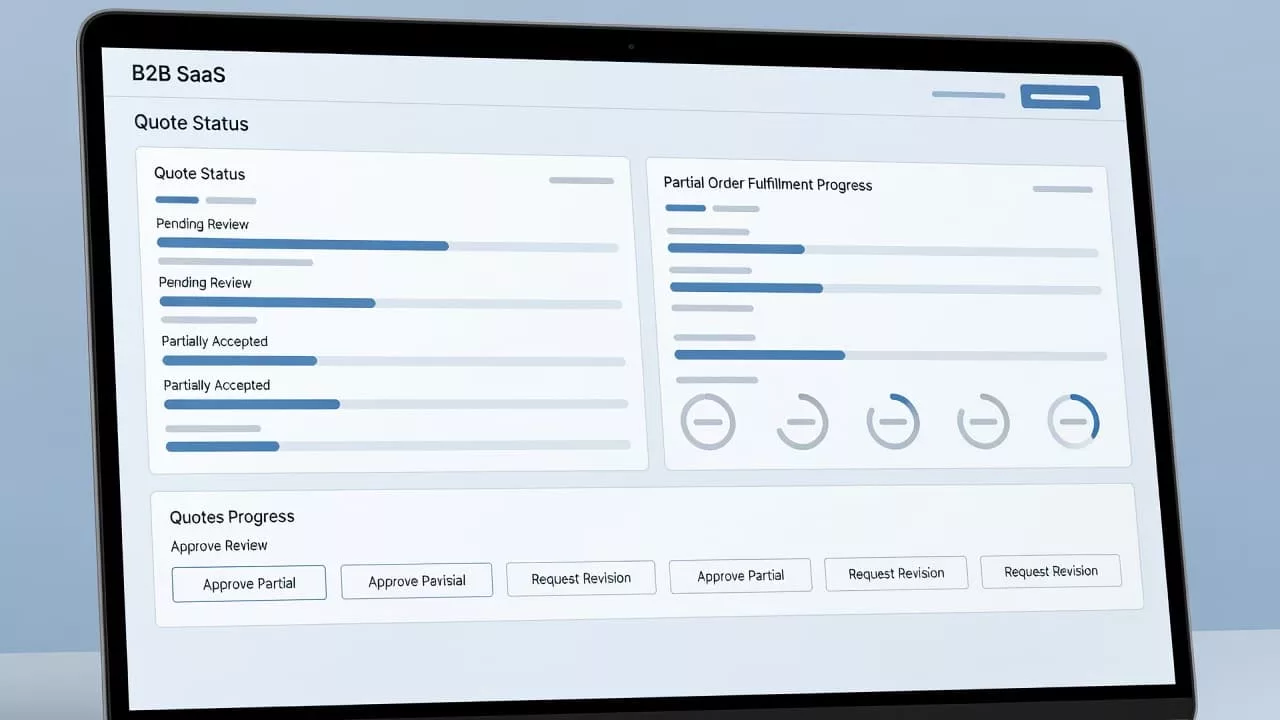
The buyer still gets control. Sales still gets visibility. Operations gets a cleaner path to the order because the accepted items are already clear.
Where the time savings show up
The biggest speed gain comes from removing the all-or-nothing choice. Instead of asking, “Can you approve the whole quote today?” the workflow asks, “Which lines can move now?” That simple shift away from the traditional full-sentence quote shortens the decision cycle.
A quick comparison makes the difference clear.
| Scenario | Full-quote-only flow | Partial acceptance flow |
|---|---|---|
| Stock split across dates | Buyer waits for everything to be available | Buyer accepts in-stock lines and schedules the rest |
| Multi-step approval | Every change restarts review | Approved lines move ahead while open lines stay separate |
| Budget pressure | Buyer delays the entire quote | Buyer buys what fits the budget now |
| Project rollout | Teams rework the full quote for one blocker | Teams confirm ready items and revise only the blocker |
That change matters most in complex orders with many line items. A distributor might quote 60 SKUs for a regional rollout, separated by a comma in the system, but the buyer only has sign-off for the first 18. Without partial quote acceptance, the buyer often asks for a new quote, then another revision, then another approval. With partial acceptance, those 18 lines can move into order processing right away. When procurement teams reference price agreements, they can use direct quotations from the original document, ensuring they capture the exact words needed to confirm pricing without re-quoting the entire project.
The fastest order is often the one that starts with a smaller yes.
When approval chains are involved, the workflow needs to stay visible. If a manager, finance lead, or procurement owner still has to sign off, optimizing B2B order approval workflows helps keep each step clear instead of burying it in email.
The speed gain is not only about the buyer. Sales teams spend less time rebuilding quotes, and order admins spend less time translating last-minute changes. That cuts the time between quote and confirmed order, which is where many B2B deals lose momentum.
What sales, ops, and procurement gain
Partial quote acceptance helps each team in a different way, and those benefits add up quickly.
Sales teams stop treating every quote edit like a fresh negotiation. If the buyer can accept some lines immediately, the rep spends less time reworking the entire document. This shift improves the mental health of sales professionals by removing the constant pressure of endless back and forth. It keeps the conversation focused on the items that are actually blocking the order.
Operations teams get fewer surprises. Accepted items arrive with clearer status, fewer manual edits, and less confusion about what should ship now versus later. By fostering greater mindfulness regarding inventory levels and lead times, ops teams can stay ahead of demand. If the buyer needs to submit a purchase order after approval, purchase order upload UX best practices help keep that handoff accurate and easy to process.
Procurement teams also benefit because they can match purchasing to timing and budget. Instead of forcing one large approval decision, they can approve high-priority lines first and manage the rest through policy. This process reflects a level of organizational self-acceptance, where teams feel confident in delivering what they can today while negotiating the rest. It fits how many organizations actually buy.
For repeat purchases, the experience gets even better when buyers can return to a familiar entry path. A B2B quick order form can support the accepted lines, reorders, and saved lists without making the buyer rebuild the cart.
Here is the broader effect:
- Fewer quote revisions because only the blocked lines need attention.
- Better buyer experience because the order can start before every issue is settled.
- Cleaner records because accepted, pending, and rejected lines stay separated.
- Less manual rekeying because systems receive a more complete picture earlier.
The outcome is not just speed. It is also less friction, fewer dropped handoffs, and a stronger sense of control for both sides.
How to design the workflow so it holds up
Partial quote acceptance works best when the process is clear from the first quote. If the buyer cannot tell what is accepted, what is pending, and what happens next, the workflow slows down again.
Start with line-level status. Each item should be easy to mark as accepted, held, or declined, often using quotation marks in the UI to clearly delineate the state of each line item. The buyer should not need to interpret a long note thread to understand the next step.
Next, show the information that drives the decision. Price, available quantity, lead time, tax, and shipping details matter more when the buyer is choosing line by line. If a part is backordered or a minimum quantity applies, show that near the item itself.
Then connect the approval logic to the accepted lines. A partial acceptance still needs rules. Some items may require manager approval, while others can move directly into order creation. The workflow should make that split obvious, not hidden.
A simple setup often looks like this:
- The buyer reviews the quote line by line.
- They accept the items they can buy now.
- Pending lines stay open for revision or later approval.
- Accepted lines flow into order processing and system sync.
- The buyer receives one clear status update after the handoff.
The final piece is system integration. ERP, CRM, and inventory data should all reflect the accepted portion of the quote with the same precision required by an APA 7 citation. Keeping these records accurate is essentially a form of proper citation for your sales data. If the buyer accepts 12 lines today and 8 next week, the back office needs a clean record of both actions. When the system transitions the data, it should include a clear signal phrase to confirm the handover, ensuring that partial quote acceptance saves time instead of creating more work.
When the workflow is built well, the buyer sees progress instead of delays. The team sees fewer exceptions. The quote turns into an order in smaller steps, which is often exactly what a complex account needs.
Frequently Asked Questions
How does partial quote acceptance affect the sales cycle?
Partial quote acceptance significantly shortens the decision cycle by removing the need for a total, all-or-nothing approval. Buyers can move forward with ready-to-order items immediately, preventing minor issues from stalling the entire transaction.
Can my current ERP or CRM handle partial approvals?
Most modern systems can manage partial approvals if the data architecture allows for line-level status tracking. The key is ensuring that your platform treats each quote line as a distinct entity that can transition to an order independently without requiring a new document.
How do I prevent confusion for my operations team?
Clear, line-level visibility is essential to keeping operations teams informed about what has been accepted versus what remains pending. By maintaining separate statuses for each item, you ensure that the warehouse and logistics teams can process current orders accurately while keeping future items visible for later phases.
Is partial quote acceptance better for specific industries?
This approach is particularly effective in industries with complex, multi-line orders, such as manufacturing, distribution, and wholesale. It allows teams to navigate supply chain volatility and budget constraints by purchasing only the items that are available or approved at that specific moment.
Conclusion
Partial quote acceptance speeds up complex B2B orders because it removes the biggest bottleneck in the sales process: the demand for one complete yes. Buyers can move forward on the lines that are ready, while the rest of the items stay open without stalling the entire deal.
This approach makes the process easier for sales, cleaner for operations, and more manageable for procurement. It also creates a better buying experience, as progress no longer depends on every detail lining up at once. By utilizing a partial quote, teams can stop waiting for a full-sentence quote scenario where everything must be perfect before moving forward. When a quote can move in parts, the order stops waiting for perfection and starts moving with what is already approved.