

Product images now do more than show color and shape. They help shoppers decide, support search visibility, and shape how fast a product page feels.
If your images are vague, oversized, or hard to crawl, they cost you twice, once in rankings and once in conversions. The fix is not more images. It’s better image handling across filenames, formats, markup, and mobile performance.
Start with filenames and alt text that match the product
Good ecommerce image SEO starts before the file reaches your CMS. Google’s image SEO best practices still reward clear filenames, helpful alt text, and page context.
A strong filename should describe the product, angle, and key detail. That helps search engines, and it helps your team keep assets organized.
| Bad filename | Better filename | Why it works |
|---|---|---|
| IMG_4821.jpg | black-leather-chelsea-boot-side-view.jpg | It names the product and angle |
| product1.webp | womens-ribbed-knit-sweater-front.jpg | It adds useful context |
| final_image.avif | matte-black-water-bottle-top-angle.avif | It supports search and asset management |
Alt text should read like a shopper note, not a keyword dump. Use the main product detail, then add one or two useful attributes.
For example:
- “Men’s navy waterproof trail jacket, front view”
- “Ceramic dinner plate set in matte white, 10-inch size”
- “Wireless noise-canceling headphones, folded for travel”
If the same image appears across variants, keep alt text specific to the selected product page. Otherwise, you blur the page’s intent.
Alt text should describe what matters to the buyer, not repeat the product title line by line.
Serve modern formats without slowing the page
WebP is now a safe default for most product pages, while AVIF is worth testing when file size matters more than simple setup. For many stores, AVIF gives smaller files without a visible drop in quality.
That said, platform support still matters. Some CMS setups handle modern formats automatically, while others need theme edits or app help. If your stack supports it, use <picture>, srcset, and sizes so phones get smaller files and desktop screens get enough detail.
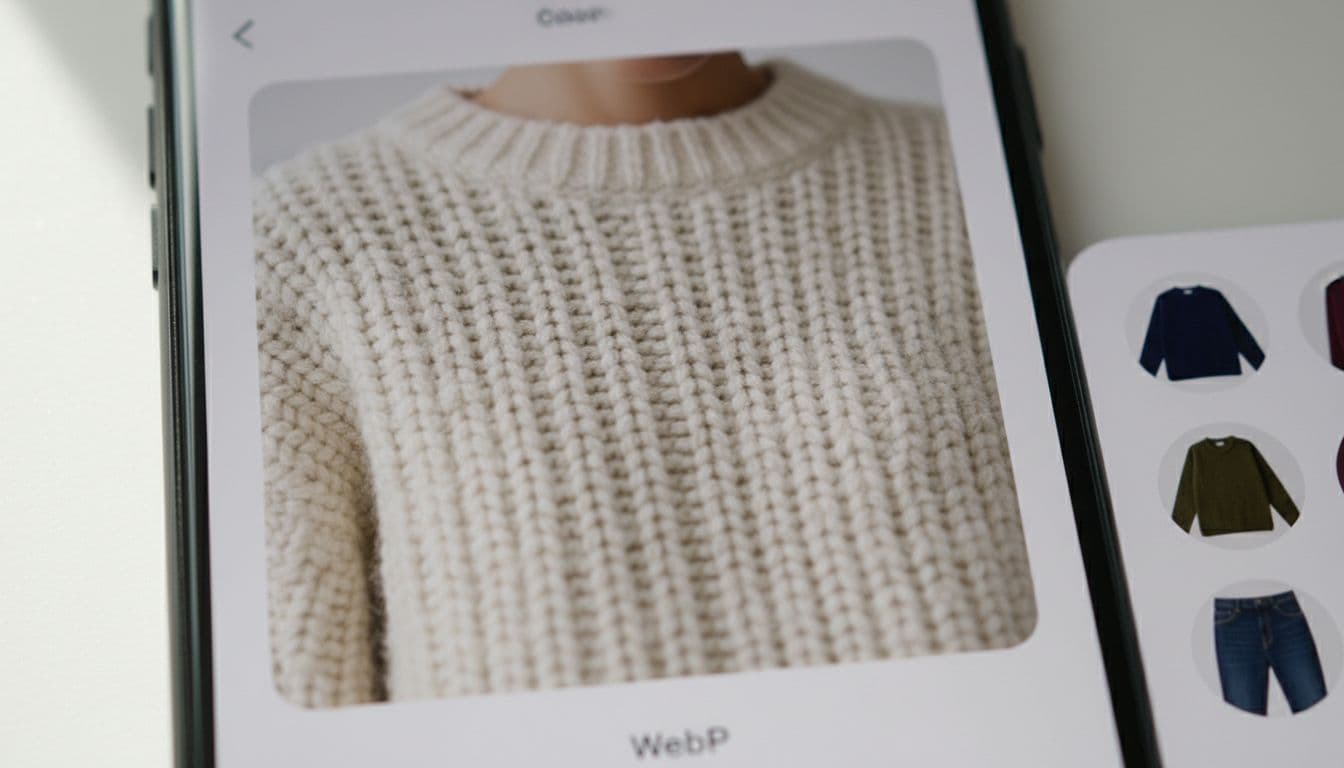
A practical setup looks like this:
- Hero and gallery images in WebP or AVIF
- JPG fallback where older tools still need it
- Responsive sizes for mobile, tablet, and desktop
- Compressed files that keep fabric, texture, and edges sharp
The biggest mistake is shipping one oversized image to every device. That hurts LCP and makes the page feel heavy before shoppers even scroll. If you want a deeper technical pass, the ecommerce image optimization guide covers WebP, AVIF, responsive images, and gallery loading in more detail.
Make product galleries earn their place on mobile
Mobile shoppers don’t zoom into the details the same way desktop users do. They swipe, compare, and decide fast. So your gallery needs to show enough in a small space.
Start with the product’s main angle, then add images that answer buying questions. Close-ups, scale shots, packaging, and lifestyle images all help when they are useful, not decorative.
Use the Core Web Vitals for e-commerce checklist as you review each image slot. The goal is simple: keep the hero image visible fast, avoid layout shifts, and make taps feel responsive.
The best galleries usually include:
- One clean hero image
- One detail shot that proves material or finish
- One scale or fit image
- One in-use image for context
Don’t lazy-load the hero image if it sits above the fold. Do lazy-load lower gallery images. That small decision often matters more than another round of compression.
Add schema and feed signals that line up
Images need to match the rest of the product page. If the page says one thing and the markup says another, you create noise.
Your Product schema should reflect the same main image, title, price, and availability that shoppers see. The Product schema for rich results guide is useful here, because it shows how to keep JSON-LD aligned with the visible page.
That same consistency matters in Google Merchant Center product feeds. Use the image you want people to see, and keep the crop honest. If your feed uses one image and your PDP uses another, you weaken trust.

Search engines also need to find your images. If your gallery loads through JavaScript, check whether the images appear in the HTML, not only after interaction. If they do not, add an image sitemap or adjust the gallery so crawlers can see the assets.
A clean markup setup usually includes:
- One canonical product URL
- Image URLs that match the visible gallery
- JSON-LD that mirrors the page content
- Feed images that match the product variant
Improve discoverability in visual search
Visual search is now part of normal shopping behavior. People use Google Lens to identify a shoe, lamp, or jacket from a photo, then look for a match.
That means the image itself has to tell the story fast. Strong lighting, simple backgrounds, and clear product edges help. So do multiple angles and close-ups that reveal the exact shape or texture.
Use product schema and visual search signals together, not separately. Schema helps machines label the page. The image helps them recognize the product.
A few old habits should go now:
- Keyword-stuffed alt text
- Filenames like IMG_1234.jpg
- Heavy sliders above the fold
- Text baked into product images
- One huge upload for every device
If you run Shopify and theme apps keep adding weight, the mobile e-commerce speed checklist can help you spot the bottlenecks fast. In some platforms, the right fix is a theme change. In others, it’s a lighter app stack.
Conclusion
Strong product images do three jobs at once. They help shoppers decide, help search engines understand the page, and help the page load fast enough to keep attention.
In 2026, the best ecommerce image SEO work is plain and practical. Use clean filenames, useful alt text, modern formats, and structured data that matches the page.
If an image slows the page or confuses the listing, it costs more than it gives back. When the visuals are clear and consistent, they do real work for search and sales.