


Deleting a retired SKU feels tidy. It can also wipe out links, rankings, and customer trust when the page still has value.
That’s why discontinued product page SEO is no longer a cleanup chore. In 2026, it’s a routing decision. Some pages should pass value forward, some should stay live as reference pages, and some should leave the index cleanly. The right move starts with page value, not habit.
The core rule for discontinued product page SEO in 2026
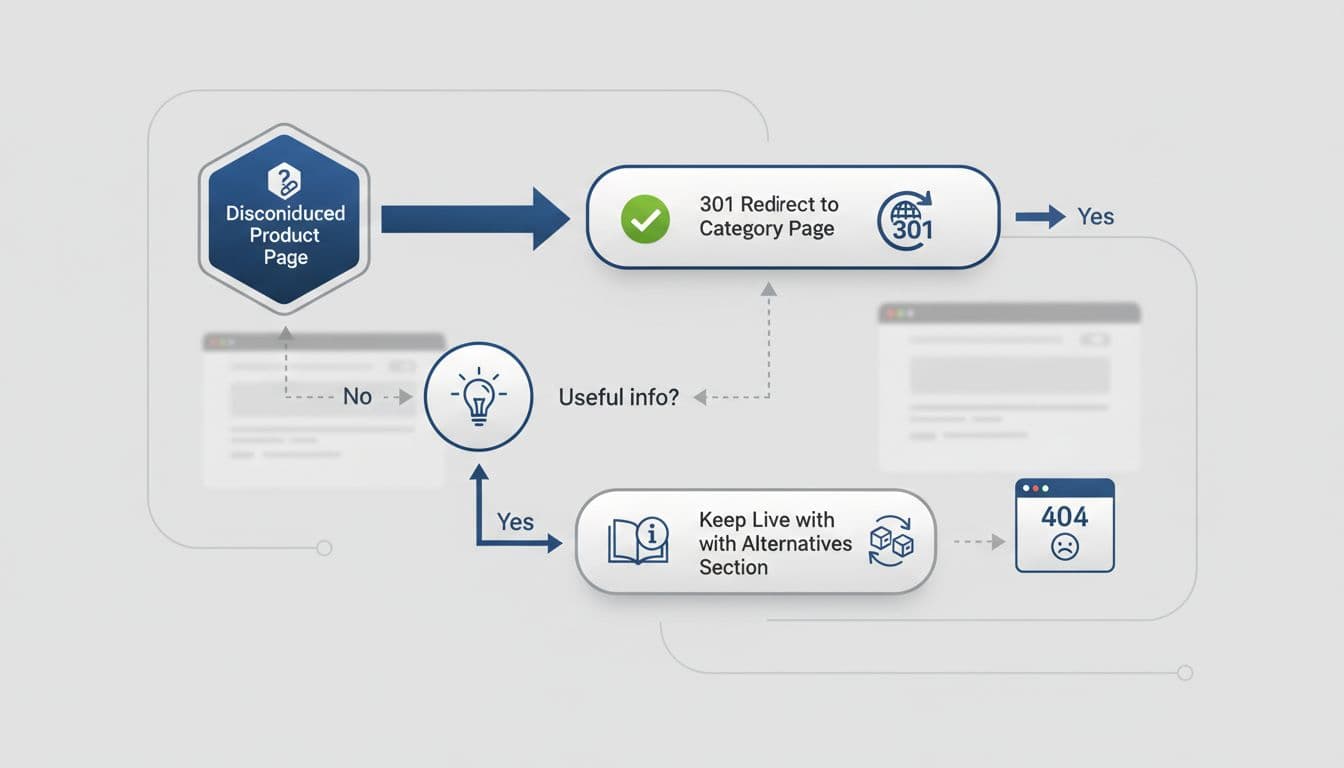
Not every discontinued page deserves the same treatment. A product page with backlinks, rankings, or steady visits is an asset. A page with no traffic and no links is closer to clutter.
Google’s current direction is straightforward. Valuable retired pages should usually keep their equity through a 301 redirect. Pages that still answer search intent can stay live, as long as they clearly state the item is discontinued and point shoppers to the next step. Pages with no lasting value can return a 404. The broader case against default deletion is well explained in Digital Kaizen’s guide to discontinued product SEO.
A 410 has one clear upside: it signals permanent removal more strongly than a 404. Still, that strength is also its weakness. It gives you less room if the SKU returns, if support demand remains, or if the URL still attracts useful searches. For most retailers, 410 is a narrow option for low-value pages you never plan to revive.
Use this quick rule-of-thumb table before touching the URL:
| Page condition | Best move | Why |
|---|---|---|
| Backlinks, rankings, or strong visits | 301 redirect | Preserves authority and guides users to a relevant page |
| Ongoing searches for specs, manuals, or compatibility | Keep page live | Serves intent and can route shoppers to replacements |
| No traffic, no links, no demand | 404 | Removes dead weight without redirect noise |
| Low-value page, permanent removal, zero future use | 410, rarely | Fast removal, but little recovery room |
Most teams should think in three default states: 301, keep live, or 404. A noindex often gives you the worst of both worlds, because the page stays accessible but stops earning search value.
Use traffic, links, and intent to pick the right path
The best decision tree is boring, and that’s good. Start with evidence.
Traffic and backlinks: If the page still earns visits or links, protect it. Redirect to the closest active destination, often the product family or a true successor. Avoid lazy homepage redirects. They feel like a broken promise.
Replacement fit: Only redirect to a new product when it matches the old intent. A close model update works. A random substitute does not. When the fit is broad, send users to the most relevant category or filtered collection instead.
Informational demand: Some retired SKUs still pull searches for manuals, part numbers, fit guides, and compatibility. In 2026, many old-product queries include “replacement,” “manual,” or “compatible with.” Keep those pages live and turn them into strong handoff pages.
Chance of return: Temporary stockouts are not discontinuations. Those pages need a different treatment, including back-in-stock alert UX, not a permanent redirect.
Don’t send every retired SKU to the homepage. That helps no one, and search engines read it as a weak match.
A simple example helps. Say an older espresso machine earned links from review sites. A newer version exists, but many users still search the old model for filter size and replacement parts. In that case, keep the retired page live, add support details, and offer the successor plus compatible accessories. By contrast, a seasonal candle scent with no backlinks and no searches can disappear with a 404.
UX patterns that turn a retired page into a useful page
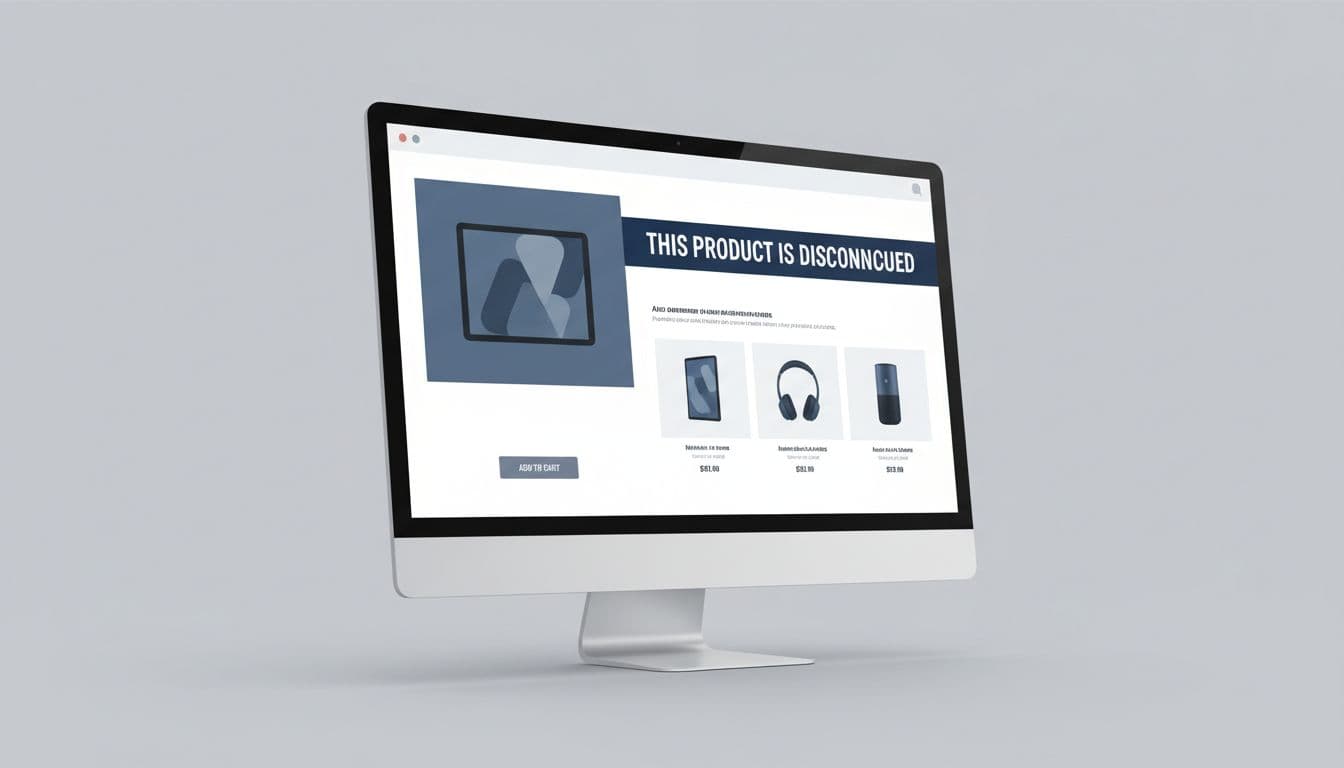
A discontinued product page should never feel like a trap door. It needs to confirm what happened and show the next best action within seconds.
Start with a plain status message near the title. Say the product is discontinued. Keep the buy button visible but disabled when the page is still public, because that keeps the page state honest. Google Shopping expectations have also tightened around clear availability signals and page-feed consistency. This summary of Google’s out-of-stock product page rules captures the shift well.
Then give users a handoff path. The strongest options are a successor model, a small set of related products, compatibility info, manuals, and service content. This is where discontinued product page SEO and UX meet. Search engines understand the page, and shoppers know what to do next.
For example, a retired laptop page can still win by showing: “This model is discontinued,” “See the latest 14-inch line,” “Download the manual,” and “These chargers still fit.” That page serves three intents at once, shopping, support, and comparison.
If the product is only paused, offer alerts or save actions instead of declaring it dead. A page can pair temporary stock messaging with wishlist UX patterns or restock flows. If the product is gone for good, skip false hope. Don’t show “notify me” unless a relaunch is realistic.
Implementation mistakes that still hurt stores in 2026
Many losses come from process, not strategy. Teams pick the right path, then break it in execution.
Audit retired SKUs every month. Check traffic, links, revenue assists, and internal search demand before changing status. Keep redirects to one hop, because chains waste equity and slow the experience. Use one clear discontinued template so users don’t see mixed signals across brands or categories.
When a page stays live, update internal links, search results, and product feeds to match its new state. When it moves to 404 or 410, remove it from sitemaps and stop linking to it from active merchandising modules. Then track organic visits, exits, and clicks on replacement products.
Make each retired URL do one clear job
A retired product page can still earn traffic, answer support questions, and move shoppers to the right item. That’s the real win.
Pick one discontinued SKU this week and decide whether it should hand off, stay useful, or exit cleanly. Small fixes here often protect more search value than a full category rewrite.