

Imagine being able to design website with ai and launch a polished, interactive site in just a few hours. In 2026, AI has completely changed the game, making expert-level web design accessible to everyone, no matter your background or experience.
This guide walks you through the latest AI-driven trends, step-by-step processes, and the most effective tools available. You will see real examples and learn tips to future-proof your online presence.
Discover how to harness AI’s speed and creativity, unlock new opportunities, and turn your vision into a reality with confidence.
The Rise of AI in Website Design: 2026 Landscape
Artificial intelligence has transformed how businesses and individuals design website with ai. In 2026, what once required weeks of manual coding and design expertise now happens in a matter of hours. This section explores the evolution, benefits, technologies, trends, and examples that define the AI-driven website design landscape.

Evolution of AI in Web Design
The journey to design website with ai began with simple drag-and-drop templates. Early tools offered limited customization, but the introduction of machine learning models like GPT-4 and image generators such as DALL-E brought a new era of dynamic, personalized design.
Key milestones include:
- Launch of GPT-5 for content creation
- Generative design algorithms for custom layouts
- Real-time personalization engines
By 2026, over 60 percent of new websites leverage AI-assisted tools, according to industry reports and AI in Web Design Statistics 2025. This rapid adoption demonstrates a clear shift toward intelligent automation in the web development process.
Benefits of AI-Powered Website Design
The benefits when you design website with ai are both immediate and far-reaching. AI reduces design time by up to 80 percent, allowing rapid prototyping and deployment. Cost efficiency is another standout, as businesses spend less on development compared to traditional agencies.
Additional benefits include:
- Accessibility for non-coders
- Personalized layouts and content based on user behavior
- Consistent quality across devices
With AI, small businesses and solo creators can compete with larger organizations, leveling the playing field in digital presence.
Key AI Technologies Shaping Web Design
Several core technologies power the movement to design website with ai in 2026:
- Generative AI: Tools like DALL-E and Midjourney create unique images and graphics.
- Large Language Models: LLMs generate headlines, UX copy, and product descriptions.
- No-code/Low-code Builders: Platforms enable anyone to launch a site without coding.
- Predictive Analytics: AI analyzes user data for continual UX optimization.
These technologies work together to streamline workflows, enhance creativity, and deliver tailored experiences.
Shifting User Expectations and Industry Trends
As more companies design website with ai, user expectations have evolved rapidly. Today’s visitors demand hyper-personalized experiences, mobile-first interfaces, and seamless voice interactions.
Current industry trends include:
- Greater focus on accessibility and inclusivity
- Deep integration with e-commerce, AR/VR, and AI chatbots
- Automated content updates and real-time recommendations
These shifts underscore the need for adaptive, intelligent design practices to remain competitive.
Examples of AI-Designed Sites in 2026
Real-world examples highlight the impact when you design website with ai:
- A retail brand increased conversions by 35 percent through AI-driven layout optimization.
- A creative professional launched a portfolio site in just 2 hours using an AI builder.
- An e-commerce site implemented AI-powered recommendations, boosting user engagement.
These cases prove that AI is not just a trend but a fundamental change in how websites are conceived, built, and optimized.
Step-by-Step: How to Design a Website With AI in 2026
Launching a modern site used to demand weeks of work, coding expertise, and a hefty budget. In 2026, anyone can design website with ai efficiently, regardless of technical background. This step-by-step guide breaks down the process, helping you turn your vision into a live, AI-powered website in just hours.

Step 1: Define Your Goals and Audience
Before you design website with ai, clarify your website’s mission. Are you building an e-commerce store, a personal portfolio, or a blog? Write down your primary objectives.
Next, identify your target audience. AI-driven market research tools in 2026 provide deep insights into demographics, interests, and online behavior. Use these tools to ensure your site’s content and features align with your audience’s needs.
Set measurable KPIs such as monthly visitors, conversion rates, and user engagement. Clear goals help AI tools tailor your website for maximum impact.
Step 2: Choose the Right AI Website Builder
Selecting the best platform is crucial when you design website with ai. Consider features like scalability, design flexibility, integrations, and customer support.
Compare leading AI website builders:
| Platform | Key Feature | Scalability | Support |
|---|---|---|---|
| Wix ADI | Deep learning layouts | High | 24/7 |
| Bookmark | AIDA assistant | Medium | |
| 10Web | WordPress-based | High | Chat |
| Durable | Local business focus | Medium | Chat |
Reviewing comprehensive guides such as the Best AI for Web Design can help you evaluate the strengths and weaknesses of each platform, making your selection process smoother.
Step 3: Generate and Customize Your Site Layout
Once you choose a builder, it is time to design website with ai-driven prompts. Input your brand name, color palette, and desired content structure.
The AI will auto-generate a homepage, navigation, and main pages. Review these suggestions, then use drag-and-drop features or manual adjustments to refine layouts. Most tools let you toggle between AI recommendations and hands-on customization, ensuring your site looks unique.
Step 4: Create and Optimize Content With AI
Content creation is seamless when you design website with ai. Utilize large language models for headlines, product descriptions, and blog posts.
Generate high-quality images for banners or product photos using AI image tools. Need a multilingual site? AI can instantly translate and localize your content, making global reach easy.
Optimize for SEO by letting AI suggest keywords, craft meta descriptions, and structure content for better search visibility.
Step 5: Integrate Advanced Features
To design website with ai that stands out, integrate advanced elements. Add AI-powered chatbots for real-time customer support and recommendation engines to personalize user experiences.
Enhance accessibility with voice search and automated compliance checks. These features help your site engage visitors while ensuring usability for everyone.
Step 6: Test, Launch, and Iterate
Testing is essential as you design website with ai. Use AI-driven usability testing and A/B split tests to identify bottlenecks before launch.
Monitor your site with real-time analytics dashboards powered by AI. Continuously refine layouts, content, and features based on user feedback and AI insights, keeping your website ahead of the curve.
Real-World Example: Building a Portfolio Site in 2026
Imagine an artist aiming to design website with ai for their portfolio. After defining goals and audience, they select an AI builder, input their brand details, and let the AI generate a personalized layout.
With AI-generated copy and images, they launch the site in under three hours. Built-in analytics reveal increased engagement, and continuous AI optimization keeps the site fresh. This approach saves time, reduces costs, and delivers professional results.
AI Tools and Platforms for Website Design: 2026 Review
Exploring the tools that power the movement to design website with ai is essential for anyone aiming to stay ahead in 2026. The landscape is rich with advanced builders, creative engines, and workflow integrations that make professional results achievable for all skill levels.
Overview of Leading AI Website Builders
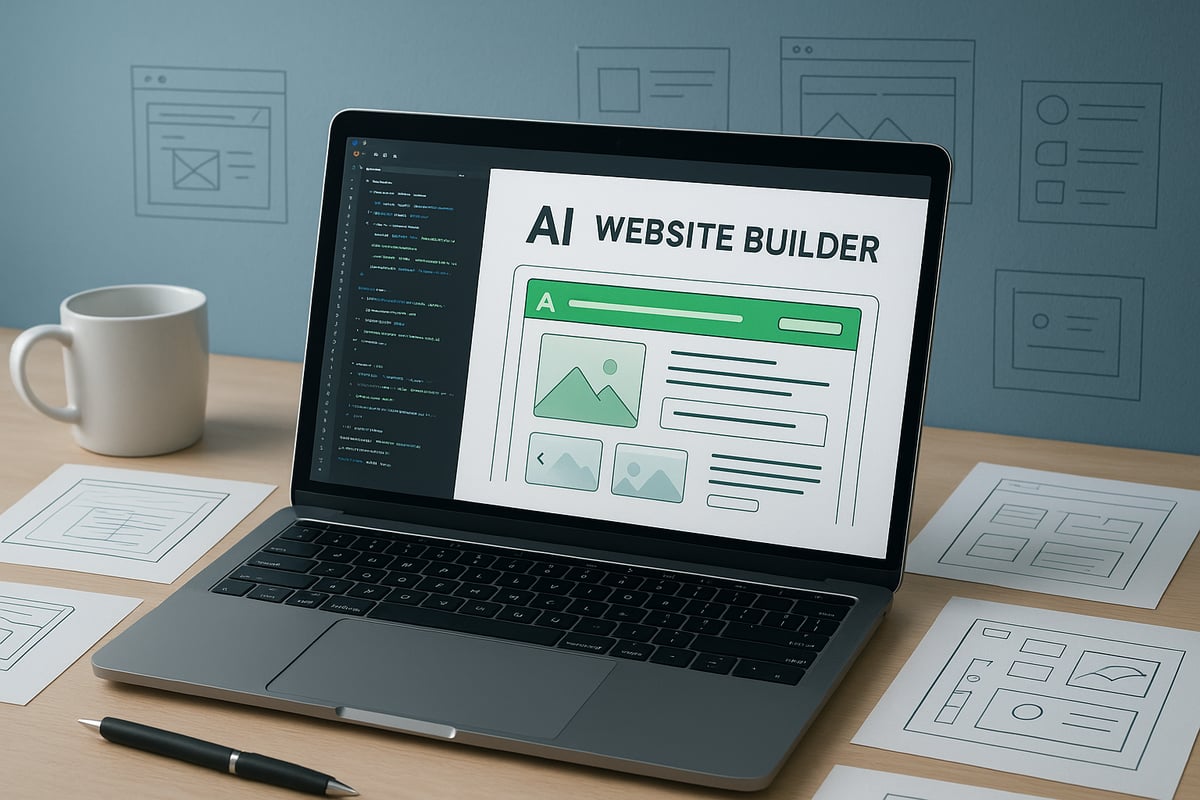
In 2026, several platforms compete to help users design website with ai efficiently. Wix ADI leverages deep learning to create layouts and content tailored to your brand. Bookmark’s AIDA assistant asks a few questions and delivers a ready-to-launch site in minutes. 10Web brings AI automation to WordPress, making it possible to replicate or enhance existing sites. Durable specializes in small business websites, offering quick setup and simple management. Recent innovations, such as Wix’s Harmony AI Website Builder, combine automation with creative flexibility, as described in Wix Launches Harmony AI Website Builder. With these tools, building a sophisticated online presence is faster and more accessible than ever.
Specialized AI Design Tools
Beyond core builders, a rich ecosystem of specialized tools helps design website with ai even further. Midjourney and DALL-E generate unique images and graphics, providing custom visuals for any site. Jasper and Copy.ai automate content creation, from product descriptions to blog posts, using natural language processing. Uizard and Figma AI introduce smart prototyping and wireframing, streamlining the design process for teams and individuals alike. These solutions automate time-consuming tasks, allowing users to focus on strategy and creativity.
Comparison Table: Features, Pricing, Pros & Cons
Choosing the right platform to design website with ai requires careful comparison. Below is a summary of leading options:
| Platform | Key Feature | Pricing | Pros | Cons |
|---|---|---|---|---|
| Wix ADI | Deep learning design | Mid-tier | Fast, customizable | Limited on free plan |
| Bookmark | AIDA assistant | Affordable | Intuitive, quick | Less advanced options |
| 10Web | WordPress AI | Scalable | Flexible, robust | WP experience needed |
| Durable | SMB focus | Budget | Fast setup, simple | Fewer integrations |
Each platform offers unique benefits, making it important to align features with your project needs.
Integrating AI Tools Into Existing Workflows
Seamless integration is vital when you design website with ai, especially for businesses with established systems. Most AI platforms now offer APIs for connecting with e-commerce, CRM, and marketing tools. Automated updates, such as product photo replacements or content refreshes, can be scheduled or triggered by user activity. This reduces manual effort and ensures your website remains current. Teams can also automate maintenance, freeing up resources for strategic growth.
Security and Privacy Considerations
Trust and compliance are top priorities as you design website with ai. Leading platforms implement strict data handling policies, supporting GDPR and other global privacy standards. User data is encrypted, and access is tightly controlled. It is important to review the privacy documentation of each tool and follow best practices for protecting customer information. As AI-driven design evolves, ongoing vigilance ensures your site remains secure and compliant.
Best Practices for AI-Driven Website Design
Adopting AI in web design can unlock speed, personalization, and efficiency. However, to truly excel when you design website with ai, a strategic approach is essential. Explore these best practices to ensure your AI-powered site stands out, serves every user, and builds lasting trust.

Ensuring Brand Consistency
When you design website with ai, maintaining a unified brand identity is crucial. Start by training your AI tools with comprehensive brand guidelines, including logos, color palettes, and tone of voice. Upload style guides and sample content so the AI can mirror your visual and messaging standards.
- Use AI builders that allow for custom brand kits.
- Regularly review AI-generated layouts and content for alignment.
- Provide feedback to refine AI outputs over time.
This proactive approach prevents off-brand results and ensures customers recognize your brand, no matter how automated your process becomes.
Balancing Automation and Human Creativity
AI offers impressive efficiency, but the best results occur when you blend automation with human insight. As you design website with ai, know when to override AI suggestions to preserve originality. Encourage designers to use AI for initial drafts, then personalize layouts, imagery, and copy.
- Schedule collaborative design reviews.
- Use AI for repetitive tasks, reserving creative decisions for people.
- Avoid generic results by injecting brand storytelling and custom visuals.
Collaborative workflows help you harness AI speed without sacrificing the human touch that makes your site memorable.
Accessibility and Inclusivity by Design
An inclusive site reaches more users and meets modern standards. When you design website with ai, choose platforms with built-in accessibility checks. These tools can automatically flag issues with color contrast, alt text, and navigation.
- Prioritize keyboard and screen reader compatibility.
- Select AI tools that support multi-language and assistive features.
- Test your site with users of varying abilities.
Statistics show that AI-driven accessibility compliance has risen 30 percent in recent years, making it easier than ever to create websites everyone can use.
Continuous Optimization With AI
AI unlocks ongoing improvements long after launch. As you design website with ai, leverage analytics dashboards and heatmaps to monitor user behavior. Let AI suggest changes to layouts, calls-to-action, or content based on real-time data.
- Set up automated A/B tests for headlines or images.
- Review AI-driven UX insights regularly.
- Iterate quickly to boost engagement and conversions.
For more on enhancing user experience through AI, explore Web Design UX Fundamentals. These practices turn your website into a living asset that adapts to user needs.
Ethical Use of AI in Web Design
Trust is foundational in digital experiences. When you design website with ai, prioritize transparency and fairness in every stage. Ensure your AI tools avoid biased outputs by training them on diverse data sets.
- Disclose AI-generated content where relevant.
- Comply with privacy laws and user consent requirements.
- Stay informed about evolving AI regulations.
By following ethical guidelines, you protect your reputation and foster user confidence in your AI-powered website.
AI Website Design for E-Commerce: Strategies & Success Stories
The ability to design website with ai is transforming e-commerce in 2026. Online retailers can now build, launch, and optimize stores at unprecedented speed, harnessing AI-driven tools to stay ahead of the competition.
Why E-Commerce Sites Benefit Most From AI Design
E-commerce businesses are reaping the rewards of adopting design website with ai strategies. The integration of AI into website creation delivers rapid prototyping, personalized shopping experiences, and automated content updates.
AI enables dynamic product recommendations and tailored landing pages for each visitor. With automated A/B testing, businesses can identify what resonates with customers, improving conversion rates. AI-powered chatbots handle customer inquiries, reducing support costs while enhancing user satisfaction.
For online retailers, AI means less time spent on technical details and more focus on growth. This shift empowers even small brands to compete with industry leaders by leveraging the same advanced design website with ai capabilities.
Case Studies: E-Commerce Success With AI
Real-world examples highlight the impact of design website with ai in e-commerce. A fashion retailer implemented AI-generated layouts, resulting in a 40 percent increase in mobile conversions. Another small business launched a niche store using AI builders, eliminating the need for coding expertise and going live in just one day.
A global brand utilized multilingual AI content generation, rolling out localized sites in multiple languages within days. These companies saw measurable improvements in engagement, sales, and operational efficiency by trusting AI to design website with ai solutions tailored for their audiences.
For more inspiration, explore E-Commerce Design Best Practices to see how industry leaders leverage AI for superior results.
Integrating AI With E-Commerce Platforms
Integrating AI tools into major e-commerce platforms is now seamless. Shopify, Magento, and WooCommerce offer plugins that support design website with ai workflows, from real-time inventory updates to predictive pricing engines.
AI-powered product photography tools generate high quality images, while AR previews let customers visualize products in their space. Personalization engines suggest products based on browsing behavior, increasing basket size and customer loyalty.
These integrations allow brands to scale quickly, maintain consistent branding, and automate repetitive tasks. The result is a more agile approach to design website with ai, tailored to the fast pace of online retail.
Overcoming Common Challenges
While the benefits are clear, retailers face challenges when they design website with ai for e-commerce. Data privacy is a top concern, especially with personalized recommendations. Businesses must ensure compliance with evolving regulations and transparent data practices.
Avoiding over-automation is essential to maintain a unique brand identity. Human oversight and creative input remain vital in AI-driven workflows. Additionally, monitoring AI tool costs and calculating ROI ensures long-term sustainability.
By understanding these challenges and adopting proven strategies, companies can design website with ai that delivers both innovation and trust.