

A larger pack can look like better value before shoppers notice how much it contains, making value comparison difficult. Consistent labels give shoppers a common basis for comparing different sizes, brands, and purchase options.
For your store, that clarity depends on accurate quantities and prices that update together. A useful label shows the cost per standard measure without hiding the amount customers must pay.
Start with the comparison your shoppers need, then build the calculation and display around it.
What unit price labels tell shoppers
Unit pricing expresses a product’s cost against a standard quantity, such as one ounce, one liter, or 100 grams. This price per unit removes package size as an obstacle to comparison.
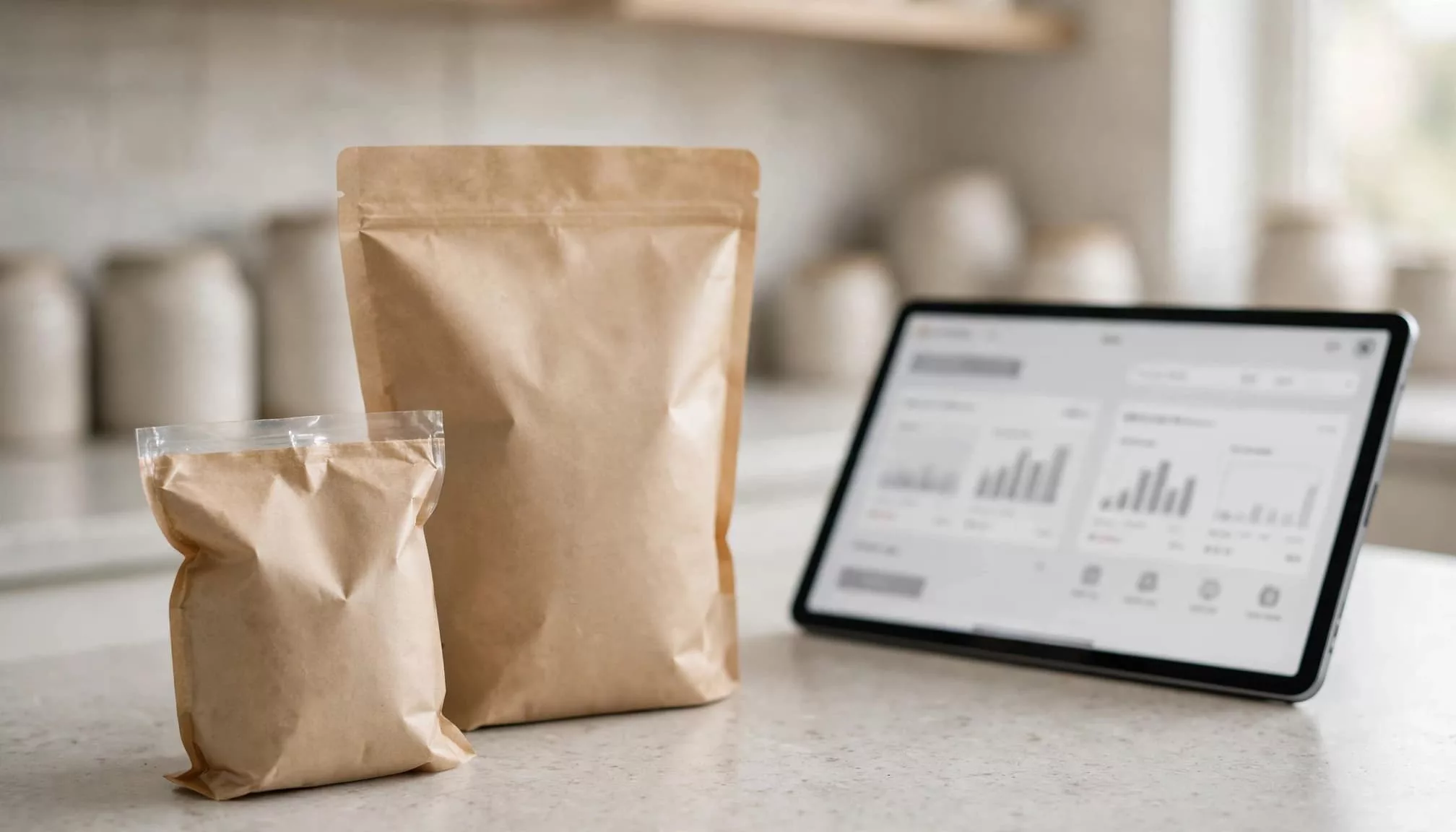
Package price and comparison price have different jobs
The package price tells customers what they’ll pay for the selected item. The unit price shows how much that item costs relative to a fixed quantity.
Keep both visible. A favorable price per ounce doesn’t reduce the upfront cost of buying a bulk pack. Customers still need the total price to decide whether the purchase fits their budget.
Likewise, unit pricing doesn’t include every expense of an order. Shipping and other applicable charges need their own clear presentation.
Comparable measures make the label useful
NIST’s unit pricing best-practice guidance recommends using the same measure wherever comparable products are sold.
Therefore, don’t show one cereal per ounce and another per pound in the same comparison. Both calculations may be correct, but shoppers must do extra arithmetic.
Rules vary by market, so choose consistent category measures that meet the applicable requirements.
Calculate unit prices from the actual sellable quantity
Following the comparison approach in NIST’s Unit Pricing Guide, calculate the cost for a standard quantity rather than the whole package. Unit pricing makes it easier to compare products in different package sizes.
Divide price by quantity, then scale the result
The basic unit pricing calculation is:
Unit price = package price / package quantity
For weight-based goods such as flour or cereal, divide the package price by its net weight in ounces to calculate the price per ounce. Keep the unit of measure consistent across products, whether comparing price per ounce or price per 100 grams.
For a price per 100 grams, divide the package price by its net weight in grams, then multiply by 100. For a price per kilogram, divide by the net weight in kilograms.
Use net contents, not shipping weight. A bottle’s packaging shouldn’t become part of the liquid quantity used for comparison.
Calculate with full precision, then round the displayed result according to your market’s requirements. Otherwise, repeated rounding can create discrepancies between surfaces.
Multipacks need the combined contents
A Coca-Cola 12-pack containing twelve 12 fl oz cans holds 144 fl oz. Divide its current selling price by 144 to calculate the price per fluid ounce.
A 10-pack of 7.5 fl oz Coca-Cola mini cans contains 75 fl oz. Comparing both packs per fluid ounce makes their different can sizes irrelevant to the calculation.
These measures serve different purposes:
| Comparison basis | What the shopper compares |
|---|---|
| Price per fluid ounce | Cost relative to beverage volume |
| Price per can | Cost of each individual container |
| Pack price | Upfront cost of the entire purchase |
For volume comparisons, use the combined volume rather than simply counting containers. Also, keep ounces and fluid ounces distinct: one measures weight, the other volume.
Put unit prices where shoppers make choices
Customers shouldn’t need to open every product page to compare value. Use consistent unit pricing by showing unit price labels on collection pages, search results, and product pages wherever comparable packaged products appear. Keep the labels consistent between category listings and product pages to support a clear value comparison.
Place the label near the selling price and package size. For example, a shopper comparing coffee should see its net weight in the product information, without searching through a description or specification tab.
Keep retail price labels clear, with the package price visually prominent. Don’t push the comparison price into faint text or hide it behind a tooltip. Your product listing card design should leave room for both prices without unstable line wrapping.
On product pages, attach the calculation to the selected variant. Choosing a larger bag should update the price, quantity, and comparison figure together.
A label calculated for the default variant becomes misleading as soon as the shopper selects a different size.
Use real text rather than embedding pricing information in an image. That supports resizing, localization, and assistive technology.
Finally, check mobile layouts at normal zoom. A label that technically exists but becomes unreadable on a narrow card won’t help customers compare. Avoid abbreviations that save space at the expense of understanding the measure.
Handle discounts and subscriptions without mixing offers
A comparison price must describe the offer beside it. Promotions, subscriptions, and quantity discounts can change that offer during the shopping journey.
Separate one-time and recurring prices
Each purchase option needs its own complete price presentation. A one-time purchase at $32 and a subscription at $27 every 30 days describe different commitments.
Calculate each unit price from the relevant per-order price and quantity. Also show the recurring frequency near the subscription option.
If the first shipment costs less than later shipments, distinguish the introductory unit price from the ongoing one. A lower first-order number shouldn’t imply permanent savings.
When shoppers switch purchase options, update the comparison price immediately. Keep keyboard focus stable and make the changed price accessible to screen readers.
Recalculate when discount eligibility changes
Use an automatic product discount in the calculation when it applies to the selected offer. However, don’t present a coupon-dependent price as available to everyone.
Quantity breaks also need conditions beside the claim. Show which purchase quantity qualifies for the lower unit price, rather than attaching that number to a single pack.
If eligibility changes after login, a quantity adjustment, or a delivery-location change, recalculate the price and explain the change.
For mixed-product promotions, avoid assigning a discounted unit price to one item unless your pricing system can support that allocation. The displayed saving should match the actual cart result.
Check unit-pricing requirements in each market
Unit pricing isn’t governed by one worldwide rule. Your obligations can depend on jurisdiction, product category, sales channel, and retailer coverage.
U.S. model guidance isn’t a nationwide mandate
NIST’s overview of uniform unit pricing explains that the Uniform Unit Pricing Regulation applies when stores voluntarily provide unit pricing information. The model itself doesn’t impose mandatory adoption.
However, individual jurisdictions can have their own requirements. Don’t interpret a voluntary model as permission to ignore an applicable state rule.
Before launch, check with the relevant weights and measures authority. Confirm covered products, permitted comparison measures, rounding rules, display requirements, and any exemptions. Treat that review as market-specific work, not a single global approval.
Australia includes online grocery retailers
The ACCC says Australia’s Unit Pricing Code is mandatory for many retail stores, including grocery store operators and online businesses.
Retailers should check whether their business falls within the Code and which products it covers. Confirm how display requirements apply to price tags and online listings. Selling online doesn’t automatically remove unit-pricing responsibilities.
Keep legal review separate from UX recommendations. Readable text and consistent placement are sensible design choices, but this practical display guidance isn’t a complete legal checklist.
For multi-country stores, maintain separate validation samples for each market and language. Weights and measures rules can vary, and currency conversion alone doesn’t settle local labeling requirements.
Build reliable unit pricing into your catalog
A polished label can’t repair an incorrect quantity. Reliable unit pricing starts with structured data for each sellable SKU or variant.
At minimum, your calculation needs the selling price, net quantity, measurement unit, and chosen comparison basis. Multipacks also need enough information to determine their total contents.

Keep these values separate from marketing titles. Parsing quantities out of titles such as “family size” or “value pack” creates unnecessary uncertainty.
Assign ownership for quantity updates and category measurement rules. If a supplier reduces a 1 kg pack to 900 g, update the SKU’s net quantity and recalculate its unit price, even if the selling price stays the same.
Packaging downsizing raises the comparison figure when the total price remains constant. That makes unit pricing useful for spotting value changes familiar packaging can obscure.
Use the same controlled quantity fields in your product specification tables and pricing calculations, so product information stays consistent. Apply the relevant weights and measures rules to quantity data.
Finally, validate the live storefront. Theme scripts, promotion apps, currency converters, and variant selectors can change what customers see after data leaves the catalog. A correct source record alone doesn’t prove the displayed label is correct.
Test accuracy across the shopping journey
Test a complete purchase path rather than checking one screenshot. Begin in search or a collection grid, select a variant, change quantities, and continue through cart and checkout.
Confirm that the package price, selected contents, and unit pricing describe the same item at every step. Repeat the test with subscriptions, active promotions, and regional pricing where relevant.
Also test what happens when quantity data is missing. Flag the record for correction instead of displaying zero, reusing another variant’s quantity, or guessing from a product image.
Include keyboard navigation, screen-reader output, and mobile zoom in your review. Check consumer awareness by asking shoppers to identify the relevant quantity and compare products. If prices update dynamically, assistive technology should receive the change without forcing shoppers to restart their selection.
For omnichannel retailers, compare the same SKU’s website information with retail shelf labels used in retail stores. Web and in-store displays may have different price contexts, but package quantities and measurement definitions should remain comparable and follow local weights and measures requirements.
Measure data quality alongside commercial outcomes. Useful checks include missing-label rates, calculation mismatches, stale promotional prices, and customer questions about package sizes. A rise in add-to-cart rate doesn’t excuse a rise in pricing confusion or recurring-order cancellations.
Key Takeaways
- Show the package price and unit price together, using a consistent measure across comparable products.
- Calculate from the selected SKU’s actual contents and the offer the customer can buy.
- Update labels when variants, promotions, subscriptions, or package quantities change.
- Review local requirements and test the rendered storefront, rather than trusting source data alone.
Frequently Asked Questions
How do you calculate a unit price?
Divide the selling price by the product’s net quantity, then scale the result to the chosen comparison measure. For example, divide a package price by its net weight to find the price per ounce.
Should a unit price replace the package price?
No. Show both prices together: the package price tells shoppers what they’ll pay, while the unit price supports comparisons across different sizes.
How do you calculate unit prices for multipacks?
Use the combined contents of all items in the pack, not just the quantity of one item. For example, twelve 12 fl oz cans contain 144 fl oz in total.
Should discounts and subscriptions affect the unit price?
Calculate the unit price from the offer shown beside it, and make eligibility or recurring terms clear. Update the comparison when shoppers change purchase options or discount eligibility.
Clear Comparisons Start With Consistent Data
Unit pricing helps shoppers judge value when package sizes and purchase options differ. Its usefulness depends on accurate quantities and prices that describe the same selected offer.
Make the comparison visible before customers commit. Then keep it correct through variant selection, promotions, and checkout.
A larger package should earn its value claim through a clear comparison, not leave shoppers to guess.