


Going global can hurt rankings faster than it grows revenue. When every market page looks the same except for currency, Google often picks one version and ignores the rest.
That is why Shopify Markets SEO in 2026 is mostly about clean signals, not store expansion alone. The checklist below puts the high-impact fixes first, then shows which extras can wait. Start with structure, because every later change depends on it.
Set up market structure before you touch content
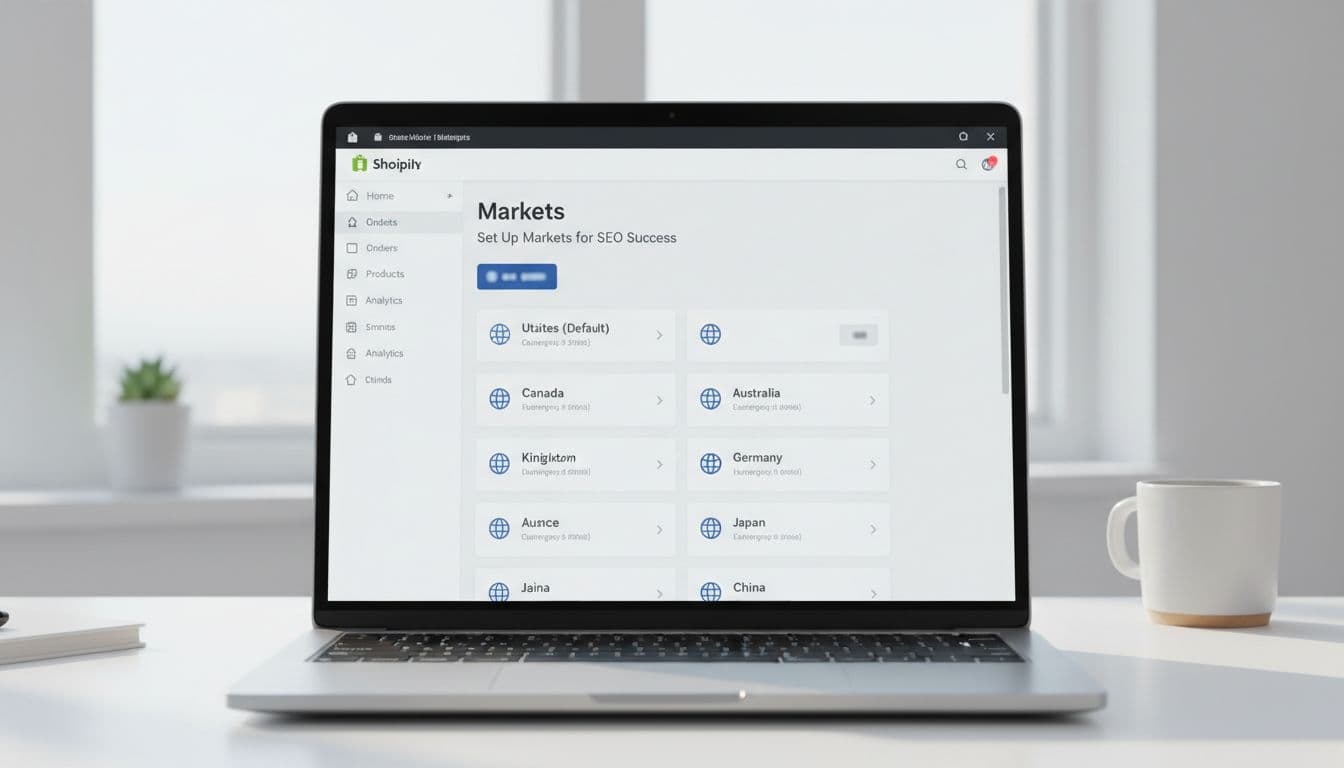
Your store needs one clear version for each language and country pair. In most Shopify builds, subfolders are the cleanest choice, such as /en-us/, /en-gb/, and /fr-fr/. They keep authority on one domain, and they are easier to audit.
If your setup is older or inconsistent, revisit your hreflang tags and regional URL structures before rewriting a single page. Search engines need matching market signals, stable URLs, and internal links that point to the right version.
Run these checks in order:
- Pick one market URL pattern and keep it stable. Do not mix country-only folders with language-country folders unless you have a clear reason.
- Validate hreflang across equivalent pages. Each version should reference itself and all alternate versions. Missing returns still break international targeting in 2026.
- Review canonicals on product and collection pages. Product pages should canonically point to the product URL for that same market, not a default-country page or a collection path.
- Add separate Search Console properties for your main market folders. You need market-level query and indexing data, not one blended report.
- Reduce forced geo-redirects. Let users and crawlers reach alternate versions without being trapped in the default market.
A common mistake is assuming hreflang will fix duplicate market pages by itself. It will not. This article on why Shopify Markets SEO gets tricky makes the point well: if two pages are almost identical, Google may ignore your alternates.
Localize pages for buyers, not translators
Translation gets you a readable page. Localization gives that page a reason to rank. Buyers in Canada, Germany, and Australia often use different product terms, sizing language, shipping expectations, and commercial wording.
Start with your money pages first. That means top collections, best-selling products, and core support pages. For many stores, 20 strong localized pages beat 500 machine-translated ones.
If a UK page and an Australian page differ only by currency, search engines have little reason to rank both.
Use this content checklist on each priority market:
- Rewrite titles, H1s, and meta descriptions with local search terms, not literal translations.
- Add unique collection copy. Even 150 to 300 words can help a market page stand on its own.
- Localize sizes, units, tax language, shipping times, and returns information.
- Match breadcrumbs, filters, alt text, and internal anchors to the market language.
- Keep category names consistent across markets unless local search behavior clearly differs.
Shopify’s own 2026 guidance on SEO for niche markets supports the same principle: local intent beats broad, generic copy. For teams scaling content across countries, adapting product pages to local search intent is a better workflow than translating line by line.
Also check trust signals. Local phone formats, payment language, return terms, and author or brand credibility cues matter more now because AI-generated summaries surface pages that look complete and reliable. Thin translated pages rarely make that cut.
Clean up technical SEO, then decide what can wait
Once structure and localization are in place, tighten the parts that control crawling and page quality. Shopify’s April 2026 improvements to storefront filter URLs are helpful, but faceted navigation can still create index bloat if every filter path is crawlable.
This quick split helps when time is tight:
| Fix now | Optional later |
|---|---|
| Control filtered and parameter URLs | Build market-specific blog calendars |
| Add product and breadcrumb schema per market | Customize themes by market |
| Keep internal links inside the right market folder | Run local link-building campaigns |
| Improve Core Web Vitals on market templates | Create separate editorial hubs by country |
The “fix now” column protects ranking signals. Audit internal links from blogs, collections, navigation, and related products. A French blog post should not keep sending users to the US product URL. Add structured data that matches the visible page, including price, currency, availability, and language.
Then review crawl depth. Important products should be reachable in three clicks or less. If filtered pages create endless combinations, noindex or limit the ones that add no search value. This 2026 Shopify SEO playbook is a helpful reference for filter handling and schema checks.
Optional work still matters, but it pays off later. Market-specific theme customization can improve local relevance, and Shopify Markets geolocation and pricing can reduce bounce when visitors see the right currency right away. Those gains are real, but they come after indexation, canonicals, and localized content are under control.
Final thoughts
The strongest 2026 move is simple: launch fewer markets, but launch them fully. Mixed signals across URLs, canonicals, hreflang, and copy still sink international visibility faster than almost anything else.
Clean market folders, valid alternate tags, useful local copy, and tight crawl control give each storefront a fair shot. In Shopify Markets SEO, the stores that win are usually not the ones with the most regions. They are the ones with the clearest versions.