

The wrong order channel creates unnecessary work before the order ever ships. For B2B suppliers, understanding the differences in punchout vs edi and portal orders changes how data enters your system, how much your team touches each order, and how much control you keep over the buying experience. By optimizing these channels, you can strengthen your supply chain and embrace automation to reduce the reliance on manual tasks.
That makes the choice bigger than a simple tech decision. It affects onboarding, catalog control, order accuracy, and the amount of rework your operations team has to clean up later.
Key Takeaways
- PunchOut fits buyers who want to shop your punchout catalog directly inside their procurement system.
- EDI works best for high-volume accounts that send predictable, structured documents.
- These digital ordering channels drive significant automation for high-volume accounts, reducing manual errors and processing time.
- Supplier portals are the fastest to launch, but they often need more manual support.
- The right model depends on account size, order volume, and buyer maturity.
- Many suppliers need a mix, not a single channel for every customer.
What Each Order Channel Means for Suppliers
PunchOut connects a buyer’s eprocurement platform directly to your punchout catalog. The buyer starts in a system like SAP Ariba, Coupa, or Oracle Procurement, then shops your live offerings without leaving their internal purchase approval software. The cart eventually returns to the buyer’s system for final authorization and order creation. Most of these setups rely on standardized communication protocols like cXML or OCI, which requires your product data, pricing, and customer-specific rules to remain accurate and synchronized.
For a plain-language overview of the catalog side, see how PunchOut catalog integration works.
Electronic data interchange, or EDI, works differently. Instead of a person manually shopping, systems exchange structured documents to automate procurement. In B2B buying, this typically involves the automated exchange of a purchase order, an order acknowledgment, an advanced shipment notification, and an invoice. The buying experience is almost invisible, which is the primary benefit. Orders move rapidly, provided that the data maps, message formats, and trading partner rules remain stable.
If you want a compact comparison of the two, this EDI and PunchOut differences page is a useful reference.
Portal orders are the simplest model to explain. Buyers log into your online catalog, search for products, add items to a cart, and submit the order directly. You maintain full control over the branding, the inventory display, and the specific account rules. This makes portal orders attractive for smaller customers, occasional buyers, and long-tail accounts that do not justify a deep integration project. By focusing on a seamless shopping experience for repeat customers, features like B2B saved cart design principles and optimizing quick order forms for B2B can make portal buying much more efficient.
PunchOut vs EDI vs Portal Orders at a Glance
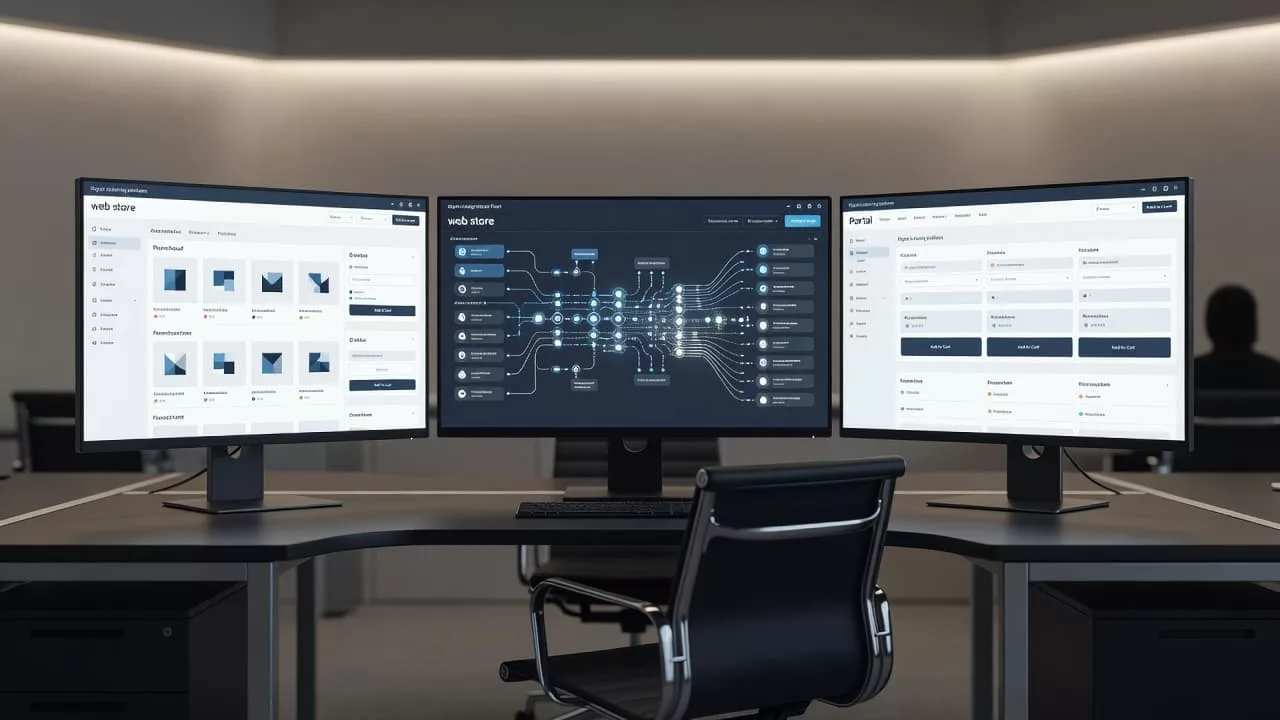
| Channel | How orders arrive | Setup effort | Order accuracy | Catalog control | Best fit |
|---|---|---|---|---|---|
| PunchOut | Buyer shops your catalog inside procurement software, then sends the cart back for approval | Medium to high | High, based on real-time data integration | Strong, with central catalog control | Strategic accounts with formal purchasing |
| EDI | Systems exchange structured order documents directly | High upfront, lower per-order effort | Very high, once mappings are stable | Tight, but browsing is limited | High-volume trading partners |
| Supplier portal | Buyer orders directly on your website or portal | Low to medium | Depends on form quality and validation | Full control inside your own site | Smaller accounts and occasional buyers |
The table makes one thing clear. The cheapest channel to launch is often the one with the highest ongoing support load.
The quiet cost in B2B order channels is manual data entry, not the initial setup.
Where Each Model Hits Your Operations
Onboarding and integration effort
A punchout catalog usually takes the most coordination with the buyer’s team. You need to configure your punchout catalog to support cxml or other data standards that sync directly with the buyer’s procurement software. This setup involves authentication, testing, and agreement on account pricing. That work pays off when the account is valuable and orders repeat often.
EDI asks for a different kind of effort. Instead of catalog work, you spend time on message mapping and document testing. A buyer may ask for a purchase order, an acknowledgment, an advanced shipment notification, and an invoice. By connecting these documents directly to your erp system, you facilitate true b2b automation where order flow runs with very little human touch.
Portals are faster to launch because you own the environment. Still, they need account setup, permission rules, and clean product data. If buyers also place repeat orders, portals work better when they support stored lists, reorder flows, and fast entry methods. Using an integration solution can help you manage these various channels more effectively as you scale.
Catalog control and order accuracy
PunchOut gives you strong control over what buyers see, because your catalog remains the source of truth. By utilizing real-time data, you ensure that product changes, contract pricing, and availability are always accurate. The tradeoff is that your catalog quality has to be excellent. Weak search, bad attributes, or stale information will show up fast.
EDI is less forgiving in another way. It works best when the trading relationship is stable and the product set does not change every week. Once order structure and item codes are locked in, accuracy can be very high. When they are not, errors spread through every downstream document.
Portal orders give you the most direct control over content and presentation. They serve as an excellent tool for managing negotiated pricing, as you can shape search, merchandising, and ordering logic in one place. That said, the more manual the buyer journey becomes, the more likely your team is to handle corrections, substitutions, or price questions after submission.
Customer experience and internal efficiency
Buyer experience matters because it changes how often customers come back. Large procurement teams prefer PunchOut when they want familiar approval flows and account controls. High-volume buyers prefer EDI when speed and consistency matter more than browsing. Smaller buyers often stick with portals because they need a direct path that does not require special procurement software.
Internal efficiency is the other side of the same coin. Each manual order review adds time to customer service, finance, and fulfillment. Each data mismatch creates a delay. Over time, the channel that looks easiest for the buyer may cost the supplier more in rekeying, exception handling, and support.
Choosing the Right Mix for Each Account
A good channel strategy starts with account segmentation, not with a favorite technology. Match the channel to the buyer’s size, ordering pattern, and technical setup.
- Start with order volume and repeat rate. Large accounts that place frequent, predictable orders are strong candidates for a punchout catalog or EDI. By streamlining the purchase order process, you drive significant efficiency. Smaller buyers with occasional orders usually do better in a portal.
- Check the buyer’s procurement maturity. If the customer already uses Ariba, Coupa, or a similar eprocurement stack, a punchout solution fits naturally to support their internal spend management goals. If they want system-to-system automation and stable documents, EDI makes more sense. If they want low friction and no integration work, a portal is easier.
- Match the channel to your own operating capacity. If your team can manage trading-partner testing and catalog governance, punchout can scale well and drive long-term cost savings. If you are looking to modernize your supply chain, API integration offers a flexible alternative for connecting systems. If you already have EDI capability, high-volume accounts become cheaper to serve. If your catalog team is small, a portal can still work, as long as the automation of the order flow remains simple.
A blended model is common for a reason. Many suppliers use portal orders for the long tail, punchout for strategic accounts, and EDI for mature, high-volume partners. That mix keeps customer service practical without forcing every buyer into the same process.
Frequently Asked Questions
Which order channel should I prioritize for my largest customers?
For your most strategic, high-volume accounts, PunchOut and EDI are generally the preferred choices. PunchOut works best when the buyer requires deep integration with their internal procurement software, while EDI is the gold standard for automating high-volume, structured document exchanges.
Are portal orders less professional than PunchOut or EDI?
Not at all; portal orders are a highly efficient solution for smaller or infrequent buyers who do not need complex system-to-system integration. They offer the highest level of control over your branding and catalog presentation, making them a cornerstone of a well-balanced B2B strategy.
Can I use more than one order channel at the same time?
Yes, most successful B2B suppliers utilize a mix of channels to match the specific needs of different customer segments. You might support high-volume partners via EDI, strategic buyers via PunchOut, and smaller, transactional accounts through a standard web portal.
What is the biggest hidden cost when choosing an order channel?
The most significant hidden cost is manual data entry and exception handling, rather than the initial setup of the technology itself. Choosing a channel that doesn’t fit your customer’s maturity level can result in high ongoing operational costs for your support and fulfillment teams.
Conclusion
Selecting the right strategy for your business requires navigating the nuances of punchout vs edi and portal orders. While each solution addresses the same goal of streamlining procurement, they shift the workload to different areas of your operations. A portal typically functions as your primary B2B ecommerce platform, offering high levels of control with minimal setup requirements. Conversely, implementing electronic data interchange or PunchOut technology is essential for businesses looking to eliminate manual data entry at scale.
The most effective approach is the one that aligns with your specific customers and internal team capabilities. When you successfully balance your order volume, buyer maturity, and internal capacity, the decision between these channels becomes much clearer. By choosing the right mix, your operations will benefit from fewer exceptions and significantly cleaner order processing.