

Imagine your store dominating Google’s top results in 2026, attracting a steady stream of highly targeted shoppers every day. In such a competitive landscape, mastering on page seo ecommerce is essential for standing out, increasing visibility, and driving more sales. This guide unveils the latest on page seo ecommerce strategies you need to boost your rankings and outperform competitors. You will discover actionable tactics, real-world examples, and expert tips covering everything from keyword research and technical essentials to AI-powered enhancements. Apply these proven methods to your ecommerce site and watch your search performance reach new heights.
Understanding On-Page SEO for Ecommerce in 2026
On page seo ecommerce is the process of optimizing all website elements you directly control, making your online store more visible and attractive to both users and search engines. In today’s landscape, the difference between a thriving ecommerce site and a struggling one often comes down to how well you master these on-page tactics.

The Role of On-Page SEO in Ecommerce Success
On page seo ecommerce is more than just placing keywords on your site. It involves shaping every product and category page to be relevant, unique, and valuable. Unlike off-page SEO, which depends on factors like backlinks and social signals, on page seo ecommerce puts you in control of your store’s destiny.
| On-Page SEO | Off-Page SEO |
|---|---|
| Content quality, meta tags, internal links | Backlinks, social media, external signals |
Focusing on on page seo ecommerce directly affects user experience. When shoppers find clear, helpful information, bounce rates drop and conversion rates rise. Google’s algorithms now prioritize pages with high “Information Gain,” meaning your content needs to offer unique value and clear entity signals. For example, a product page with original descriptions and robust structured data often outperforms a generic manufacturer listing.
Did you know that 68% of online experiences start with a search engine? This makes on page seo ecommerce critical for product discovery and organic growth. When you deliver fresh content and user-focused details, you stand out from countless competitors and build lasting visibility.
On page seo ecommerce is about creating an experience where both users and search engines find what they need quickly. It’s not just about keywords, but about designing each page for maximum impact in a rapidly evolving digital marketplace.
Core Elements of On-Page SEO for Ecommerce
To succeed with on page seo ecommerce, you need to master several core elements. First, create unique, high-quality content for every product. Avoid duplicate descriptions and answer real buyer questions to build trust and authority.
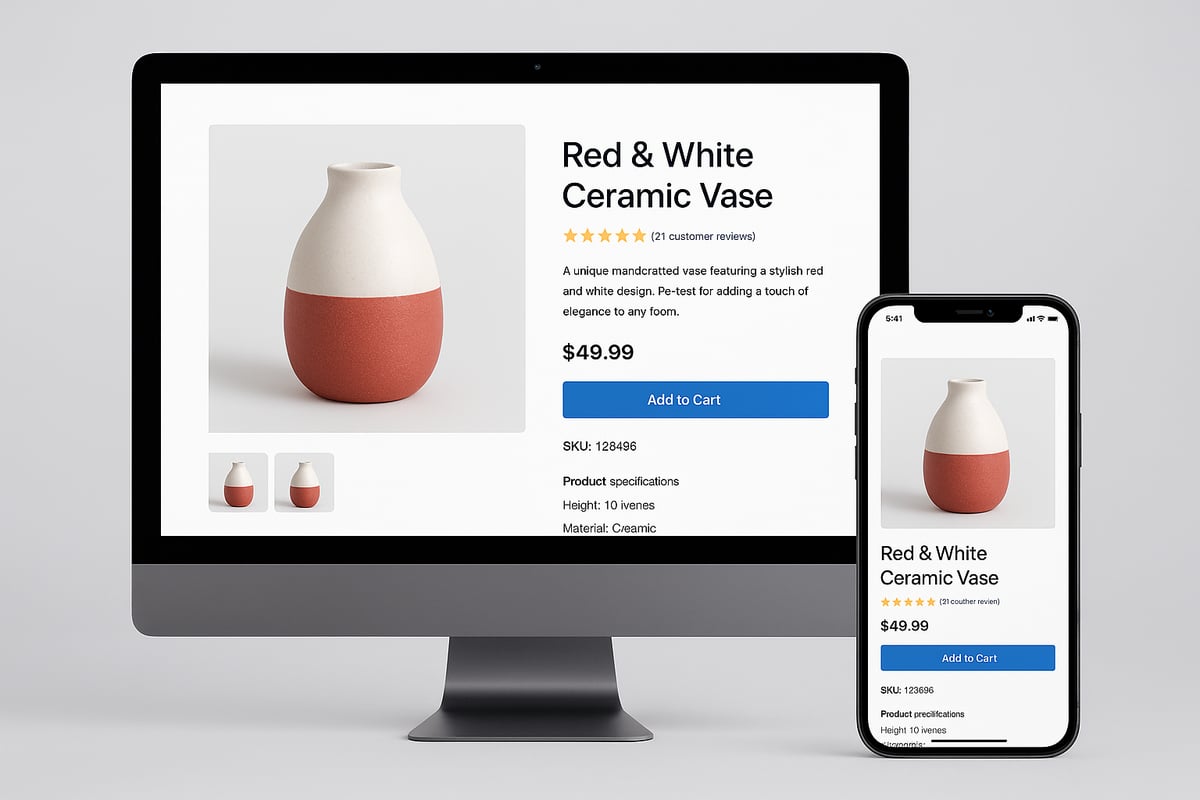
Second, use structured data and schema markup to help search engines understand your products. Marking up SKUs, reviews, and availability can unlock rich results and drive more traffic to your site. Optimized meta tags, like page titles and descriptions, directly influence click-through rates and rankings.
Internal linking is another pillar of effective on page seo ecommerce. By connecting related products and categories, you guide users deeper into your store and build topical authority. Consider adding breadcrumb navigation for even better usability.
Finally, your content should always focus on the user. Include detailed specs, FAQs, and comparison tables to help shoppers make informed decisions. For a comprehensive look at upcoming trends and best practices in on-page optimization, see Ecommerce SEO Best Practices 2026.
Mastering these elements ensures your on page seo ecommerce efforts pay off with higher rankings, better engagement, and more sales.
Step 1: Advanced Ecommerce Keyword Research & Optimization
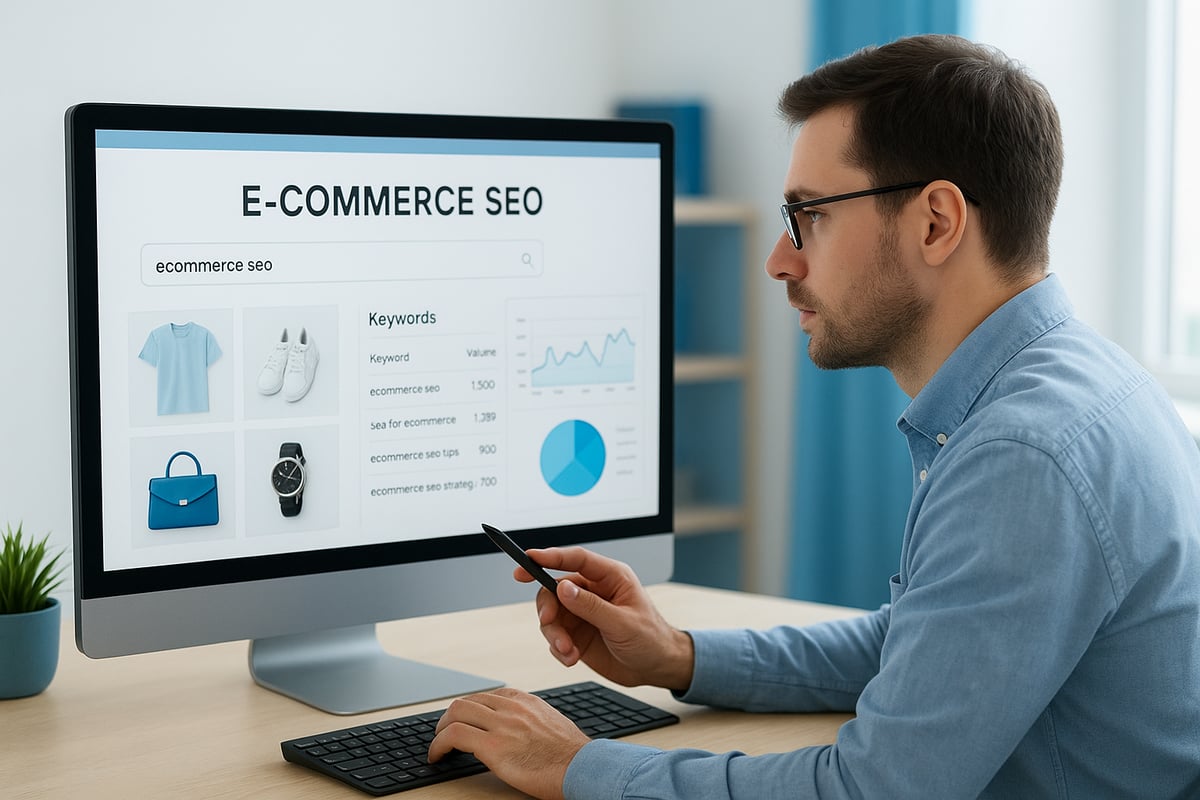
To succeed with on page seo ecommerce in 2026, your keyword strategy must be smarter than ever. The right keywords connect your products to buyers who are ready to convert. Effective research and optimization ensure your ecommerce site surfaces for high-intent queries and stands out from the competition.
Identifying High-Value Keywords for Ecommerce
The foundation of on page seo ecommerce is choosing keywords that drive qualified traffic. Start by targeting several keyword types:
| Keyword Type | Example | Purpose |
|---|---|---|
| Product-specific | “wireless earbuds” | Targets buyers ready to purchase |
| Category | “men’s running shoes” | Captures broader interest |
| Long-tail | “buy men’s waterproof hiking boots size 11” | Attracts high-intent shoppers |
| Informational | “how to clean suede sneakers” | Engages top-of-funnel visitors |
Use tools like Google Keyword Planner, Semrush, Ahrefs, and Google Trends to discover search volume, competition, and emerging topics. Analyze competitors by searching their product and category pages, then identify opportunity gaps in their keyword targeting.
Understanding search intent is vital for on page seo ecommerce success. Transactional queries signal purchase intent, while informational queries help build trust and authority. For instance, compare “buy men’s waterproof hiking boots size 11” (transactional) to “best hiking boots 2026” (informational). Both have value, but the former is more likely to convert.
According to recent data, 43% of ecommerce traffic comes from organic search. By refining your keyword approach, you can capture this valuable segment and improve your store’s visibility.
Strategic Keyword Placement & Density
Once you have a list of high-value keywords, focus on strategic placement. On page seo ecommerce best practices include naturally integrating keywords in these elements:
- Page titles and H1 tags
- Product descriptions and feature lists
- Image alt text and filenames
- URLs and breadcrumb navigation
Avoid keyword stuffing, which can harm rankings and user experience. Instead, use synonyms and related phrases to improve semantic relevance. Incorporate Latent Semantic Indexing (LSI) keywords and entities, which help search engines understand your content’s topic.
For example, a product page optimized for both “wireless earbuds” and “Bluetooth headphones” can capture a wider audience. Unique, detailed product descriptions are essential. For expert tips on crafting descriptions that boost conversions and SEO, check out Optimizing Product Descriptions.
Internal linking also supports topical authority. Link related products and categories to guide users and search engines deeper into your site.
Seasonal and Trend-Based Keyword Optimization
On page seo ecommerce is not a set-it-and-forget-it process. Trends and seasons impact what shoppers search for, so your strategy should adapt. Regularly update content to reflect new product launches, holidays, or popular events.
Leverage Google Trends and real-time analytics to identify surging keywords. For example, optimizing your pages for “Black Friday deals 2026” months in advance can help you capture early-bird shoppers. Adjust landing pages, banners, and product copy to match seasonal demand and maximize organic reach.
Stay alert to changing shopper behaviors and competitor moves. By keeping your keyword strategy agile, your ecommerce site remains visible and relevant all year.
Step 2: Optimizing Product & Category Pages for Maximum Impact
Optimizing your product and category pages is the cornerstone of effective on page seo ecommerce. These pages are often the first touchpoints for searchers, so every element must be crafted to attract, engage, and convert.
A strategic approach to on page seo ecommerce not only boosts rankings but also drives real results—higher click-through rates, better user experience, and increased sales.
Crafting Unique, High-Converting Product Descriptions
Original content is the backbone of on page seo ecommerce. Avoid copying manufacturer descriptions. Instead, create unique product copy that highlights benefits, features, and real use cases.
For example, address buyer pain points directly. If you sell hiking boots, mention waterproof technology, comfort during long treks, and durability in extreme weather. This approach not only helps your on page seo ecommerce efforts but also builds trust with customers.
Incorporate customer reviews, FAQs, and ratings to further enrich your content. These user-generated elements answer common questions, reduce hesitation, and supply fresh keywords for search engines.
Before-and-After Example:
| Generic Product Description | Unique, Optimized Description |
|---|---|
| “High-quality hiking boots. Comfortable and durable.” | “Conquer every trail with our men’s waterproof hiking boots. Featuring advanced Gore-Tex lining, reinforced ankle support, and slip-resistant soles, these boots keep your feet dry and comfortable on any adventure. See what real hikers say in our customer reviews below.” |
Unique content increases information gain, helping your on page seo ecommerce pages outperform generic listings.
Meta Tags & Structured Data for Ecommerce
Meta tags are essential for both search engines and users. For on page seo ecommerce, craft compelling page titles (50–60 characters) and meta descriptions (up to 160 characters) using primary keywords. Align your H1 tags with user intent.
Structured data, like schema.org markup, enables rich results in search. By tagging products, reviews, SKUs, and availability, you help search engines understand your offerings and increase visibility.
Example Schema Markup:
{
  "@context": "https://schema.org/",
  "@type": "Product",
  "name": "Men’s Waterproof Hiking Boots",
  "sku": "HIKER-2026-11",
  "aggregateRating": {
    "@type": "AggregateRating",
    "ratingValue": "4.8",
    "reviewCount": "112"
  },
  "offers": {
    "@type": "Offer",
    "price": "129.99",
    "availability": "https://schema.org/InStock"
  }
}
Structured data improves click-through rates and supports on page seo ecommerce by generating rich snippets. This makes your product listings more attractive in search results.
SKU Placement & Supplementary Content
Placing the SKU near the product title is a simple but powerful tactic for on page seo ecommerce. Search engines can index SKUs more efficiently, and customers benefit from clear, quick identification.
Supplementary sections add value and answer buyer concerns. Consider including:
- Shipping information
- Return policies
- Product comparisons (tables work well here)
Sample Table: Product Comparison
| Feature | Product A | Product B |
|---|---|---|
| Waterproof | Yes | No |
| Weight | 1.2 lbs | 1.5 lbs |
| Return Policy | 30 days | 14 days |
Organize your content hierarchy for easy scanning. These strategies reinforce the effectiveness of on page seo ecommerce by making information accessible and relevant.
Internal Linking Strategies for Ecommerce
Internal linking is a foundational element of on page seo ecommerce. Link related products, categories, and blog articles to build topical clusters and help both users and search engines navigate your site.
Implement breadcrumb navigation for improved UX and SEO. For example, a user viewing “Men’s Waterproof Hiking Boots” should easily find a link back to the “Men’s Footwear” category.
For more insights on how internal linking and navigation can supercharge your on page seo ecommerce efforts, see On-Page SEO for Ecommerce.
A well-structured internal linking strategy ensures every important page is discoverable, enhancing topical authority and supporting higher rankings.
Step 3: Technical On-Page SEO Essentials for Ecommerce Sites
Mastering technical aspects is vital for effective on page seo ecommerce. These elements ensure your store is discoverable, fast, and accessible, directly impacting both user experience and search rankings. Let’s break down the technical essentials you must address for ecommerce SEO success in 2026.

Site Architecture & Crawlability
A well-structured website is the foundation of on page seo ecommerce. Your site should have a flat, logical architecture, making it easy for both users and search engines to find and index your products.
Keep URLs clean, short, and descriptive. For example, use /category/product-name instead of complex strings. Ensure all important pages are linked internally and are not orphaned.
- Use breadcrumb navigation for clarity.
- Submit an XML sitemap to Google Search Console.
- Regularly audit for broken links.
For advanced guidance on how design impacts SEO, see the Best Website Design for SEO guide.
Mobile Optimization & Core Web Vitals
Most ecommerce traffic now comes from mobile devices, making mobile optimization a critical part of on page seo ecommerce. Responsive design ensures your store looks and functions perfectly on any device.
Google’s Core Web Vitals are key metrics for user experience and ranking:
| Metric | Ideal Value | What It Measures |
|---|---|---|
| LCP | <2.5 seconds | Loading performance |
| FID | <100 milliseconds | Interactivity |
| CLS | <0.1 | Visual stability |
Compress images, reduce server response times, and eliminate render-blocking resources to pass these tests.
A mobile-first approach not only boosts rankings but also drives conversions.
Image Optimization & Alt Text
Optimized product images are essential for on page seo ecommerce. Large, uncompressed images can slow down your site and hurt rankings.
- Compress images for faster loading.
- Use descriptive, keyword-rich file names.
- Add alt text that describes both the product and its features.
For example, instead of img123.jpg, use wireless-earbuds-black.jpg and alt text like “Black wireless earbuds with Bluetooth connectivity.”
Optimized images help your products appear in image search results and improve accessibility for all users.
Secure, Fast, and Accessible Ecommerce Sites
Security and speed are non-negotiable for on page seo ecommerce. Always use HTTPS to protect customer data and build trust.
Implement lazy loading for images to enhance speed. Minimize the use of heavy scripts, and load non-essential scripts asynchronously.
Accessibility is another core factor. Ensure your site meets ADA compliance by providing text alternatives for images, clear navigation, and keyboard accessibility.
A secure, fast, and accessible website not only improves SEO but also expands your customer base.
Handling Duplicate Content & Canonicalization
Duplicate content can dilute your on page seo ecommerce efforts, especially with product variants. Use canonical tags to signal the primary version of a page to search engines.
Example canonical tag for a product page:
<link rel="canonical" href="https://yourstore.com/product-name" />
Manage product variants (like size or color) with unique URLs and proper canonicalization. Regularly audit your site for duplicate titles, descriptions, and product listings.
Effective duplicate content management protects your rankings and ensures search engines understand your site’s structure.
Step 4: Leveraging AI, Personalization, and User Experience for On-Page SEO
Ecommerce is evolving fast, and staying ahead means embracing technology that puts shoppers first. AI and personalization are now key drivers for on page seo ecommerce, shaping how users interact with your site and how search engines rank your pages. Let’s explore how these innovations, paired with a focus on user experience, can transform your ecommerce SEO strategy for 2026.
AI-Powered Content & Personalization
Artificial intelligence is revolutionizing on page seo ecommerce by delivering tailored experiences at scale. AI tools can analyze user data and behavior to show dynamic product recommendations, personalized banners, and even adjust content blocks in real time.
For example, a shopper who previously browsed athletic shoes might see a carousel of new arrivals in their size and preferred color. These personalized touches increase engagement, reduce bounce rates, and help search engines recognize the page’s relevance for diverse user intents.
Key AI personalization features:
- Dynamic product recommendations based on browsing and purchase history
- Personalized content blocks (offers, banners, messages)
- Automated content optimization for trending keywords
By leveraging AI, you can ensure every visitor feels like your store was built just for them, boosting both user satisfaction and on page seo ecommerce performance.
Enhancing UX for Higher Rankings & Conversions
User experience is at the heart of on page seo ecommerce. A fast, intuitive site keeps shoppers engaged and guides them smoothly from discovery to checkout. AI-powered search and site navigation help users find products quickly, while streamlined checkout processes minimize friction and cart abandonment.
Consider these UX improvements:
- Predictive search suggestions and autocorrect
- Faceted filters for easier product discovery
- One-click checkout options
These enhancements do not just improve rankings, they also drive real business results. According to Ecommerce Conversion Rate Optimization, optimizing these elements can significantly increase conversion rates, directly impacting your bottom line.
Integrating Reviews, FAQs, and User-Generated Content
Trust signals are essential for both search engines and shoppers. Incorporating user-generated content like reviews, ratings, and FAQs can give your on page seo ecommerce a major boost. Rich review snippets and FAQ sections help pages earn featured snippets and increase long-tail keyword coverage.
A sample FAQ schema for a product page:
{
  "@context": "https://schema.org",
  "@type": "FAQPage",
  "mainEntity": [{
    "@type": "Question",
    "name": "Is this product eco-friendly?",
    "acceptedAnswer": {
      "@type": "Answer",
      "text": "Yes, it is made from 100% recycled materials."
    }
  }]
}
Integrating this content not only builds trust but also enhances visibility in organic search.
Multimedia Optimization: Images & Videos
Images and videos are powerful tools for on page seo ecommerce. High-quality visuals engage users and increase time on page, which search engines interpret as a sign of valuable content. Optimizing image alt text with keywords ensures accessibility and helps your products appear in image search.
A comparison of product page performance:
| Page Feature | Avg. Dwell Time | Conversion Rate |
|---|---|---|
| No Video | 1:20 | 2.1% |
| With Demo Video | 2:45 | 3.3% |
Embedding product demo videos and optimizing their titles and descriptions can give you a competitive edge in search rankings.
Future-Proofing with Voice Search and Conversational Commerce
As voice assistants and conversational shopping tools become more widespread, optimizing for natural language queries is vital for on page seo ecommerce. Structure your content to answer questions directly and use conversational phrases that match how users speak.
For instance, a product page optimized for “What are the best eco-friendly running shoes in 2026?” will better capture voice search traffic. Adding concise answers and featured snippets positions your store as a trusted source for both human users and search engines.
Embracing these trends ensures your ecommerce site is ready for the next wave of search innovation.
Step 5: Measuring, Monitoring, and Iterating Your On-Page SEO Strategy
Continuous improvement is at the heart of on page seo ecommerce success. In 2026, the only way to consistently climb the rankings and boost sales is through diligent measurement, proactive monitoring, and smart iteration.
Setting Up SEO Tracking & Analytics
The first step in on page seo ecommerce is establishing robust tracking. Use Google Analytics 4 and Google Search Console to gain insights into user behavior, keyword rankings, and conversion rates.
Set up ecommerce-specific goals and events, such as product page visits, add-to-cart actions, and completed purchases. Regularly review metrics like bounce rate, average session duration, and revenue per visitor. According to Ecommerce SEO statistics 2025, sites using structured data and analytics outperform those that do not.
Auditing and Improving On-Page Elements Regularly
Frequent audits are crucial for on page seo ecommerce. Use tools like Screaming Frog, Sitebulb, or Semrush Site Audit to spot technical issues and content gaps.
Key audit checks include:
- Missing or duplicate meta tags
- Broken internal links
- Slow-loading images
- Incomplete structured data
After each audit, prioritize fixes based on impact and effort. Consistent improvements keep your site ahead of the competition.
Responding to Algorithm Updates & Industry Changes
Google’s algorithms evolve constantly, making agility essential in on page seo ecommerce. Stay informed about updates by following SEO news and monitoring your organic performance.
If you notice ranking fluctuations or SERP changes, review affected pages and update content or technical elements as needed. Study competitors’ reactions to algorithm shifts for additional insights. Proactive adaptation helps protect and grow your rankings long term.
A/B Testing and Conversion Rate Optimization
Optimization does not stop at search rankings. A/B testing is a powerful tool for improving on page seo ecommerce by refining titles, meta descriptions, CTAs, and layout.
Use platforms like Google Optimize to run split tests on high-traffic pages. Analyze results with heatmaps and user recordings to identify friction points. For example, changing a CTA button color or headline can increase add-to-cart rates significantly.
Building a Continuous Improvement Cycle
Establish a feedback loop for your on page seo ecommerce efforts. Hold monthly SEO review meetings, track progress, and set new priorities.
Leverage insights from technical audits, analytics, and competitor research. For actionable frameworks and advanced tactics, refer to Ecommerce SEO Strategies 2026. This process ensures your site evolves alongside the industry and maintains its competitive edge.
Staying Ahead: Future Trends & Expert Tips for Ecommerce On-Page SEO in 2026
Staying ahead in the rapidly evolving world of on page seo ecommerce requires both technical expertise and strategic vision. As we approach 2026, the landscape is shaped by innovation, user demands, and new search technologies. Forward-thinking brands that adapt early will secure long-term organic growth.
Embracing AI and Automation in SEO Workflows
AI continues to revolutionize on page seo ecommerce by streamlining repetitive tasks and uncovering optimization opportunities. Automation tools can now generate meta tags, implement structured data, and manage internal linking at scale. Leveraging AI for real-time content recommendations and competitive analysis ensures your strategy remains agile and data-driven.
Brands that integrate AI into their on page seo ecommerce processes often see faster response times to algorithm changes and more consistent improvements in search performance.
Preparing for Search Generative Experience (SGE) and Zero-Click Searches
Search is shifting toward instant answers and interactive results. Google’s SGE highlights the need for on page seo ecommerce content that is concise, authoritative, and directly answers user questions. Zero-click searches are rising, so optimizing for featured snippets and structured data is essential.
Ecommerce sites should focus on product FAQs, comparison tables, and clear answer boxes to secure visibility even when users don’t click through to a site. This approach maximizes the value of every impression in on page seo ecommerce.
Sustainability, Accessibility, and Ethical SEO
Modern consumers are increasingly conscious of sustainability and ethical practices. Prioritizing eco-friendly product features and transparent sourcing within your on page seo ecommerce content builds trust and can influence rankings. Accessibility is also critical, as search engines reward sites that serve all users equally.
Implementing ADA-compliant design, readable fonts, and alt text for images not only supports compliance but also enhances the user experience for everyone interacting with your on page seo ecommerce site.
Internationalization & Multilingual SEO
Ecommerce growth often means reaching new markets. Internationalization of on page seo ecommerce involves optimizing category and product pages with hreflang tags and localized content. This ensures the right content is served to the right audience, reducing bounce rates and improving engagement.
Translating key on page seo ecommerce elements and adapting messaging to local preferences can drive significant organic traffic from global audiences. Sites that prioritize multilingual strategies are well-positioned for international success.
Expert Insights and Actionable Takeaways
To excel in on page seo ecommerce for 2026, focus on continuous learning and adaptability. Key priorities include:
- Automate routine SEO tasks with AI tools.
- Structure content for SGE and featured snippets.
- Highlight sustainability and ensure accessibility.
- Localize for international audiences.
- Regularly optimize onsite search for better UX and conversions, as outlined in Onsite Search Optimization Tips.
Ecommerce leaders who build these habits into their on page seo ecommerce workflows consistently outperform competitors and are ready for whatever the future brings.