


Staying on top of search rankings in 2025 demands more than just keywords — it requires the best website design for seo, merging innovative visuals with strategic optimization.
In this guide, you will discover the nine essential tips that will set your site apart and drive measurable SEO growth.
From mobile-first layouts and AI personalization to visual UX and technical foundations, these strategies are designed to help you futureproof your site’s performance.
Ready to unlock higher rankings, better engagement, and actionable results? Let’s dive in and transform your approach to website design and SEO for the year ahead.
The Critical Role of Website Design in Modern SEO
Website design is now at the core of SEO success. In 2025, the best website design for seo is about far more than visuals. It is an essential foundation for discoverability, engagement, and conversions.
Google’s algorithms have evolved to reward sites that deliver seamless user experiences. Today, ranking factors go beyond keywords and backlinks. Google prioritizes how real users interact with your site, making the best website design for seo a strategic necessity.
A strong website must blend visual appeal, intuitive UX, and technical excellence. This intersection is where the best website design for seo truly shines. Beautiful layouts, clear navigation, and fast load times all signal quality to both users and search engines.
Core Web Vitals have become a central part of Google’s ranking system. Metrics like Largest Contentful Paint (LCP), First Input Delay (FID), and Cumulative Layout Shift (CLS) measure how quickly and smoothly a site loads and responds. If your site fails these tests, even great content can struggle to rank. Mobile usability is equally critical, as most searches now happen on mobile devices. Accessibility, too, is a ranking factor. Sites that cater to users with disabilities not only expand their audience but also gain SEO advantages.
Let’s look at some recent statistics highlighting the connection between design and SEO performance:
| Statistic | Source |
|---|---|
| 88% of online consumers are less likely to return to a site after a bad experience | Sweor, 2024 |
| 94% of first impressions relate to design | Web Design Statistics 2025 |
| Sites meeting Core Web Vitals see up to 24% better ranking | Google, 2024 |
Design choices have a measurable impact on key SEO metrics. A cluttered layout or slow-loading images increase bounce rates. Poor navigation confuses users and search engines alike. When brands invest in the best website design for seo, they often see higher dwell times, lower bounce rates, and improved conversions.
Consider how leading brands have transformed their organic performance through redesigns. For example, a global retailer revamped its site structure and visual hierarchy. After launch, the brand saw a 30% increase in organic traffic and a 17% rise in conversions. Similarly, a SaaS company improved its technical SEO by cleaning up code and simplifying navigation, resulting in a significant boost in crawl rates and keyword visibility.
Common design mistakes can quietly sabotage SEO efforts. Overly complex menus, inconsistent layouts, and heavy media files reduce site speed and frustrate visitors. Failing to optimize images or use descriptive alt text harms both accessibility and rankings. Ignoring mobile users puts your site at a disadvantage, as Google’s mobile-first indexing is now standard.
To summarize, the best website design for seo is a blend of art and science. It requires aligning user-centric design with technical best practices. By focusing on user experience, speed, mobile usability, and accessibility, businesses can futureproof their sites for search success in 2025 and beyond.

9 Essential Best Website Design For SEO Tips in 2025
Staying at the forefront of search performance in 2025 means mastering the best website design for SEO. Each of the following nine tips is grounded in current data and future-focused strategies. Let’s break down what makes these website design practices essential for SEO and how you can implement them effectively.
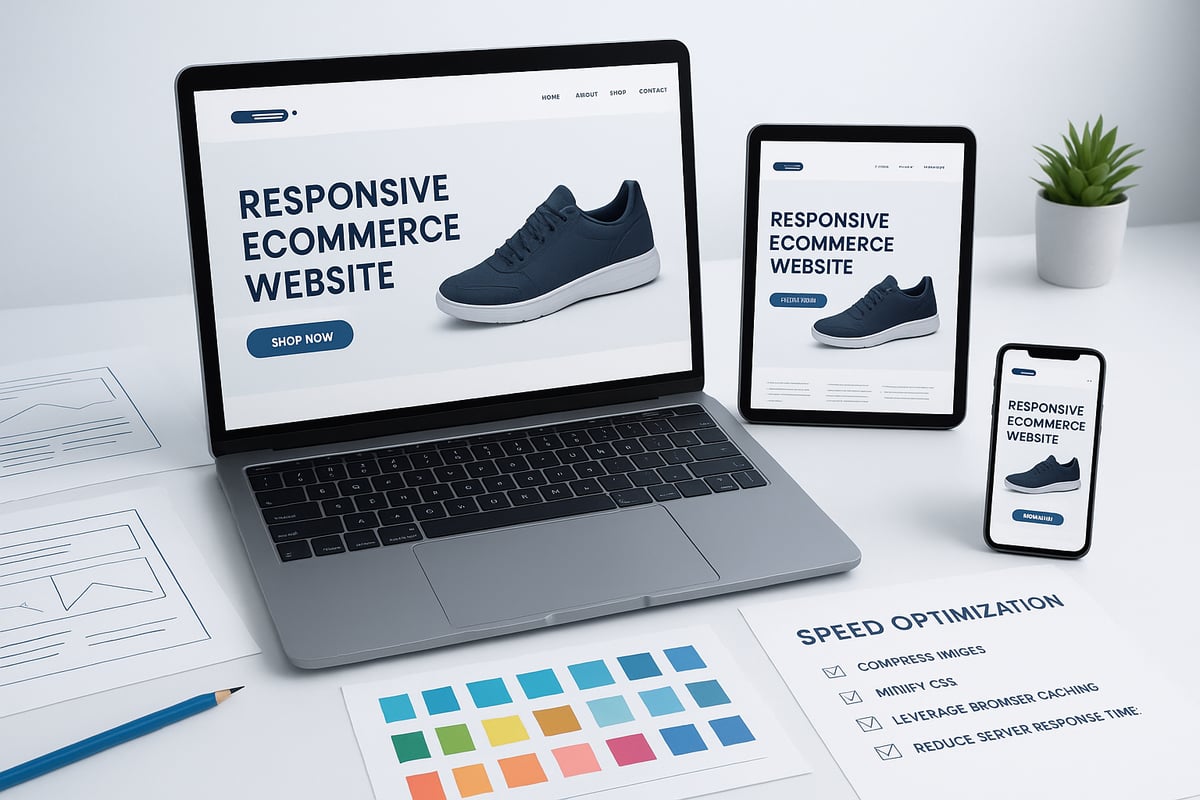
1. Mobile-First and Responsive Design
Adopting a mobile-first approach is the foundation of the best website design for SEO in 2025. With over 65% of all website traffic now coming from mobile devices (Statista), Google’s mobile-first indexing makes responsiveness non-negotiable.
Responsive frameworks and CSS grid systems enable your site to adapt seamlessly across devices. This not only improves user experience but also strengthens SEO signals. Flexible images, viewport meta tags, and touch-friendly navigation are essential features. For example, e-commerce brands leveraging responsive layouts report significant boosts in mobile conversions and lower bounce rates.
Use tools such as Google Mobile-Friendly Test and BrowserStack to verify your design’s adaptability. Regular testing ensures your site maintains optimal performance as devices evolve. For deeper insight into mobile-first strategies, see Mobile-First E-Commerce Design.
The best website design for SEO means prioritizing mobile usability at every stage, from layout to checkout.
2. Lightning-Fast Page Speed Optimization
Page speed is a direct ranking factor for SEO and a critical aspect of the best website design for SEO. Slow-loading sites increase bounce rates and can severely impact conversions.
Core Web Vitals—Largest Contentful Paint (LCP), First Input Delay (FID), and Cumulative Layout Shift (CLS)—are now central to Google’s ranking algorithm. Optimizing images through compression, employing lazy loading, and minifying CSS and JavaScript are all proven tactics.
Retailers who reduced load times by just two seconds reported notable ranking improvements and higher user engagement. Use Google PageSpeed Insights and GTmetrix to identify and fix bottlenecks.
Incorporate speed checks into your design workflow to ensure the best website design for SEO remains fast and efficient.
3. Intuitive Site Architecture & Navigation
A logical site structure is crucial for both users and search engines, making it a pillar of the best website design for SEO. Clear hierarchies, breadcrumbs, and flat architecture enable better crawlability and user satisfaction.
Implement internal linking strategies by siloing related content and optimizing your menu design. SaaS companies that improved navigation experienced a 30% boost in crawl rates and saw more pages indexed.
Leverage tools like Screaming Frog and Sitebulb to audit your site’s architecture. A clean structure reduces confusion, enhances dwell time, and increases the likelihood of higher rankings.
Remember, the best website design for SEO isn’t just about aesthetics—it’s about logical paths that guide both users and bots.
4. AI-Powered Personalization & Dynamic Content
AI-driven personalization is redefining the best website design for SEO. Dynamic content tailored to user preferences increases engagement and sends positive signals to search engines.
Balance personalization with crawlability by ensuring important content is accessible to bots. Avoid cloaking practices, which can harm SEO. Retailers using AI-powered product recommendations have seen session durations and conversions rise significantly.
Tools like Adobe Sensei and Dynamic Yield make implementing smart banners and AI-generated content blocks straightforward. Future trends point toward even more granular personalization, further enhancing the best website design for SEO.
Personalization, when executed correctly, drives both user satisfaction and search visibility.
5. Visual-First UX: Imagery, Video, and Interactivity
High-quality visuals are a cornerstone of the best website design for SEO. Compelling images and videos reduce bounce rates and increase dwell time. According to WordStream, video content can drive a 157% increase in organic traffic.
For SEO, always use descriptive alt text, compress images, and implement schema for visual content. Interactive elements like carousels, quizzes, and calculators further boost engagement.
However, heavy media can slow your site, undermining SEO gains. Brands incorporating AR and VR into product pages report higher conversion rates, but must balance innovation with speed.
Strive for a visual-first UX that supports, rather than hinders, the best website design for SEO.
6. Accessibility and Inclusive Design for SEO
Accessibility is now a ranking factor and integral to the best website design for SEO. Key elements include alt text, ARIA labels, keyboard navigation, and color contrast.
Beyond compliance with regulations like ADA and WCAG 2.2, accessible sites reach broader audiences and improve engagement. Online stores that invested in accessibility saw bounce rates drop by 20%.
Use tools like WAVE and Axe Accessibility Checker to identify and fix barriers. The best website design for SEO creates an inclusive environment where everyone can interact seamlessly.
Prioritizing accessibility not only mitigates legal risks but also enhances SEO performance.
7. Clean, Crawlable Code & Technical SEO Foundations
Technical SEO remains foundational to the best website design for SEO. Semantic HTML5, schema markup, and clean code ensure search engines can easily understand your site.
Modern JavaScript frameworks can impact SEO—consider server-side rendering (SSR) or pre-rendering to support crawlability. Maintain accurate XML sitemaps, robots.txt files, and canonical tags to avoid duplicate content.
A blog that resolved crawl errors and eliminated duplicates saw its traffic double. Collaborate closely with developers to maintain SEO-friendly code.
Regular audits with Google Search Console and Ahrefs Site Audit keep the best website design for SEO in peak technical health.
8. Sustainable and Eco-Friendly Web Design Practices
Sustainability is emerging as a differentiator in the best website design for SEO. Lightweight assets, efficient coding, and green hosting reduce your site’s carbon footprint and can enhance brand perception.
Google now highlights sustainable practices in SERPs. E-commerce sites that showcase eco-friendly initiatives attract environmentally conscious customers and improve engagement.
According to EcoPing, sustainable websites can consume up to 70% less energy. Use design choices that balance performance, aesthetics, and environmental impact.
Integrating sustainability into the best website design for SEO supports both rankings and responsible business practices.
9. Future-Proofing with Structured Data & Rich Snippets
Structured data is vital for the best website design for SEO in 2025. Product, FAQ, HowTo, and Review schema help your pages stand out with rich snippets, driving higher click-through rates.
Implement schema using plugins or manually adding JSON-LD code. For guidance, see Leveraging Schema Markup for Search Rankings. Recipe sites that adopted structured data have doubled their organic traffic.
Regularly test your implementation with Google Rich Results Test. Incorporating structured data ensures the best website design for SEO remains visible and competitive as search evolves.
Integrating SEO Design Tips into Your E-Commerce Strategy
Incorporating the best website design for seo into your e-commerce strategy is vital for staying competitive. As consumer expectations shift and algorithms evolve, every detail of your online store must align with both user experience and search optimization. Futureproofing your business means treating design and SEO as interconnected pillars, not separate initiatives.

Customizing Best Website Design for SEO for E-Commerce
Tailoring the best website design for seo to your e-commerce site starts with your most crucial pages. Product listings need mobile-first layouts, fast media loading, and detailed schema markup for maximum visibility. Category pages should feature clear navigation and internal links, helping both users and search engines discover your full catalog.
For checkout flows, prioritize speed, minimal distractions, and secure design elements. This not only increases conversions but also signals quality to search engines. If you want a deeper dive into actionable methods, the Essential SEO Strategies for Designers resource offers practical steps for aligning design and optimization on every page.
Testing and Analytics: Continuous Improvement
Implementing the best website design for seo is not a one-time task. Use A/B testing and multivariate experiments to compare different layouts, calls to action, and navigation structures. Heatmaps and session recordings provide real-world insights into user behavior.
Pair these findings with analytics data to track how design changes affect bounce rates, dwell time, and organic sales. Regular audits ensure your improvements continue to deliver SEO value as trends change.
Overcoming Common Challenges
Balancing visual appeal with technical performance is a frequent challenge when applying the best website design for seo. Avoid overloading pages with heavy graphics or unnecessary scripts that could slow your site. Address technical debt by prioritizing fixes for page speed, accessibility, and crawlability.
Consider this: a leading online retailer revamped their site with a focus on these principles and saw a 40 percent increase in organic sales within six months. Their success demonstrates the measurable impact of a strategic, unified approach.
Actionable Checklist for E-Commerce Teams
To effectively integrate the best website design for seo, follow this checklist:
- Audit your site’s structure, speed, and mobile usability.
- Update product and category pages with schema markup.
- Optimize images and videos for fast loading and accessibility.
- Streamline navigation and checkout experiences.
- Establish regular A/B and multivariate testing cycles.
- Monitor analytics to measure SEO and conversion gains.
Applying these steps will ensure your e-commerce brand is ready for the demands of 2025 and beyond.