

Did you know that 93% of online shoppers say visual appearance is the key deciding factor in their purchase decisions? As e-commerce evolves at breakneck speed, design has become the single most critical element for online store success. This guide is crafted to help you master e commerce store design and rise above the competition in 2026’s digital marketplace.
We will uncover the latest trends shaping e-commerce, from immersive technology and UX best practices to AI, accessibility, sustainability, and localization. Whether you are a business owner, designer, or marketer, follow this guide to future-proof your store, boost sales, and engage your customers like never before.
Understanding E-Commerce Design Trends for 2026
E commerce store design is evolving faster than ever as we approach 2026. Shoppers are demanding richer, more personalized experiences, while technology continues to push the boundaries of what’s possible. To thrive, brands need to understand and adopt the latest trends shaping the future of online retail.

The Shift Toward Immersive Shopping Experiences
Immersive technology is redefining e commerce store design. Augmented reality (AR), virtual reality (VR), and 3D product visualization are becoming mainstream. Retailers like IKEA and Shopify now let customers preview products in their homes or interact with items in real time.
This shift is not just about novelty. Data shows that 60% of Gen Z shoppers prefer stores offering immersive experiences. These technologies drive higher engagement and conversion rates, making them essential for competitive brands. For a deeper dive into foundational and emerging strategies, see E-commerce design best practices.
Minimalism, Micro-Interactions, and Visual Storytelling
Minimalism is central to modern e commerce store design. Clean layouts, strategic whitespace, and intuitive navigation create a sense of calm and clarity for shoppers. Micro-interactions, such as subtle animations or button feedback, enhance usability and delight users.
Story-driven product pages are rising in popularity. Brands use compelling visuals and narratives to connect emotionally with visitors. This approach transforms product pages into immersive journeys, setting stores apart from generic competitors.
Mobile-First and Responsive Innovations
Mobile commerce is expected to account for 73% of sales by 2026. This reality makes mobile-first e commerce store design non-negotiable. Progressive Web Apps (PWAs) deliver app-like experiences without requiring downloads, improving speed and engagement.
Designers prioritize thumb-friendly layouts and gesture navigation to ensure smooth browsing on any device. Responsive designs that adapt seamlessly to different screens are now standard, reducing friction and boosting conversions.
Personalization and Dynamic Content
Personalization is a defining trend in e commerce store design. AI-driven product recommendations and dynamic landing pages respond to each visitor’s preferences and behavior. For example, Amazon’s personalized homepage increases sales per visit by tailoring content in real time.
Dynamic content adapts instantly, showing relevant offers or products as users interact with the site. This not only increases engagement but also drives higher average order values.
Sustainable and Ethical Design
Sustainability is influencing e commerce store design at every level. Brands now use eco-friendly visuals, green hosting providers, and ethically sourced materials to meet consumer expectations. Transparency in materials and shipping practices is a must.
According to Nielsen, 81% of consumers expect brands to be environmentally responsible. Clear messaging about sustainability builds trust and loyalty, setting stores apart in a crowded market.
Data-Driven Design Decisions
Making informed choices is key to successful e commerce store design. A/B testing, heatmaps, and analytics tools help brands understand what works and what needs improvement. By analyzing real user behavior, designers can refine layouts, content, and features for better performance.
Data-driven decisions reduce guesswork and ensure that updates are effective. This approach leads to higher conversion rates and a more satisfying customer experience.
Future-Proofing: Staying Ahead of the Curve
Continuous learning is essential for anyone involved in e commerce store design. Following design leaders, reading trend reports, and staying updated on new technologies help brands stay ahead. Adaptation is not a one-time task but an ongoing process.
Future-ready stores are those that anticipate change and innovate proactively. By embracing new ideas and refining strategies regularly, brands can secure long-term success in the digital marketplace.
User Experience (UX) Optimization: The Foundation of Store Success
Delivering an exceptional user experience is the cornerstone of modern e commerce store design. In 2026, the most successful online stores are those that seamlessly blend intuitive navigation, speed, accessibility, and trust. Let us explore the foundations of UX optimization and the actionable strategies that will set your e commerce store design apart.
Streamlined Navigation and Information Architecture
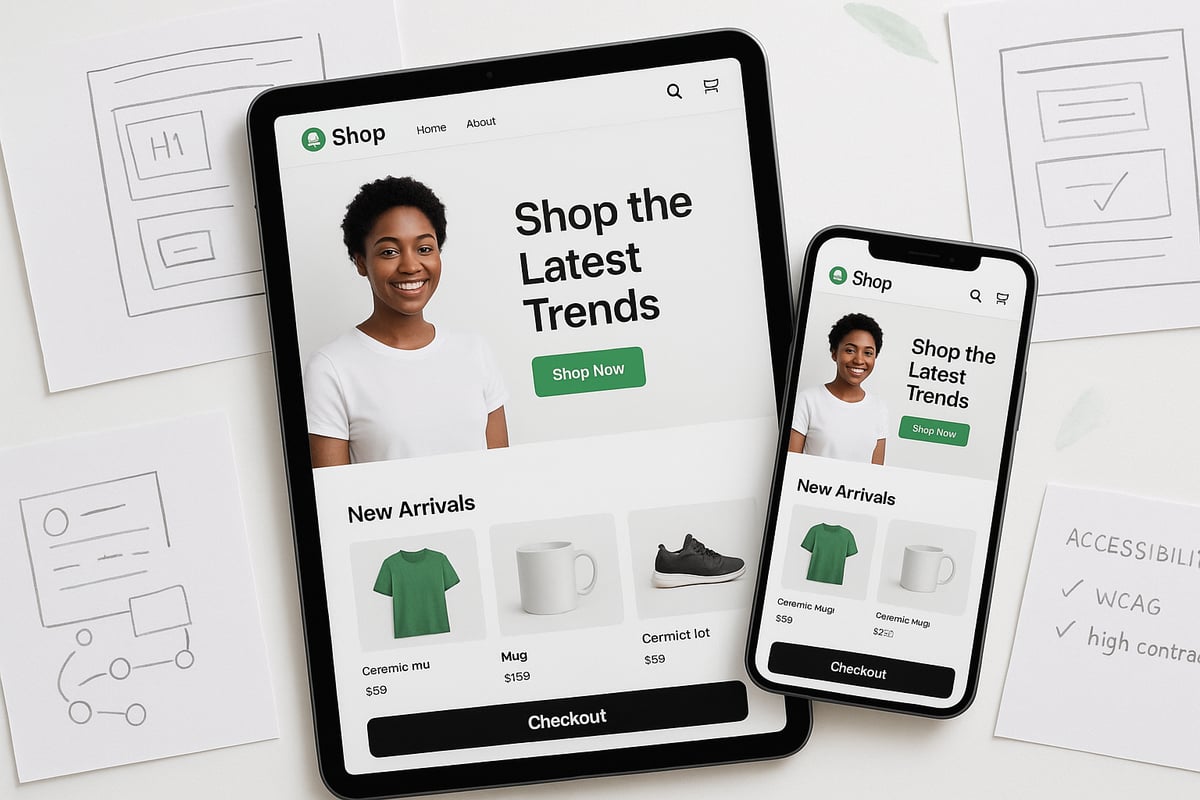
A clear, logical navigation structure is vital for e commerce store design. Mega-menus, breadcrumb trails, and predictive search help users find products with minimal effort. Logical categories and robust filtering prevent confusion and increase session duration.
For instance, retailers like ASOS have seen measurable improvements by refining their menu layouts. To dive deeper into these strategies, refer to Optimizing user experience for e-commerce, which offers advanced tips for creating intuitive navigation that keeps shoppers engaged.
Fast Load Times and Performance
Shoppers expect instant access to products, making speed a non-negotiable factor in e commerce store design. Research shows 53 percent of users abandon a site if it loads in more than 3 seconds. Techniques like image compression, lazy loading, and content delivery networks (CDNs) are now standard.
Optimizing performance not only reduces bounce rates but also improves SEO rankings. Regularly audit your store’s speed and address bottlenecks to maintain a competitive edge.
Accessibility and Inclusive Design
Accessible e commerce store design ensures every customer can shop, regardless of ability. Following WCAG 2.2 standards, use high-contrast colors, enable keyboard navigation, and support screen readers. Legal compliance is not just a requirement but a chance to expand your customer base.
Brands like Target have shown that accessibility improvements can boost conversions by up to 20 percent. Prioritize inclusivity from the start to future-proof your store.
Seamless Checkout and Payment Experiences
A smooth checkout is essential for reducing cart abandonment. Offer one-click checkout, guest options, and multiple payment methods to remove friction. Simplified forms and progress indicators reassure shoppers and speed up the process.
The right e commerce store design addresses every step of the purchase journey, ensuring customers complete their orders with confidence.
Trust Signals and Social Proof
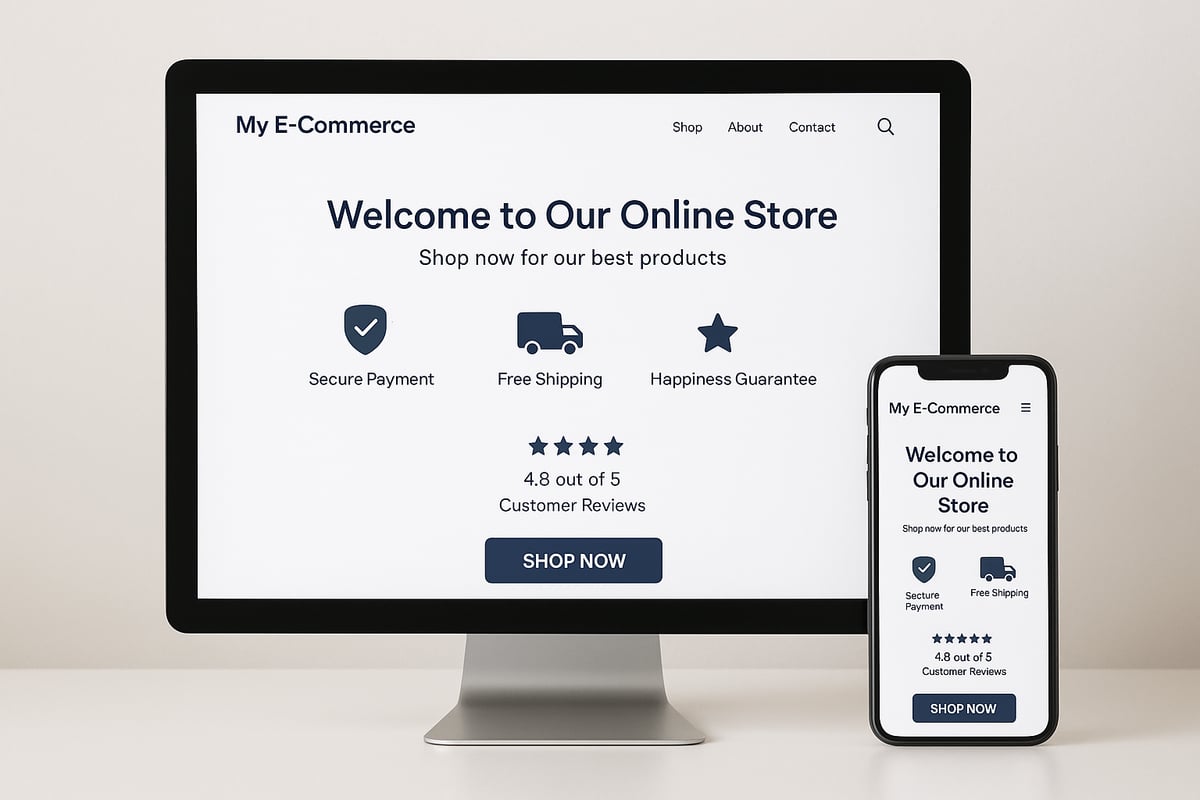
Trust is built through visible reviews, testimonials, and security badges. Prominently display privacy assurances and secure payment icons to help customers feel safe. Social proof, such as user-generated content and ratings, adds authenticity.
A trustworthy environment encourages repeat purchases and referrals, both critical for long-term growth.
Microcopy and UX Writing
Effective microcopy guides users and reduces confusion. Clear calls-to-action, helpful tooltips, and friendly error messages can significantly impact conversion rates. Focus on concise, actionable language that aligns with your brand voice.
Regularly review and update microcopy as part of your ongoing e commerce store design improvements.
Continuous UX Testing and Feedback Loops
Ongoing user testing, surveys, and analytics are the backbone of successful e commerce store design. Use A/B testing and usability audits to identify pain points. Iterate based on real customer feedback to refine navigation, messaging, and layout.
A culture of continuous improvement ensures your store evolves with user expectations and industry trends.
Integrating AI and Automation for Next-Level Personalization
Artificial intelligence and automation are redefining the future of e commerce store design. These technologies enable brands to deliver hyper-personalized experiences, streamline operations, and boost conversion rates. As we approach 2026, successful stores will rely on AI to anticipate customer needs, automate routine tasks, and continually optimize the user journey.

AI-Powered Product Recommendations
AI-driven product recommendations are at the heart of next-level e commerce store design. Algorithms analyze browsing history, purchase behavior, and real-time interactions to suggest relevant products. This approach not only increases average order value but also enhances customer satisfaction.
For example, Sephora’s use of AI recommendations led to a 15% rise in average order value. Upselling, cross-selling, and dynamic pricing are now automated, making the shopping experience more intuitive. Personalized bundles based on customer profiles keep shoppers engaged and loyal. Integrating these features into your e commerce store design ensures you remain competitive.
Chatbots and Virtual Shopping Assistants
Round-the-clock customer support is now possible with AI-powered chatbots and virtual shopping assistants. These tools answer questions, recommend products, and guide users throughout the buying process. Natural language processing allows chatbots to understand and respond in a human-like manner.
Incorporating chatbots into your e commerce store design means customers receive instant support, which reduces frustration and increases conversions. Guided selling features help users find products faster, improving the overall user experience. Virtual assistants are especially valuable for mobile users seeking quick answers.
Automated Inventory and Order Management
Efficient inventory and order management are crucial for any e commerce store design. AI automates stock updates, tracks sales trends, and predicts when to restock popular items. This minimizes manual errors and prevents out-of-stock situations.
Automated order processing speeds up fulfillment, ensuring customers receive their purchases promptly. Predictive analytics help businesses maintain optimal inventory levels, reducing costs and improving customer satisfaction. With automation, operational efficiency becomes a competitive advantage.
Smart Search and Visual Search
AI-powered search transforms how customers find products in your e commerce store design. Smart search uses algorithms to suggest relevant products as users type, while visual search lets shoppers upload images to discover similar items.
ASOS, for instance, leverages visual search to increase product discovery rates. These innovations cater to the growing demand for intuitive, fast, and accurate search experiences. By integrating smart search, you help users find what they want with minimal effort, driving higher engagement and sales.
Dynamic Content and Email Automation
Personalized content is now a standard expectation in e commerce store design. AI tailors landing pages, banners, and product recommendations based on real-time user data. Email automation delivers targeted messages, such as abandoned cart reminders or personalized offers, at optimal times.
Lifecycle marketing becomes seamless, with triggered communications adapting to each customer’s journey. This level of automation not only improves engagement but also increases retention rates. Brands that harness dynamic content stand out in a crowded digital marketplace.
AI in Design: Generative Tools and Personalization
AI is revolutionizing the creative side of e commerce store design. Generative tools suggest layouts, color schemes, and even create banners or product images automatically. These innovations allow designers to focus on strategy and storytelling while AI handles repetitive design tasks.
If you want to explore how to practically implement these technologies, read about AI-powered website design tools for actionable insights and step-by-step guidance. With AI, stores can rapidly test and deploy new visual elements, ensuring their online presence feels fresh and relevant.
Measuring AI Impact: Analytics and ROI Tracking
Success in e commerce store design depends on measuring the results of AI and automation. Analytics platforms track the performance of AI-driven features, from recommendation click-through rates to chatbot satisfaction scores.
By monitoring key metrics, businesses can adjust their strategies to maximize ROI. Continuous improvement is vital, as user needs and technology trends evolve. Data-driven decision-making ensures your store remains agile and ahead of the competition.
Building Trust and Credibility Through Design
Building trust and credibility is fundamental to effective e commerce store design. Customers make purchasing decisions based on their perception of your brand’s reliability and professionalism. Each design element must reinforce security, transparency, and authenticity, ensuring visitors feel confident throughout their shopping journey.
Visual Brand Consistency and Identity
Consistency is the cornerstone of strong e commerce store design. A cohesive palette, carefully selected typography, and well-positioned logo create a recognizable identity. These elements help shoppers remember your brand and feel more secure making purchases.
Brand storytelling through visuals can further strengthen trust. Use high quality imagery and design elements that reflect your company’s values, mission, and unique selling points. This approach ensures every touchpoint feels familiar and credible.
Authentic Social Proof and User-Generated Content
Genuine reviews, ratings, and user-generated content are powerful trust drivers in e commerce store design. Featuring real customer photos and testimonials gives shoppers confidence that others have had positive experiences.
Encourage customers to share their stories and images by offering incentives or spotlighting their content on product pages. This interactive approach builds community and enhances your brand’s reputation for authenticity.
Transparent Policies and Customer Support
Transparency is non-negotiable in e commerce store design. Clearly display shipping, returns, and privacy policies in accessible locations, such as the footer or navigation menu. This openness reassures visitors about what to expect.
Offer multiple customer support channels, including live chat and email. Prompt, friendly service signals that your brand is attentive and values customer satisfaction, making shoppers more likely to trust your store.
Secure Payment and Data Protection
Consumers expect robust security in e commerce store design. Prominently display SSL certificates and recognizable trust badges during checkout. Ensure PCI compliance and use secure payment gateways to protect sensitive information.
Communicate privacy practices clearly. Let customers know how their data will be used and protected, reinforcing your commitment to their security at every step.
Awards, Certifications, and Media Mentions
Showcasing third party recognition builds authority in e commerce store design. Display industry awards, certifications, and positive media mentions on your homepage or product pages.
Including trust signals like Trustpilot ratings or “As Seen On” banners can boost conversion rates. For more inspiration, see Top 7 eCommerce Trends in 2026, which highlights the growing impact of trust signals and recognition.
Community Building and Loyalty Programs
Fostering a loyal customer base is vital for ongoing success in e commerce store design. Offer member exclusive content, referral incentives, and rewards programs to encourage repeat business.
Create spaces for customers to interact, such as forums or social media groups. This sense of belonging makes your brand more memorable and trustworthy, leading to stronger customer relationships.
Humanizing the Brand
Personal connections set brands apart in e commerce store design. Share founder stories, team bios, and behind the scenes content to put a face to your business.
Introduce your team through video or interactive Q&A sessions. These human touches make your store approachable and relatable, helping visitors feel a genuine connection with your brand.
Sustainable, Accessible, and Global Store Design
Designing for the future means embracing sustainability, accessibility, and a global mindset in e commerce store design. These pillars not only meet consumer demand but also ensure your store thrives in a competitive marketplace.
Eco-Friendly Design and Operations
Sustainable e commerce store design is now an expectation, not a bonus. Brands are adopting green hosting, carbon-neutral shipping, and recyclable packaging to reduce their environmental footprint.
- Use renewable energy-powered servers
- Offer carbon-neutral delivery options
- Choose minimal, eco-conscious packaging
Eco-conscious branding and messaging are equally important. Highlighting these efforts on your site builds trust and drives loyalty, as seen with Patagonia’s sustainability initiatives. For a deeper dive, explore eco-friendly web design strategies that align with modern e commerce store design principles.
Accessibility for All Users
Accessible e commerce store design ensures everyone can shop with ease, regardless of ability. Designing for color blindness, low vision, and dyslexia involves high-contrast visuals, readable fonts, and adjustable text sizes.
- Enable keyboard navigation
- Integrate screen reader compatibility
- Offer voice commerce options
Assistive technology integration opens the door to a wider audience, making your store more inclusive and compliant. Prioritizing accessibility not only fulfills legal requirements but also supports a seamless experience for every shopper.
Localization and Multilingual Support
Global e commerce store design requires adapting content, currency, and payment methods to local markets. Multilingual support, region-specific promotions, and localized customer service are crucial for international growth.
- Translate product descriptions and checkout pages
- Display prices in local currencies
- Accept popular regional payment options
Zalando’s localized stores are a prime example, increasing global sales by meeting unique customer needs. This approach positions your e commerce store design for cross-border success.
Compliance with Global Standards
Modern e commerce store design must comply with evolving regulations such as GDPR, CCPA, and accessibility laws. Adhering to these standards protects both your brand and customers’ data.
- Update privacy policies to meet local laws
- Implement cookie consent banners
- Ensure accessibility features meet WCAG guidelines
Staying current with international requirements helps you avoid penalties and builds consumer confidence in your operation.
Cultural Sensitivity in Design
Cultural sensitivity is essential in e commerce store design when targeting diverse regions. Tailoring visuals, language, and promotions to reflect local customs shows respect and enhances engagement.
- Research cultural preferences and holidays
- Avoid imagery or phrases with negative connotations
- Test campaigns with local focus groups
This thoughtful approach helps avoid missteps and fosters stronger connections with your audience.
Measuring and Reporting on Sustainability and Accessibility
Tracking your sustainability and accessibility efforts is vital for ongoing improvement. Use analytics tools to measure eco-impact and accessibility scores, then share progress transparently with your customers.
- Monitor energy usage and carbon offsets
- Audit site for accessibility compliance
- Publish annual sustainability and inclusivity reports
Regularly reporting these metrics demonstrates your commitment and keeps your e commerce store design aligned with 2026’s best practices.
Step-by-Step Guide: Designing Your E-Commerce Store for 2026
Designing an e commerce store design for 2026 means embracing innovation while following a methodical process. This step-by-step guide covers every aspect to ensure your store stands out, adapts to future trends, and maximizes results.
Step 1: Conduct Market and Competitor Research
Begin your e commerce store design journey with deep market and competitor research. Analyze leading e-commerce sites, focusing on their design trends, features, and user experience. Identify gaps where your store can differentiate.
Review consumer behavior data and trend reports to understand what shoppers expect in 2026. This includes immersive experiences, personalization, and sustainability. For a comprehensive look at transformative trends, see 7 E-Commerce Trends Transforming Shopping in 2026.
Document your findings in a table, comparing competitors’ strengths, weaknesses, and opportunities for your brand. This foundation ensures your e commerce store design is both relevant and forward-thinking.
Step 2: Define Your Brand Identity and Target Audience
A successful e commerce store design starts with a clear brand identity. Develop detailed brand guidelines, including your logo, color palette, typography, and visual style. These elements create a cohesive, memorable impression.
Next, define buyer personas to understand your target audience’s needs, preferences, and shopping habits. Align your design choices with these insights to resonate emotionally and functionally with your customers.
Use storytelling to communicate your brand’s mission and values, ensuring consistency across your website and marketing channels. This approach fosters loyalty and trust in your e commerce store design.
Step 3: Plan Site Architecture and Navigation
Effective site architecture is the backbone of any e commerce store design. Start by mapping out product categories, navigation menus, and user flows.
Use wireframes and prototypes to visualize the customer journey from landing page to checkout. Incorporate mega-menus, breadcrumb trails, and filtering options for intuitive navigation.
Organize information logically, making it easy for users to find products and content. An efficient layout reduces bounce rates and increases conversions, making your e commerce store design both user-friendly and results-driven.
Step 4: Choose the Right Platform and Tools
Selecting the right platform is crucial for your e commerce store design. Compare options like Shopify, WooCommerce, Magento, and emerging platforms based on scalability, customization, and integration capabilities.
Evaluate which tools support features such as AI, AR/VR, and sustainability. Consider platforms that enable seamless integration with analytics, marketing automation, and inventory management.
Prioritize platforms that offer robust security, mobile optimization, and support for global commerce. The right foundation empowers your e commerce store design to grow and adapt in 2026.
Step 5: Design for UX, Accessibility, and Mobile First
User experience is at the core of effective e commerce store design. Apply UX best practices, such as clean layouts, intuitive navigation, and clear calls-to-action.
Ensure your site is fully responsive, providing a seamless experience on all devices. Incorporate accessibility standards like high-contrast text, keyboard navigation, and screen reader compatibility, opening your store to a wider audience.
Conduct usability testing on various devices and screen sizes. A mobile-first, accessible e commerce store design increases engagement, satisfaction, and conversions.
Step 6: Integrate AI, Automation, and Personalization
Incorporate AI-driven features to elevate your e commerce store design. Implement personalized product recommendations, dynamic content, and chatbots for tailored customer experiences.
Automation streamlines tasks like inventory management, order processing, and email marketing. Explore the role of unified commerce and agentic AI, as highlighted in Agentic AI and Unified Commerce in 2026, to create seamless, future-ready operations.
Monitor AI performance with analytics, refining strategies to maximize ROI. Advanced automation and personalization set your e commerce store design apart in a competitive landscape.
Step 7: Optimize for Speed, SEO, and Conversion
Website speed directly impacts user satisfaction and conversions. Optimize image sizes, leverage lazy loading, and use a CDN for faster load times.
Structure your e commerce store design for SEO, including descriptive URLs, meta tags, and schema markup. Implement A/B testing for calls-to-action, product pages, and checkout flows to maximize conversion rates.
Continuously monitor analytics to identify bottlenecks and refine your store’s performance. A fast, SEO-friendly e commerce store design attracts more visitors and drives sales.
Step 8: Launch, Monitor, and Continuously Improve
Before launching, conduct thorough pre-launch testing and quality assurance. Check for broken links, compatibility issues, and accessibility compliance.
After launch, collect user feedback through surveys, reviews, and usability audits. Monitor key metrics like bounce rate, conversion rate, and average order value.
Iterate on your e commerce store design based on real-world data and evolving customer needs. Continuous improvement ensures your store remains competitive and relevant in 2026.
Real-World Example: Successful 2026 Store Redesign
Consider a fashion retailer who revamped their e commerce store design using this step-by-step approach. They started with competitor analysis, then crafted a strong brand identity and intuitive navigation.
By integrating AI-powered recommendations and optimizing for mobile, the retailer saw a 30% boost in conversion rates. Regular feedback and A/B testing led to ongoing improvements, solidifying their position in the market.
Their e commerce store design became a benchmark for innovation, accessibility, and customer satisfaction in 2026.
Essential Tools and Resources for 2026 Store Design
Equip your team with essential tools for every phase of e commerce store design. For wireframing, use Figma or Sketch. For user testing, try Hotjar or UserTesting. Analytics platforms like Google Analytics and Mixpanel provide actionable insights.
Leverage AI tools such as Adobe Sensei for design automation and Shopify’s AR tools for immersive shopping. Use accessibility checkers like WAVE and axe to ensure compliance.
Stay updated with industry blogs, webinars, and design reports. The right resources empower your e commerce store design to evolve with the future.