

Online retail is entering a new era, where e-commerce design is the frontline of competition and innovation. As we approach 2026, brands must adapt quickly to stand out in an ever-evolving digital marketplace.
This guide provides a roadmap for mastering online store success with actionable principles and future-focused strategies. You will discover the pillars of user-centric design, harness cutting-edge technology, and learn how to optimize for conversions and loyalty.
Explore the trends, tools, and best practices shaping the future of e-commerce. Ready to elevate your business? Apply these insights and watch your results grow.
The Foundations of Modern E-Commerce Design
A strong foundation in e-commerce design is essential for any online store aiming to thrive in 2026. The most successful brands combine user-focused experiences, compelling brand identity, and conversion-driven elements. By understanding and implementing these core principles, businesses can create digital storefronts that attract, engage, and convert customers. For a deeper dive into these strategies, review the E-Commerce Design Best Practices for actionable guidance.

User Experience (UX) as the Cornerstone
User experience is the heart of effective e-commerce design. Intuitive navigation and a seamless site structure help visitors find what they need quickly. According to recent studies, 88 percent of users are unlikely to return after a poor UX, highlighting the importance of smooth interactions.
Accessibility is another critical factor. Sites should be designed for all users, including those with disabilities. A mobile-first approach is now mandatory, as over 70 percent of e-commerce traffic comes from mobile devices. Leading fashion brands have seen a surge in mobile conversions by focusing on responsive layouts and touch-friendly interfaces.
Personalization further enhances user engagement. Dynamic content and product recommendations make each visit feel unique. Security and trust signals, such as SSL certificates, transparent policies, and third-party badges, reassure customers. Consistent branding and messaging across every touchpoint reinforce credibility and trust in your e-commerce design.
Building Brand Identity Through Design
Establishing a strong brand identity starts with visual hierarchy. Effective use of color, typography, and imagery communicates your brand’s personality. Storytelling techniques, such as sharing your brand’s origin or mission, create emotional connections with shoppers.
Consistent logo placement and standardized design elements help maintain a unified look. In the health and beauty sector, aspirational imagery is commonly used to inspire and engage audiences. Data shows that 65 percent of consumers trust brands with consistent branding.
Customer reviews and testimonials add another layer of credibility. Displaying real feedback builds social proof and helps new customers feel confident in their purchases. Every aspect of e-commerce design, from the product page layout to the checkout process, should reinforce your brand’s values and story.
Essential Elements for Conversion Optimization
Conversion optimization is where e-commerce design translates into measurable results. Clear calls to action (CTAs) must stand out and guide visitors toward key actions, such as adding items to the cart or completing a purchase. A simplified checkout process, with minimal steps and guest options, reduces cart abandonment.
High-quality product images and engaging videos help shoppers make informed decisions. Sports and fitness stores, for example, use interactive 360 degree product views to showcase features. Integrating social proof, such as user-generated content and customer reviews, boosts credibility.
Minimalistic design reduces distractions, keeping the focus on products and CTAs. By streamlining your site and prioritizing essential features, you create an environment where visitors are more likely to convert, ensuring your e-commerce design achieves its full potential.
Future-Proofing Your Online Store: Trends for 2026
Staying competitive in e-commerce design means anticipating what shoppers will expect in the coming years. As 2026 approaches, forward-thinking brands are reimagining their digital storefronts to deliver smarter, more engaging, and more responsible experiences. The following trends will shape how leading stores future-proof their success.

AI and Automation in E-Commerce Design
Artificial intelligence is redefining e-commerce design at every level. AI-driven personalization now tailors product recommendations and pricing in real time, making shopping journeys feel unique to each visitor. Chatbots and virtual shopping assistants provide instant support, answering questions and guiding users through their purchase decisions.
Automation also boosts efficiency behind the scenes. Advanced tools optimize product images and videos for faster load times, while AI-powered editing ensures visuals meet brand standards. For example, stores can instantly enhance product photos with automated background removal or consistent lighting.
Shoppers are not just embracing these innovations—they expect them. By 2026, 63% of consumers will seek AI-enhanced online experiences. To dig deeper into how automation is transforming the digital landscape, explore AI and Automation in E-Commerce Design. Brands that leverage these capabilities in their e-commerce design will set new standards for convenience and engagement.
Immersive and Interactive Experiences
The next wave of e-commerce design is all about immersion. Augmented reality (AR) and virtual reality (VR) are transforming product discovery, letting customers try on clothing virtually or see how furniture fits in their homes. Interactive product configurators let shoppers personalize items in real time, from colors to features.
Gamification is another strategy gaining traction. Elements like rewards, progress bars, and interactive challenges keep visitors engaged longer and motivate repeat visits. For instance, furniture brands now offer AR room placement tools, which have been shown to increase conversion rates and average order value.
These innovations make e-commerce design more experiential, turning passive browsing into active participation. Stores that invest in immersive technologies will capture attention and build lasting loyalty as customers seek richer, more interactive journeys.
Sustainable and Ethical Design Practices
Modern consumers are increasingly aware of the environmental and ethical impact of their purchases. E-commerce design in 2026 will prioritize sustainability, starting with eco-friendly site architecture and green hosting to reduce carbon footprints. Brands are also integrating transparency into their digital experiences, sharing details about sourcing and manufacturing processes.
Inclusivity is key. Leading stores ensure their visuals reflect diverse audiences and that their platforms remain accessible to all users. Data shows that more than half of shoppers now prefer brands with sustainable practices.
By adopting responsible e-commerce design, businesses not only meet regulatory standards but also strengthen trust and loyalty. Highlighting ethical production and showcasing certifications can further differentiate a brand in a crowded marketplace.
Seamless Omnichannel Integration
Shoppers expect a unified experience across every touchpoint. E-commerce design in 2026 will blur the lines between web, mobile, and physical stores, ensuring consistency in look, feel, and messaging. Features like click-and-collect, curbside pickup, and flexible fulfillment options give customers more control over how they shop.
Social commerce is another critical element, allowing users to browse and buy directly from their favorite social platforms. Retailers who integrate these channels see higher engagement and increased customer lifetime value.
Consistency across channels is more than a trend—it is essential for building trust and recognition. By focusing on seamless integration, brands can maximize the impact of their e-commerce design and deliver experiences that keep customers coming back.
Visual Storytelling and Content That Converts
Visual storytelling is at the heart of effective e-commerce design. Modern consumers crave rich, immersive experiences, and the way you present your products can make or break the sale. By combining compelling visuals, authentic user content, and strategic SEO practices, you can create a store that not only attracts visitors but also converts them into loyal customers.
Crafting Compelling Product Pages
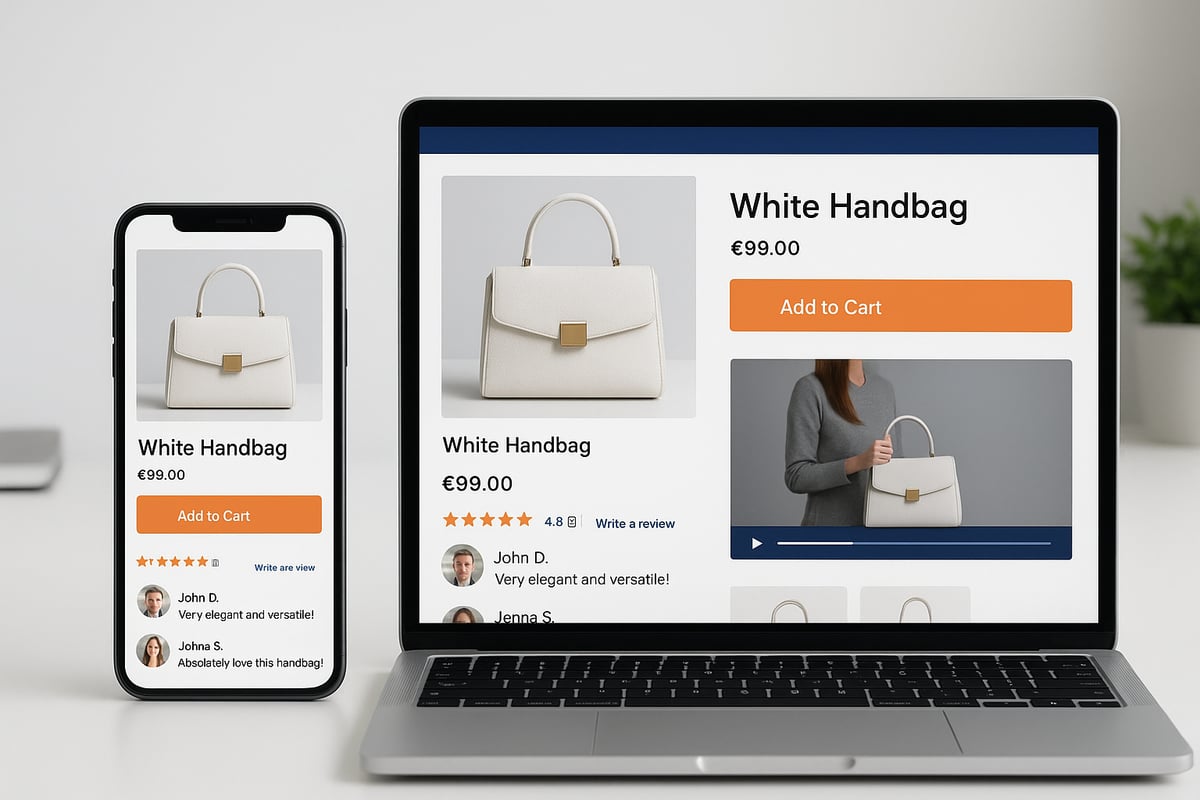
The foundation of successful e-commerce design lies in creating product pages that engage and inform. Start with detailed descriptions that tell a story, highlighting not just features but the benefits and emotions your product delivers. Use high-resolution images and video demonstrations to give shoppers a complete, transparent view.
For example, many beauty brands leverage before and after galleries to show real results. Including comparison charts and FAQs can address common objections and make decision-making easier for customers.
Best practices for product pages:
- Use multiple angles and 360° product views
- Add video demonstrations for context
- Incorporate comparison tables for clarity
- Include FAQs to resolve doubts
| Content Type | Conversion Lift |
|---|---|
| Static Images | Baseline |
| Video Demos | +37% |
Data shows that product pages with videos see a 37% higher conversion rate. In e-commerce design, these elements not only showcase your products but also build trust, reducing hesitation and boosting sales.
Leveraging User-Generated Content and Social Proof
User-generated content is a powerful tool in e-commerce design. Showcasing customer reviews, ratings, and real-life photos demonstrates authenticity and transparency, essential for building trust with new shoppers. Integrating Instagram feeds or social mentions adds a dynamic, community-driven layer to your site.
Fitness brands, for instance, feature community stories that celebrate real customer journeys. By incentivizing reviews and referrals, you can encourage more engagement and amplify your brand’s credibility.
- Highlight top-rated reviews on product pages
- Feature user-submitted photos in galleries
- Offer incentives for sharing experiences
These practices make your store feel more approachable and genuine, which is vital for modern e-commerce design. When shoppers see real people loving your products, they are more likely to convert.
Optimizing for SEO and Discoverability
Even the most visually stunning e-commerce design needs strong discoverability to drive traffic. Start with keyword-rich product titles and meta descriptions that clearly communicate value. Use structured data to enhance your listings with rich snippets in search results, making your products more attractive to click.
Fast-loading, mobile-optimized images ensure a seamless experience and better rankings. Internal linking to related products and categories helps both users and search engines navigate your store efficiently.
Example of structured data for a product:
{
  "@context": "https://schema.org/",
  "@type": "Product",
  "name": "Ultra Comfort Running Shoes",
  "aggregateRating": {
    "@type": "AggregateRating",
    "ratingValue": "4.7",
    "reviewCount": "128"
  }
}
Organic search accounts for 43% of e-commerce traffic, so optimizing every page is crucial. Prioritizing SEO in your e-commerce design ensures your content reaches the right audience and maximizes your conversion potential.
Step-by-Step Guide to Designing a High-Converting Online Store in 2026
Creating a high-converting online store in 2026 requires a strategic approach to e-commerce design. By following these actionable steps, you can ensure your store stands out, delivers exceptional user experiences, and drives measurable business growth.

Step 1: Research and Define Your Target Audience
Begin your e-commerce design journey with deep audience research. Identify core demographics, preferences, and behaviors by analyzing market data and conducting surveys. Build detailed buyer personas to guide your visual and functional decisions.
Study competitors to spot gaps and strengths in their e-commerce design. Look for patterns in navigation, product presentation, and customer engagement. Use analytics tools to pinpoint pain points and expectations unique to your potential customers.
Segment your audience for personalized experiences, such as dynamic homepages or tailored recommendations. Emphasizing user-centricity, as highlighted in User Experience in E-Commerce, ensures your e-commerce design aligns with real needs and drives loyalty.
Step 2: Choose the Right Platform and Tech Stack
Selecting the optimal platform is pivotal for e-commerce design success. Compare leading solutions like Shopify, Magento, and WooCommerce, focusing on scalability, customization, and integration capabilities. Evaluate whether a traditional or headless architecture fits your business model.
Consider composable commerce for flexibility and future-proofing. This modular approach allows you to swap or upgrade components as trends evolve. Review technical requirements for payment gateways, inventory management, and customer support integrations.
A well-chosen tech stack supports seamless user experiences and smooth operations. Document your findings in a comparison table to visualize each option’s strengths and weaknesses before making a decision.
| Platform | Scalability | Customization | Integration | Cost |
|---|---|---|---|---|
| Shopify | High | Medium | High | $$ |
| Magento | High | High | High | $$$ |
| WooCommerce | Medium | High | Medium | $ |
Step 3: Develop a Mobile-First, Responsive Design
With over 70% of shopping traffic on mobile, a mobile-first approach is non-negotiable for modern e-commerce design. Start by designing adaptive layouts that adjust seamlessly across devices and browsers.
Prioritize fast load times and touch-friendly interfaces. Test your store on various screen sizes to ensure consistency. Strategic use of whitespace, legible fonts, and clear CTAs enhances usability.
For branding consistency, refer to Achieve Consistent Branding Across Devices. This practice helps reinforce your identity and builds trust across every customer touchpoint.
Step 4: Design for Conversion and Engagement
Effective e-commerce design focuses on guiding users toward clear actions. Place CTAs prominently, using contrasting colors and concise text. Keep navigation simple, with minimal steps to reach key pages.
Implement one-click checkout and guest purchase options to reduce friction. Use urgency and scarcity cues, like limited-time offers, to motivate action ethically. Regular A/B testing of landing pages and checkout flows reveals what resonates most with your audience.
Incorporate social proof, such as reviews and testimonials, to foster trust. High-quality visuals and straightforward messaging further support conversion goals.
Step 5: Integrate Advanced Features and Personalization
Advanced features elevate your e-commerce design and cater to evolving shopper expectations. Add AI-powered product recommendations based on browsing and purchase history for a personalized touch.
Implement live chat or chatbot support for instant assistance. Offer interactive experiences, such as virtual try-ons or product configurators, to engage users. These tools not only enhance satisfaction but also increase conversion rates.
For example, beauty stores use personalized skincare quizzes to guide customers toward ideal products. Continuous innovation in features helps your store stay ahead in a competitive landscape.
Step 6: Optimize for SEO, Speed, and Accessibility
Optimization is vital for visibility and user satisfaction. Compress images and use content delivery networks for quick load times, a cornerstone of e-commerce design. Apply semantic HTML and ARIA labels to make your site accessible to all users.
Implement technical SEO best practices, such as keyword-rich titles and structured data, to improve search rankings. Ensure your site loads in under two seconds, as faster sites see significantly higher conversions.
Regularly audit your site for broken links, outdated content, and accessibility barriers. These proactive steps maintain peak performance and a positive reputation.
Step 7: Launch, Test, and Iterate
Launching your store is just the beginning. Conduct usability testing to gather real user feedback. Analyze analytics and heatmaps to identify opportunities for improvement in your e-commerce design.
Iterate based on data and trends. Update visuals, test new features, and refresh content to keep your site relevant. For instance, brands often adapt their design themes to match seasonal campaigns or evolving customer preferences.
Building a feedback loop ensures your e-commerce design evolves with your audience, driving long-term growth and success.
Best Practices and Actionable Tips for Ongoing Success
Staying ahead in e-commerce design requires ongoing effort, strategic adaptation, and a willingness to embrace change. By following a set of proven best practices, you can ensure your online store remains competitive, user-friendly, and ready for future growth.
Continuous Optimization and Conversion Rate Improvement
Continuous improvement is essential for e-commerce design success. Start by regularly reviewing analytics to pinpoint where users drop off. Implement A/B testing on key design elements such as CTAs, layouts, and product images to see what resonates best.
- Refresh product pages to match seasonality or new launches.
- Monitor site speed and resolve bottlenecks quickly.
- Leverage user feedback to spot conversion barriers.
A proactive approach to e-commerce design ensures your store adapts to customer needs and maximizes conversion rates. Keep refining your site to maintain a competitive edge.
Staying Ahead with Trend Monitoring and Innovation
E-commerce design trends evolve rapidly. Stay informed by subscribing to industry newsletters, attending webinars, and following competitor updates. Engage in professional development to keep your team’s skills sharp.
Brands that leverage early access to AI tools or experiment with new features often lead the market. For example, integrating Immersive Shopping Experiences can set your store apart by offering engaging AR and VR elements.
Businesses that invest in innovation and stay alert to trends are more likely to achieve sustained growth and customer loyalty.
Building a Feedback Loop with Customers
An effective feedback loop is vital for e-commerce design excellence. Use surveys and feedback forms to gather insights on user experience. Monitor social media and review platforms to analyze sentiment and spot recurring themes.
- Act on customer suggestions to enhance features.
- Showcase updates inspired by user input.
- Highlight stories from your community for authenticity.
This approach not only builds trust but also ensures your e-commerce design remains relevant and customer-focused.
Focusing on Security and Compliance
Security is a cornerstone of reliable e-commerce design. Stay updated on all privacy regulations such as GDPR and CCPA to protect both your business and customers.
| Security Best Practices | Why It Matters |
|---|---|
| Regular audits | Identify weaknesses |
| Display trust badges | Increase confidence |
| Secure payment gateways | Prevent fraud |
| Transparent policies | Build trust |
With 72% of shoppers abandoning carts due to security concerns, prioritizing these steps is non-negotiable for any e-commerce design.
Planning for Scalability and Global Growth
Scalable e-commerce design supports growth into new markets and handles traffic spikes effortlessly. Design your store for localization, multi-currency support, and flexible infrastructure.
- Prepare for region-specific campaigns and sales.
- Partner with logistics providers for seamless fulfillment.
- Highlight ethical practices to attract global audiences.
Embracing Sustainable and Ethical Design Practices can further set your brand apart as you expand, appealing to eco-conscious consumers and supporting long-term success.