

Calculate ecommerce customer acquisition cost by dividing sales and marketing spend by first-time paying customers acquired during the same period. For example, $25,000 spent over a quarter to acquire 100 customers produces a $250 CAC.
Channel-level CAC uses the same formula, but you must assign costs and customers consistently. The important part is matching the numerator and denominator, especially when paid social introduces shoppers who later buy through search or email.
Start with clear cost definitions before comparing channels or shifting budget.
Key Takeaways
- Include advertising, creative, agencies, software, commissions, and acquisition-related staff costs.
- Count unique first-time customers, not orders, leads, or every conversion claimed by advertising platforms.
- Compare channel CAC with contribution-based lifetime value and payback, using one attribution model and reporting window.
Calculate Ecommerce Customer Acquisition Cost Consistently
CAC = Total sales and marketing spend ÷ New customers acquired
For channel reporting:
Channel CAC = Assigned channel acquisition costs ÷ New customers credited to that channel
Include the full acquisition cost
Your numerator should include paid advertising, creative production, agency fees, affiliate marketing commissions, software tools, and acquisition-related marketing and sales salaries.
Separate acquisition work from retention work when possible. For example, allocate an email marketing platform’s costs between prospect welcome sequences and existing-customer campaigns.
Counting only media spend understates fully loaded CAC. However, the often-quoted 20% to 40% adjustment for omitted costs isn’t a substitute for your actual invoices and payroll allocations.
Keep product costs and fulfillment outside CAC. They belong in the contribution-margin calculation used to judge affordability.
Allocate shared expenses once
Assign directly traceable costs first. Then distribute shared agency retainers, production costs, and software using documented rules.
Use staff time or deliverables where available. Spend share can work when better evidence is unavailable, but keep the method stable.
For reusable creative, choose a consistent expense or allocation policy. Charging an entire production project to one launch month can distort comparisons.
Build a Channel-by-Channel CAC Worksheet
The illustrative monthly worksheet below expands the $25,000 example across five acquisition channels. It includes $18,000 in direct costs and $7,000 in allocated shared expenses.
Paid social’s $12,000 total, for example, includes $9,000 in direct costs and $3,000 in shared costs.
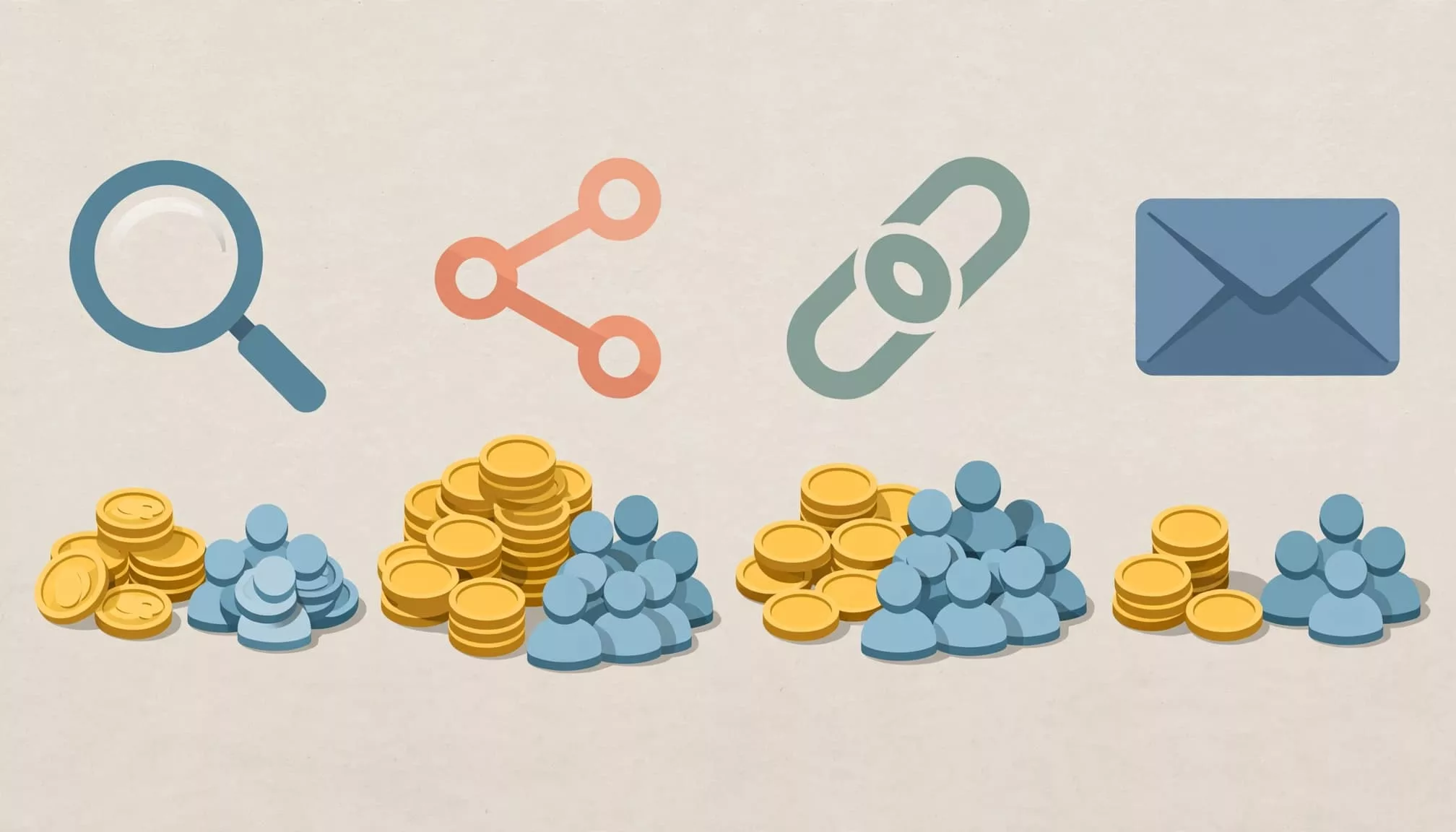
Each customer receives one channel assignment under the same attribution rule.
| Channel | Fully loaded cost | New customers | CAC | Day-120 contribution per customer |
|---|---|---|---|---|
| Paid social | $12,000 | 40 | $300.00 | $280 |
| Paid search | $7,500 | 30 | $250.00 | $275 |
| Affiliates | $2,500 | 10 | $250.00 | $225 |
| Organic search | $2,000 | 12 | $166.67 | $200 |
| Prospect email | $1,000 | 8 | $125.00 | $175 |
| Total | $25,000 | 100 | $250.00 | $255 |
The total CAC is $25,000 ÷ 100 = $250. Don’t average the five channel CAC figures equally.
Day-120 contribution means cumulative net sales minus non-acquisition variable costs. It’s measured before subtracting acquisition costs.
At 120 days, the cohort has generated $25,500 in contribution against $25,000 in acquisition costs. Yet paid social and affiliates haven’t individually recovered their costs. A healthy blended result can hide weaker channels.
Keep Attribution Windows and Customer Counts Aligned
Use order records as the customer source
Use first-party data from your commerce platform’s customer and order history to identify first-time buyers. Use stable customer IDs, reconcile guest purchases where possible, and deduplicate transaction IDs.
Exclude test, fraudulent, and canceled purchases. Document how full refunds affect customer counts, then apply that policy consistently.
Next, choose a reporting period, attribution model, and lookback window. For example, October first purchases could receive first-touch credit within a 30-day lookback.
Monthly spend divided by monthly acquisitions is a period metric. For long buying cycles, also examine matured cohorts because spending and purchasing can cross month boundaries.
Separate attributed credit from incremental demand
A shopper can discover you through Meta, return through Google, and purchase after an email. Each platform may claim the same buyer.
Don’t add platform-reported acquisitions together. Reconcile channel totals to unique first-time customers, preserving an unknown bucket for untracked journeys.
Compare first-touch and last-touch results before cutting prospecting spend. Our guide to ecommerce revenue attribution explains these differences.
A lower attributed CAC doesn’t prove a channel created additional customers. Branded search and email can receive credit for demand generated elsewhere.
For major budget decisions, use audience holdouts or geographic tests where scale permits.
Distinguish CAC, CPA, ROAS, and New-Customer CAC
CAC counts buyers; CPA counts the selected action
CAC measures the cost of acquiring a new paying customer.
CPA, or cost per acquisition/action, depends on the conversion definition. It can measure a signup, download, demo request, or purchase. Purchase CPA can include returning buyers, so it still isn’t automatically CAC.
Similarly, ROAS divides attributed revenue by advertising spend. It doesn’t deduct COGS, fulfillment, overhead, or other operating costs.
POAS uses profit rather than revenue, but definitions vary. State which costs you subtract and avoid deducting advertising twice.
Blended CAC still uses new customers
Blended ecommerce customer acquisition cost normally divides total sales and marketing spend by all new customers across channels.
Dividing spend by all orders produces a cost-per-order metric, even if a dashboard labels it blended CAC.
New-customer CAC, sometimes called nCAC, focuses on acquisition spending and first-time customers. A paid-channel nCAC may exceed blended CAC because organic channels add customers. However, that relationship can reverse when spending scopes or denominators differ.
Compare CAC Benchmarks Without Treating Them as Targets
Shopify’s industry CAC benchmarks include 2021 figures for ecommerce businesses with fewer than four employees.
These historical industry benchmarks provide context rather than current channel targets.
| Industry | Historical CAC |
|---|---|
| Arts and entertainment | $21 |
| Health and beauty | $127 |
| Fashion and accessories | $129 |
| Home and furniture | $129 |
| Electronics | $377 |
The spread shows why a single ecommerce average has limited value. Widely repeated blended estimates of $68 to $84 don’t establish an affordable CAC for your store.
Before comparing benchmarks, align the year, geography, business size, cost inclusions, and customer definition. A media-only acquisition figure can’t fairly compete with fully loaded CAC.
Your strongest benchmark is a mature customer cohort with known contribution margin, returns, and repeat purchasing. Compare channels at equal elapsed time after acquisition, rather than comparing established buyers with last week’s customers.
Judge CAC Against Contribution Margin and Payback
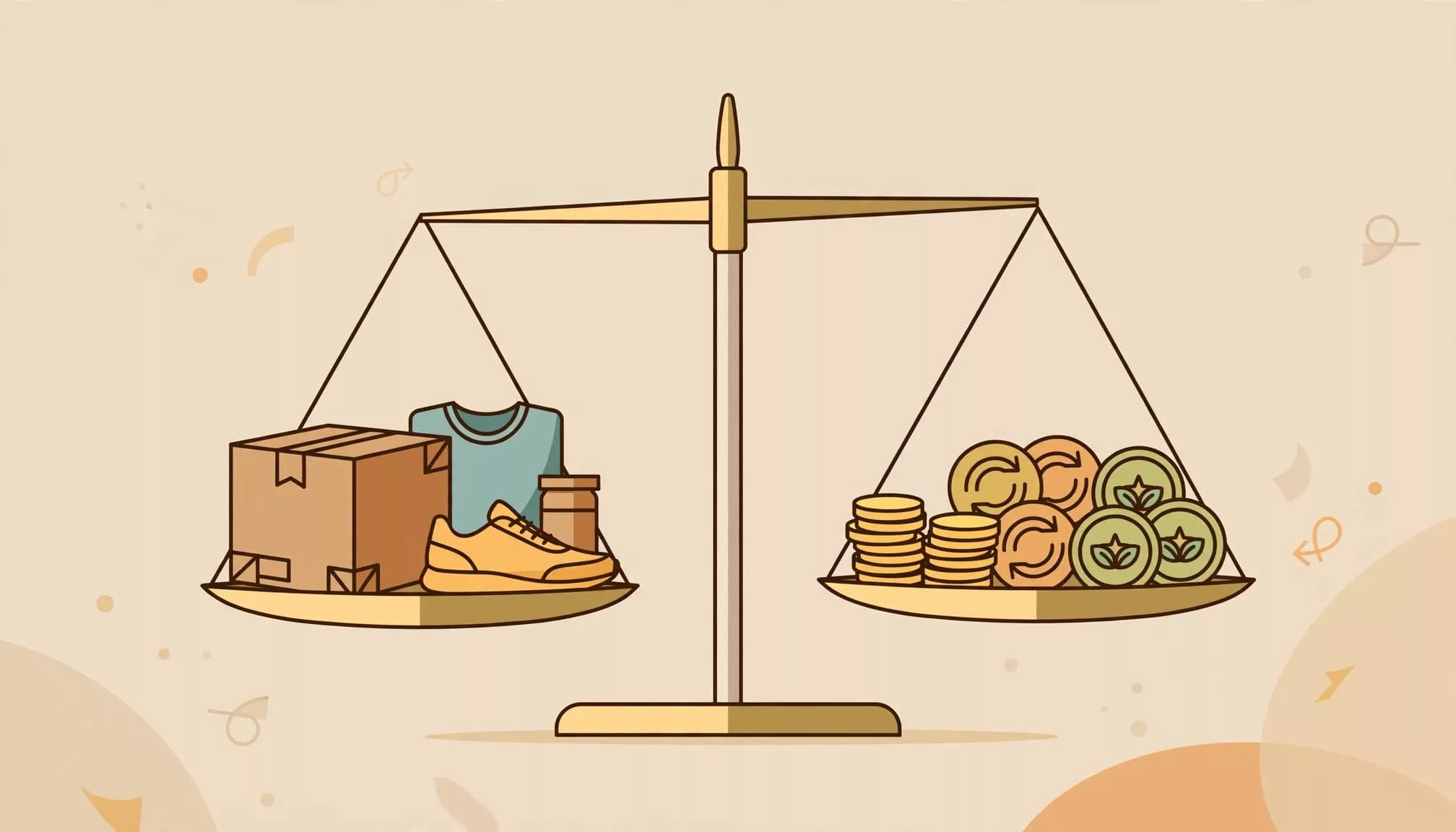
Use contribution-based customer lifetime value
The common planning rule is an LTV:CAC ratio of at least 3:1. However, revenue-based LTV can make low-margin customers appear more attractive than they are.
Use expected lifetime contribution before acquisition costs. Deduct COGS, fulfillment, payment fees, shipping subsidies, and expected returns.
At $250 CAC, $750 in lifetime contribution produces a 3:1 ratio. A ratio above 5:1 can suggest room to increase acquisition investment, but it can also reflect optimistic forecasts.
Our ecommerce contribution margin calculator helps separate order economics from acquisition spending. Count affiliate commissions once across these calculations.
Measure when contribution repays acquisition spending
The CAC payback period ends when cumulative contribution per customer equals CAC.
For standard DTC planning, a 90-to-120-day payback period is a useful recovery target, although purchase frequency and cash reserves change what’s affordable. Broader guidance sometimes allows under 12 months, which can still strain an inventory-funded store.
In the worksheet, the overall cohort recovers acquisition spending by day 120. Paid social doesn’t, despite contributing the most customers.
Use observed cohort contribution where possible. A smooth monthly payback formula can mislead when purchases are seasonal or irregular.
Lower Channel CAC Without Sacrificing Customer Quality
- Improve lookalike audiences and exclusions. Build lookalike audiences from a seed audience of profitable, low-return customers. Exclude existing buyers from prospecting when new-customer acquisition is the goal. Bloomreach’s O2 Slovakia case study reported conversion costs falling 37% for Google Responsive Ads and 25% for Discovery Ads. Those are conversion-cost results, not guaranteed ecommerce CAC reductions.
- Repair conversion friction before rejecting traffic. Match offers to landing pages, test relevant landing-page personalization, and fix unexpected delivery charges or payment failures. Our ecommerce funnel analysis guide helps locate these leaks. A/B tests can compare fixes by conversion rate. Assess any conversion rate lift against contribution and returns, not conversion rate alone.
- Improve repeat purchasing. Use post-purchase programs to encourage a repeat purchase. Shopify’s ecommerce acquisition guide, citing MobiLoud’s 2026 data, reports roughly 27% return after a first purchase and more than 54% after a second. Retention improves future lifetime economics, but it doesn’t retroactively reduce historical CAC.
- Test first-party acquisition tools with the same accounting. Shopify Audiences and customer segments can support paid targeting. Shop Campaigns charges for successful acquisitions. Include those charges in channel CAC alongside any applicable shared costs.
Frequently Asked Questions
Should retargeting count toward CAC?
Include retargeting aimed at prospects who haven’t purchased. Separate campaigns aimed at existing customers into retention reporting. For mixed audiences, allocate costs using documented customer-status data rather than assuming every conversion is new.
How often should channel CAC be reviewed?
Review operational trends weekly, but use monthly reporting and matured cohorts for larger budget decisions. Allow the attribution window and normal refund lag to develop. One strong week doesn’t establish sustainable acquisition economics.
Make Channel CAC a Budget Decision Tool
Reliable ecommerce customer acquisition cost starts with consistent costs, unique first-time buyers, and clearly labeled attribution rules. Those definitions make channel comparisons useful.
Then fund channels that produce profitable customer cohorts within an affordable payback window. A lower CAC matters only when the customers it buys contribute enough to support the business.