

Imagine launching an online store in 2026 that not only captivates with its visual appeal but also drives real results. Successful e store design now means more than just a beautiful interface. It’s about creating seamless, intelligent experiences that turn visitors into loyal customers.
This expert guide is crafted to help you stay ahead. You’ll discover essential strategies, emerging trends, and technologies that shape the most effective e store design for the future.
From breakthrough UX tactics and AI-driven personalization to accessibility, SEO, and sustainability, you’ll find actionable tips for every aspect of your next online store. Ready to transform your digital presence? Let’s dive in.
Understanding the E Store Design Landscape in 2026
The landscape of e store design in 2026 is rapidly evolving, shaped by technological innovation, shifting consumer expectations, and the drive for seamless experiences. To stay ahead, businesses must understand the key forces at play and adapt their strategies accordingly.
The Evolution of E-commerce Design
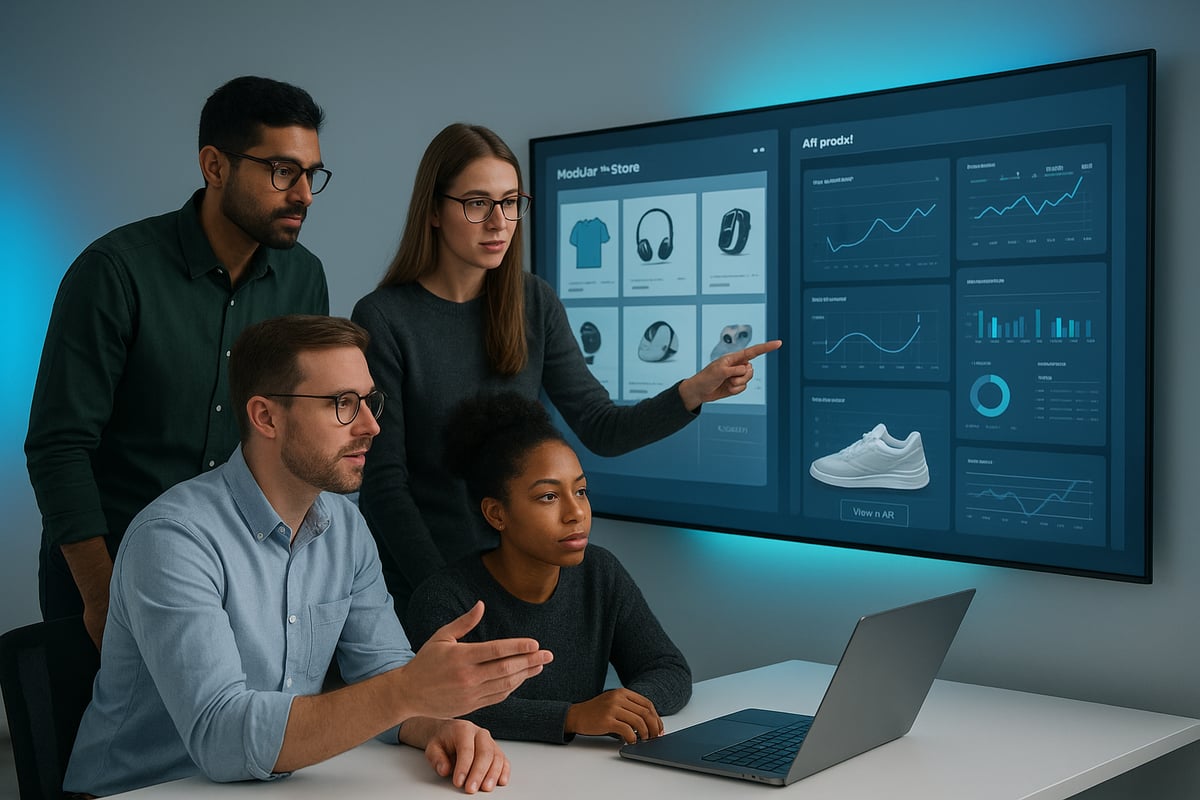
E store design has transformed from using static templates to delivering dynamic, personalized experiences tailored to each visitor. Businesses now embrace headless commerce and API-driven architectures, allowing for greater flexibility and innovation. Mobile-first and omnichannel strategies are the new standard, ensuring seamless shopping across devices and platforms.
Shopify’s rollout of modular storefronts in 2025 set a benchmark for adaptability and scalability. According to Statista (2025), 78% of top-performing stores now leverage modular design, reflecting a clear industry shift. As e store design continues to evolve, agility and adaptability have become essential for sustained growth.
Key Consumer Expectations and Behaviors
Today’s consumers demand ultra-fast load times and effortless navigation in e store design. Personalization, powered by advanced AI, is no longer a luxury but an expectation. Shoppers increasingly use voice and visual search to find products quickly and intuitively.
A striking example is the rise of AR try-on features. Nielsen (2025) reports that 65% of Gen Z shoppers prefer stores offering AR experiences. This data highlights the importance of integrating cutting-edge technologies to meet evolving consumer needs in e store design.
Major Design Trends for 2026
Minimalist interfaces, paired with immersive micro-interactions, are defining the visual language of e store design in 2026. The integration of 3D and AR product previews creates engaging, interactive shopping journeys for users. Inclusive and accessible design is now a baseline requirement, ensuring all customers can participate fully.
According to Adobe (2025), 90% of new e-commerce sites adopt dark mode and adaptive color schemes, reflecting the demand for visually comfortable experiences. For a deeper dive into best practices, explore E-commerce UX design strategies, which offers practical guidance for elevating your e store design.
The Business Case for Cutting-edge Design
Investing in advanced e store design directly impacts conversion rates and customer retention. Modern, user-centric designs enhance brand perception and build trust with shoppers. Brands that updated their design in the past year reported a 32% increase in average order value, according to BigCommerce (2025).
These results demonstrate that e store design is more than aesthetics; it is a driver of business performance. Companies prioritizing innovative, customer-focused solutions gain a significant competitive advantage.
Challenges and Opportunities
The journey to future-ready e store design presents both challenges and opportunities. Balancing innovation with usability is crucial, as overly complex interfaces can deter users. Rapid technological changes and shifting consumer trends require businesses to remain agile.
Forrester (2025) found that 47% of e-commerce leaders consider design agility their top challenge. However, those who adapt quickly are poised to seize new opportunities and set industry standards for e store design.
Step-by-Step Process to Designing a Future-Proof E Store
Designing a future-proof e store design in 2026 requires a strategic, step-by-step approach. Each phase builds on the last, ensuring your online store not only looks modern but also delivers exceptional performance, accessibility, and user engagement.

Step 1: Research and Planning
Every successful e store design starts with in-depth research and meticulous planning. Begin by analyzing your competitors to understand what works and what does not in your niche. Conduct audience research to uncover your ideal customer’s preferences and pain points.
Map out your unique selling propositions, define your brand voice, and set measurable goals for both design and business growth. For example, mapping detailed customer journeys enables you to personalize the user experience from the outset.
A well-structured research phase lays the foundation for a robust e store design that is both relevant and resilient.
Step 2: Choosing the Right Platform and Tech Stack
The next step in e store design is selecting the optimal platform and technology stack. Consider whether a headless or traditional platform aligns better with your growth plans. Headless commerce offers greater flexibility and scalability, while traditional solutions may provide simplicity for smaller operations.
| Platform Type | Flexibility | Scalability | Integration Support |
|---|---|---|---|
| Headless | High | High | Extensive |
| Traditional | Moderate | Moderate | Limited |
According to Gartner, 62% of new stores in 2026 opt for headless CMS, reflecting a significant shift in e store design preferences.
Step 3: Crafting a User-Centric Layout
A user-centric layout is at the heart of effective e store design. Prioritize intuitive navigation, clear calls to action, and a seamless flow from browsing to checkout.
Optimize for mobile-first and touch interfaces, ensuring every element is easily accessible on smartphones and tablets. Card-based layouts have become popular for product discovery, making browsing engaging and visual.
By focusing on the user journey, you ensure your e store design removes barriers and encourages conversions.
Step 4: Integrating Advanced Visuals and Media
Modern e store design leverages advanced visuals to engage and inform. Incorporate 3D models, AR previews, and high-resolution images to showcase products more vividly.
Utilize video for product demos and storytelling, enhancing the shopping experience. According to Snap Inc., AR-enabled stores see 40% higher engagement, making interactive visuals a must-have in your e store design arsenal.
These enhancements not only attract attention but also reduce uncertainty and returns.
Step 5: Personalization and AI-driven Experiences
Personalization is a core pillar of e store design in 2026. Implement AI-powered product recommendations, dynamic content, and real-time chatbots to deliver tailored experiences.
For a deeper dive into how AI can elevate your e store design, explore Integrating AI in web design.
AI-driven features anticipate customer needs and boost satisfaction, making your e store design smarter and more effective.
Step 6: Ensuring Accessibility and Inclusivity
A future-proof e store design must prioritize accessibility and inclusivity from the ground up. Follow WCAG 2.2 standards and ensure ADA compliance to serve users with diverse abilities and backgrounds.
Design with screen reader compatibility, alt-text for all visuals, and support for multiple languages. Features like voice navigation can further enhance accessibility, broadening your store’s reach.
An accessible e store design not only fulfills legal requirements but also builds trust and loyalty.
Step 7: Testing, Optimization, and Launch
Before launching, rigorous testing and optimization are essential for a high-performing e store design. Conduct usability testing and A/B experiments to identify friction points.
Utilize analytics to guide iterative improvements, and prepare a launch strategy that maximizes initial impact and gathers valuable feedback.
Pre-Launch Checklist:
- Usability testing completed
- Mobile and desktop optimization
- Analytics tracking set up
- Feedback channels enabled
A thorough launch process ensures your e store design is ready to perform from day one.
Integrating AI and Automation for Smarter E Store Design
Artificial intelligence is redefining e store design in 2026, making online retail more intuitive and data-driven than ever. Retailers who embrace these innovations gain a decisive edge, delivering seamless shopping journeys that anticipate customer needs and streamline backend operations.
The Role of AI in 2026 E-commerce
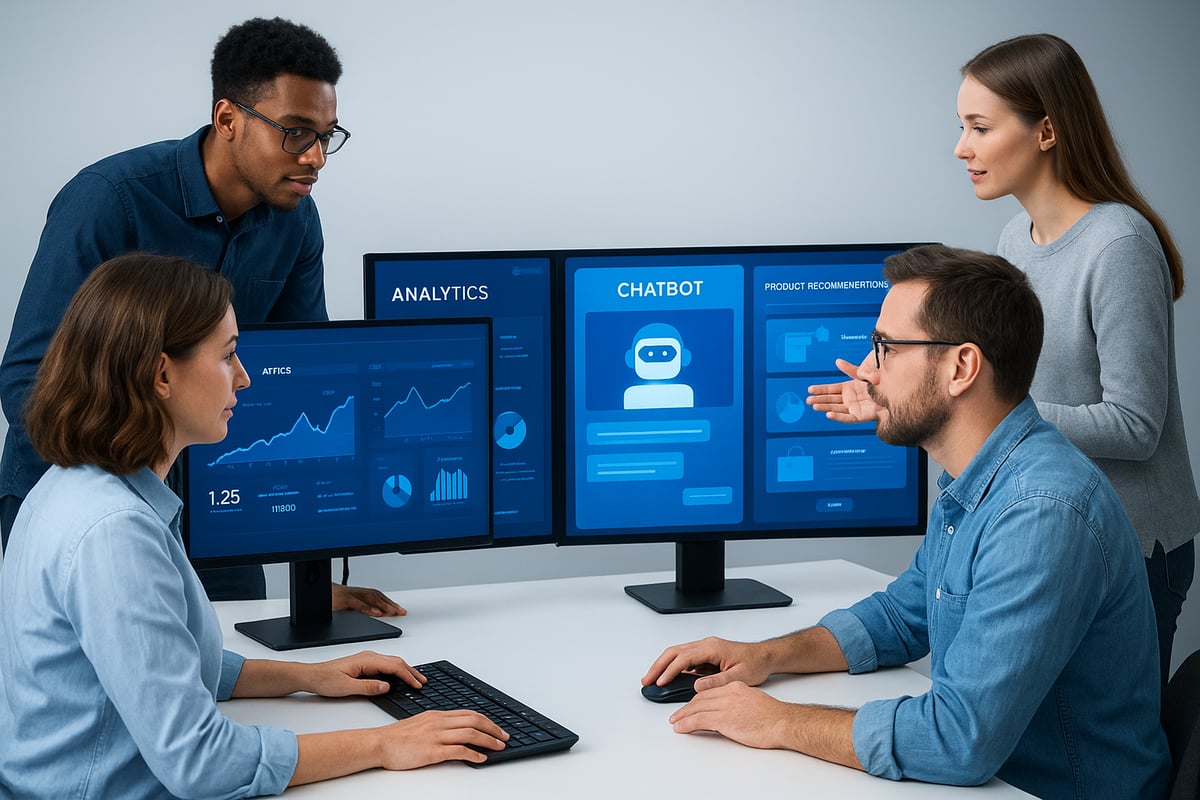
AI is the backbone of next-generation e store design. Powerful algorithms now optimize layouts, product placements, and user flows in real time. Predictive analytics models anticipate customer actions, enabling retailers to adjust inventory and promotions dynamically.
For example, AI-generated product descriptions reduce manual workload while improving SEO consistency. These advances allow e store design teams to focus on creativity and strategy, knowing routine optimizations are handled automatically.
Automation for Efficiency and Personalization
Automation is transforming e store design by managing inventory, pricing, and marketing at scale. Automated workflows handle stock updates and dynamic pricing, ensuring products are always available and competitively priced.
Personalized marketing is now the norm. AI tailors emails and SMS campaigns to each shopper, driving higher engagement and conversions. According to recent trends, AI-powered personalization in e-commerce is essential for standing out in a crowded market, directly enhancing e store design effectiveness.
AI-powered Search and Discovery
Modern e store design leverages AI to make product discovery effortless. Visual and voice search tools interpret customer intent more accurately, connecting shoppers to relevant products instantly.
Smart filtering systems use machine learning to refine results in real time, while product recommendations update as users browse. Stores that adopt these features often see a 22% increase in conversion rates, proving that AI-driven discovery is a cornerstone of successful e store design.
Enhancing Customer Support with AI
Customer support is a critical pillar of e store design. AI chatbots and virtual assistants now resolve common issues around the clock, providing immediate answers and reducing wait times.
Automated systems process returns and FAQs efficiently, allowing human agents to focus on complex queries. The result is a 45% reduction in support resolution times, which directly improves customer satisfaction and loyalty in e store design.
Balancing AI with Human Touch
The best e store design strategies combine AI efficiency with authentic brand interaction. While automation handles repetitive tasks, maintaining a personal connection is vital.
Transparent AI practices build trust, with 68% of consumers preferring brands that explain how automation shapes their experience. E store design should always prioritize ethical AI use, ensuring technology enhances rather than replaces the human element.
Optimizing for User Experience, Accessibility, and Mobile
Optimizing e store design for 2026 requires a holistic approach that places the user at the center of every decision. Modern consumers expect seamless, intuitive, and accessible shopping experiences, regardless of how or where they access your online store. Let us explore the pillars that support a future-proof e store design, focusing on mobile-first strategies, accessibility, user experience best practices, trust-building, and ongoing optimization.

Mobile-first and Responsive Design
Mobile devices continue to dominate online shopping, with 74 percent of e-commerce traffic coming from smartphones and tablets. For e store design, prioritizing mobile-first principles is essential. Responsive layouts automatically adapt to any screen size, delivering consistent experiences from desktops to wearables.
Key elements of mobile-first e store design include:
- Touch-friendly buttons and navigation
- Fast-loading pages optimized for limited bandwidth
- Clear, readable fonts and adaptive images
A responsive e store design reduces bounce rates and keeps users engaged. By embracing mobile-first strategies, you ensure your site meets the evolving preferences of today’s shoppers.
Accessibility as a Competitive Advantage
Leading e store design in 2026 must be inclusive by default. Accessibility features like screen reader compatibility and keyboard navigation open your store to a wider audience. Designing with color blindness and cognitive disabilities in mind is not just an ethical choice, but a business advantage.
Accessible e store design includes:
- Alt text for all images and icons
- High-contrast color schemes
- Logical content structure for assistive tech
Brands that invest in accessibility often see conversion rates increase by up to 20 percent. Making your e store design inclusive helps you reach more customers and strengthens brand loyalty.
UX Best Practices for 2026
User experience is the backbone of effective e store design. Streamlined checkout processes, real-time personalization, and adaptive layouts are no longer optional. Shoppers expect frictionless journeys from product discovery to purchase.
Best practices to implement:
- Simple, uncluttered navigation menus
- One-click checkout and guest options
- Contextual product recommendations
With one-click checkout adoption rising to 55 percent, optimizing your e store design for speed and simplicity can significantly boost conversion rates. Stay ahead by continually refining your UX based on user feedback.
Building Trust and Reducing Friction
Trust is a cornerstone of high-performing e store design. Displaying trust signals, such as secure payment badges and clear return policies, reassures visitors. Transparent customer support options also reduce friction during the buying process.
Key trust-building features:
- Prominent display of SSL certificates
- Easy-to-find return and refund policies
- Multiple secure payment methods
Transparent policies can lead to a 28 percent increase in repeat purchases. Prioritizing trust within your e store design helps convert first-time visitors into loyal customers.
Measuring and Improving UX Continuously
Continuous improvement is vital for sustaining effective e store design. Utilize heatmaps, session replays, and user feedback to identify pain points and opportunities. Regular UX audits based on analytics allow you to make data-driven design updates.
Tools for ongoing optimization:
- Heatmap and behavior analytics software
- A/B testing for layout and messaging
- Monthly UX performance reviews
Monthly UX audits have been shown to improve retention by 15 percent. By making optimization a routine part of your e store design process, you ensure your store evolves with user needs and market trends.
SEO, Localization, and Sustainable E Store Practices
Optimizing e store design for the future means looking beyond surface-level aesthetics. In 2026, the most successful online stores will integrate advanced SEO, localization, and sustainability practices as core pillars of their strategy. Each factor plays a critical role in building visibility, trust, and long-term growth for your e store design.
Advanced SEO Strategies for E Stores
To ensure your e store design achieves maximum reach, advanced SEO is essential. Structured data and schema markup enable search engines to better understand your content, improving visibility in rich snippets and voice search results. Optimizing for site speed, core web vitals, and mobile performance is now standard, as search engines prioritize user experience.
Modern e store design incorporates voice search optimization, as more shoppers use voice assistants to find products. In fact, stores with schema-rich product listings rank 18 percent higher on average. For actionable techniques and the latest best practices, consider reviewing Advanced SEO tips for e-stores.
Localization for Global Reach
Expanding your e store design to serve a global audience requires thoughtful localization. Multi-language support and region-specific content help connect with diverse customers, making your store accessible and relatable. Integrating local payment gateways and shipping methods streamlines the purchase process for international buyers.
Localization does not stop at translation. Adapting imagery, promotions, and legal policies to fit local markets sets leading e stores apart. Data shows that localized e stores achieve 30 percent higher international sales, demonstrating the value of a global approach to e store design.
Embracing Sustainable and Ethical Design
Sustainability is now a baseline expectation in e store design. Eco-friendly hosting, efficient code, and resources that minimize energy consumption appeal to environmentally conscious shoppers. Highlighting sustainable products and ethical business practices builds trust and loyalty.
Displaying green badges and certifications can elevate conversion rates by 12 percent. For a deeper dive into how to embed these values into your e store design, explore the insights in Sustainable e-commerce website design.
Leveraging Expert Resources for Ongoing Optimization
The digital landscape evolves rapidly, making continuous improvement a must for effective e store design. Staying updated with industry trends, algorithm changes, and emerging technologies ensures your store remains competitive. Utilizing expert guides, community forums, and professional platforms can provide future-ready strategies and support.
By prioritizing ongoing learning and adaptation, every aspect of your e store design can be optimized for long-term growth and resilience in the international market.
Case Studies: Inspiring Examples of Next-Gen E Store Design
Real-world examples bring the future of e store design into sharp focus. The following case studies showcase how innovative brands are leveraging cutting-edge strategies to meet evolving customer needs, drive measurable business results, and set new standards in online retail.
Fashion Retailer Leveraging AR and Personalization
A leading fashion retailer transformed its e store design by integrating AR try-on technology and AI-driven product curation. Shoppers can now virtually try clothes using their smartphones, creating a personalized experience that feels both immersive and intuitive. This approach not only improved engagement but also empowered users to make confident buying decisions.
The results were striking. The company saw a 35% boost in average order value and a 50% reduction in return rates. These numbers reflect the growing impact of augmented reality in online shopping on customer satisfaction, setting a new benchmark for e store design in the fashion industry.
Direct-to-Consumer Brand with Inclusive Design
A direct-to-consumer brand reimagined its e store design to prioritize accessibility and localization. By implementing multi-language support, screen reader compatibility, and keyboard navigation, the store became welcoming to a broader, more diverse audience. The design also featured adaptive color schemes and clear visual hierarchies.
These inclusive measures led to a 22% increase in international sales and marked improvement in customer loyalty. The brand’s commitment to accessibility demonstrates that thoughtful e store design not only meets regulatory standards but also drives tangible business growth.
Sustainable E Store with Transparent Practices
Another standout example comes from a retailer focused on sustainability. Their e store design highlights eco-friendly products, utilizes green hosting solutions, and clearly communicates ethical sourcing practices. The store features transparency badges and dedicated sections for sustainability initiatives.
Customers responded positively to these transparent practices. The store achieved an 18% higher repeat customer rate and fostered a strong sense of positive brand sentiment. This case proves that integrating sustainability into e store design can build lasting trust and loyalty.
Tech Store Using AI for Seamless Shopping
A tech retailer harnessed advanced AI to create a frictionless e store design. AI-powered search, responsive chatbots, and dynamic pricing tools streamline the user journey. Customers can quickly find products, receive instant support, and benefit from personalized recommendations.
This focus on automation and user-centric design resulted in a 40% faster checkout process and a 30% increase in conversion rates. The case highlights how smart integration of AI can redefine the standards of e store design, making shopping both efficient and enjoyable.