

E-commerce is evolving at a record pace, making it more challenging than ever for brands to capture and keep online shoppers’ attention. In this dynamic environment, e commerce graphic design is not just about aesthetics. It is a driving force behind how customers perceive your brand, interact with your site, and ultimately make purchasing decisions.
Design trends can directly influence user engagement, trust, and sales. With so many options available, brands that leverage the latest e commerce graphic design innovations stand out and foster stronger connections with customers.
Staying ahead of the curve is essential. Embracing fresh ideas in e commerce graphic design can be the difference between blending in and leading the market.
In this article, you will discover the eight most inspiring e-commerce graphic design trends for 2026. Each trend is packed with actionable insights and real-world examples to help your business elevate its online presence and drive measurable results.
The Importance of Graphic Design in E-Commerce

The Direct Link Between Visuals and Conversion Rates
First impressions matter more than ever in e commerce graphic design. Research shows that 38% of visitors leave a website if the design or content is unattractive. Visuals do more than beautify a site, they guide customer decisions and impact trust. High-quality graphics elevate the perceived value of products and signal professionalism. According to the Impact of Graphic Design on Digital Marketing, effective visual strategies can lead to higher conversion rates and greater brand recall.
Enhancing User Experience and Brand Loyalty
Consistent e commerce graphic design strengthens brand recognition and encourages repeat purchases. A cohesive layout and uniform branding foster familiarity, making shoppers feel at home. Good design also streamlines navigation, reducing friction at checkout and making it easy for users to find what they need. Visual cues, such as icons and banners, can highlight new arrivals or special offers, improving product discoverability and supporting upselling initiatives.
Impact of Mobile-First Design on Shopping Behavior
With 73% of online shoppers now using mobile devices, e commerce graphic design must prioritize responsiveness. Mobile-friendly visuals ensure accessibility for a wide audience and create a seamless shopping experience. Graphics that adapt smoothly to different screen sizes eliminate frustration and keep users engaged. Responsive design also maintains brand integrity across all platforms, helping businesses reach customers wherever they are.
The Power of Emotional Connection Through Design
Colors, typography, and imagery in e commerce graphic design evoke powerful emotions that drive purchasing decisions. Thoughtfully chosen palettes and expressive fonts can make a brand feel more relatable and memorable. Storytelling through visuals creates an emotional narrative, forging stronger bonds between customers and brands. When shoppers connect emotionally, they are more likely to trust the brand and become loyal advocates.
The Competitive Edge of On-Trend Visuals
Adopting current trends in e commerce graphic design positions brands as innovative and forward-thinking. On-trend visuals signal to shoppers that a site is modern and trustworthy, preventing it from appearing outdated. Brands that evolve with design trends attract more attention and stand out in a crowded digital marketplace. Staying updated is essential for maintaining a competitive edge and ensuring long-term success.
8 Inspiring E Commerce Graphic Design Trends for 2026
The landscape of e commerce graphic design is evolving at a rapid pace, with new trends redefining how brands connect with digital shoppers. Staying current is no longer optional—it’s essential for capturing attention, building trust, and driving sales. In 2026, these eight trends will empower brands to stand out and thrive in the competitive online marketplace.
1. Immersive 3D Product Visualizations
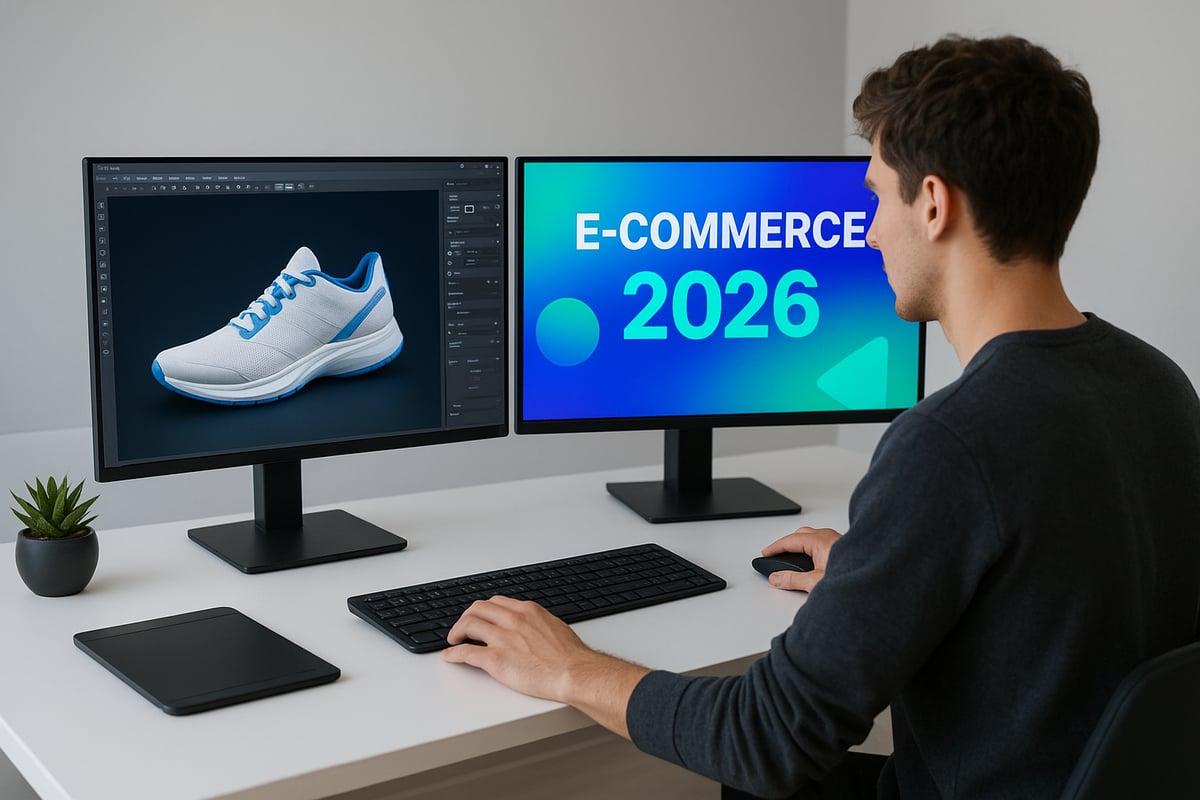
The future of e commerce graphic design is three dimensional. In 2026, 3D product visualizations are transforming digital shopping into a tactile, interactive experience. Brands now use 3D modeling to let customers rotate, zoom, and inspect products from every angle, closely simulating in-store browsing.
- Customers can interact with products, boosting confidence and reducing returns.
- Virtual try-ons for apparel and accessories bring personalization to a new level.
- Integration with AR makes the experience even more immersive.
According to industry data, interactive 3D visuals can increase e commerce graphic design conversion rates by up to 40 percent. This trend is especially valuable for sectors like fashion, electronics, and home decor, where detail matters. For a deeper look at this trend, see 3D Hyper-Realistic Visuals in Design.
A quick comparison:
| Feature | 2D Images | 3D Visualizations |
|---|---|---|
| Interaction | Static | Fully interactive |
| Buyer Confidence | Moderate | High |
| Return Rate Impact | Neutral | Reduced |
| Engagement Time | Low | High |
Adopting 3D in your e commerce graphic design toolkit can set your store apart, offering experiences that engage and convert.
2. AI-Generated Personalized Graphics
AI is rapidly reshaping e commerce graphic design through automated personalization. In 2026, AI-driven tools generate banners, product images, and recommendations tailored to each visitor’s preferences and browsing history.
- Dynamic visuals change in real time for every user.
- AI enables rapid A/B testing and creative iterations.
- Homepages and ads become unique for each shopper.
Personalized e commerce graphic design increases relevance, keeps visitors engaged, and reduces bounce rates. For example, a returning customer might see banners featuring products similar to their last purchase, while a new visitor receives introductory offers. This level of customization is scalable, making it ideal for stores with large catalogs.
Brands leveraging AI in e commerce graphic design report higher engagement and conversion rates. As AI tools become more sophisticated, expect even deeper personalization and creative diversity.
3. Sustainable and Eco-Conscious Visual Storytelling
Sustainability is now central to e commerce graphic design. In 2026, brands are weaving eco-friendly themes, earthy palettes, and natural textures into their digital storefronts. This visual storytelling appeals to the growing base of environmentally conscious shoppers.
- Use of recycled material mockups and carbon-neutral icons.
- Minimalist layouts reduce digital "waste" and improve site speed.
- Storytelling highlights ethical sourcing and responsible practices.
A recent survey reveals that 73 percent of Gen Z shoppers prefer sustainable brands. Eco-conscious e commerce graphic design not only builds trust but also differentiates your brand in a crowded market.
Showcasing sustainability through visuals—like green accents, organic textures, and transparency about materials—can turn values into conversion drivers. For many, visual authenticity is as important as product quality.
4. Bold Typography and Maximalist Fonts
Typography is taking center stage in e commerce graphic design for 2026. Expect expressive, oversized fonts that command attention and inject personality into digital storefronts.
- Headlines and calls to action use bold, contrasting typefaces.
- Kinetic typography adds motion and energy to banners.
- Creative font pairings establish clear visual hierarchy.
Fashion retailers, in particular, use maximalist fonts to announce flash sales or new collections, ensuring their messages stand out in busy social feeds. The challenge in e commerce graphic design is balancing creativity with readability—an eye-catching headline should never sacrifice clarity.
Bold typography is not just a trend, it’s a tool for instant brand recognition and emotional impact. Creative, well-placed fonts can drive engagement and boost conversions when used thoughtfully.
5. Micro-Animations and Interactive UI Elements
Micro-animations are redefining e commerce graphic design by making user interfaces lively and intuitive. These subtle motions add personality, guide user actions, and create a sense of responsiveness.
- Animated buttons and icons draw attention to key actions.
- Product cards flip or expand on hover, increasing interactivity.
- Motion graphics highlight steps in the shopping journey.
Studies show that micro-animations can boost click-through rates by 20 percent. In e commerce graphic design, well-crafted animations enhance the shopping experience without slowing down performance. The key is subtlety—animations should support, not distract from, the buying process.
To maintain fast load times, use lightweight formats and test for accessibility. The result is a site that feels modern, engaging, and easy to use.
6. Inclusive and Diverse Visual Representation
Diversity and inclusion are pillars of e commerce graphic design in 2026. Brands are featuring a broader range of models, illustrations, and cultural motifs to reflect the diversity of their audiences.
- Product imagery showcases various skin tones, ages, and body types.
- Graphic elements include multicultural patterns and symbols.
- Authentic representation builds trust and relatability.
Research indicates that inclusive marketing boosts purchase intent by 23 percent. In e commerce graphic design, representation should be authentic and avoid tokenism. Genuine inclusion fosters brand loyalty and positions your store as forward-thinking and welcoming.
Updating your visual library to include diverse assets sends a clear message: everyone is welcome.
7. Vibrant Gradients and Futuristic Color Schemes
Color is a powerful force in e commerce graphic design. For 2026, vibrant gradients and futuristic palettes are taking over. Neon, holographic, and iridescent colors create depth and signal modernity.
- Gradients are used for backgrounds, buttons, and overlays.
- Futuristic schemes draw attention to products and key CTAs.
- Minimalist layouts balance the boldness of these colors.
Tech and lifestyle brands are leading the way, using gradients in hero sections and product highlights to capture attention instantly. In e commerce graphic design, accessibility is crucial—ensure sufficient color contrast for readability.
When used strategically, bold colors can make your brand feel fresh and innovative, helping you stand out in a crowded market.
8. Data-Driven Infographics and Visual Content
Information is most powerful when visualized. In 2026, data-driven infographics are at the heart of e commerce graphic design, helping shoppers make informed decisions quickly.
- Product pages feature size guides, comparison charts, and visual metrics.
- Infographics simplify complex data, such as sustainability impact.
- Interactive elements let users explore features and stats.
The human brain processes visual content 60,000 times faster than text. Optimizing infographics for e commerce graphic design means ensuring they load quickly and display clearly on any device.
A sample use case: an interactive chart comparing product features or environmental impact guides buyers to the best choice. Fast-loading, mobile-friendly visuals are essential to keep users engaged and informed.
Optimizing E Commerce Graphics for Speed and Mobile
In the competitive world of e commerce graphic design, delivering visually stunning graphics is only half the equation. Shoppers expect fast load times and seamless browsing, especially on mobile devices. Striking the right balance between creative visuals and site performance is essential for keeping users engaged and reducing bounce rates.

Balancing Visual Appeal with Performance
Every extra second a site takes to load can cost valuable conversions. In e commerce graphic design, compressing images and using modern file formats like SVG and WebP can significantly reduce file sizes without sacrificing quality. Prioritizing above the fold content ensures shoppers see key visuals immediately, while lazy loading allows graphics below the fold to appear only as needed.
- Use image compression to maintain quality and speed
- Choose scalable formats for sharper visuals
- Implement lazy loading for off screen content
By focusing on these strategies, brands create a visually appealing experience that does not slow down the shopping journey.
Responsive Design Best Practices
Modern e commerce graphic design must adapt to every screen size. Responsive graphics automatically scale for desktops, tablets, and smartphones, ensuring a consistent look and feel. Single column layouts with large, readable fonts make content accessible on small devices. Always make sure calls to action remain visible and easy to tap, no matter the device.
Designing with flexibility in mind allows users to navigate, shop, and check out smoothly. Clean layouts, optimized images, and adaptive elements contribute to a frictionless mobile experience.
Case Studies and Data Points
Research shows how critical speed is for e commerce graphic design. A one second delay in page load time can reduce conversions by 7 percent, highlighting the direct link between performance and sales. Mobile optimized visuals lead to higher engagement rates and lower bounce rates, as users are less likely to abandon slow sites.
These data points reinforce the need for brands to invest in fast, responsive graphics. By prioritizing speed, businesses can boost user satisfaction and increase their competitive edge.
Tools and Resources for Optimization
Optimizing e commerce graphic design requires the right set of tools. Image compression platforms like TinyPNG and Squoosh help reduce file sizes efficiently. Performance testing services such as Google PageSpeed Insights provide actionable feedback to improve load times. For more detailed techniques, refer to this guide on optimizing product images for speed.
Regular use of these resources ensures that graphics remain sharp, lightweight, and mobile friendly. Investing in ongoing optimization keeps sites performing at their best as design trends evolve.
Building Brand Consistency Through Visual Identity
Establishing a recognizable and cohesive visual identity is a cornerstone of effective e commerce graphic design. A well-defined brand language, which includes colors, fonts, icons, and imagery, ensures that every digital touchpoint feels unified. This cohesion helps customers instantly identify your business, making each interaction more memorable and trustworthy.
A comprehensive design system or style guide is invaluable for maintaining this consistency. It provides clear direction to internal teams and external partners, ensuring that every element aligns with the brand’s voice and values. For brands seeking to refine their approach, exploring E-commerce design best practices offers a solid foundation for developing a unified look and feel.

Establishing a Cohesive Brand Language
Consistency in e commerce graphic design starts with a strong brand language. This includes a signature color palette, designated fonts, and a set of icons and imagery that represent the brand’s personality. When these elements are used systematically, they create a visual thread that ties together every aspect of the customer experience.
A cohesive design language simplifies the creative process for marketing campaigns and product launches. Teams can quickly assemble new materials, confident that every asset will reinforce the brand’s identity. The result is a seamless, professional presence that resonates across all digital platforms.
The Role of Consistency in User Trust and Loyalty
Visual consistency is not just about aesthetics, it is fundamental to building trust. If customers encounter different visuals or conflicting styles, it creates confusion and diminishes credibility. Consistent e commerce graphic design reassures users, signaling reliability and professionalism.
Repetition of design elements, such as logo placement and uniform button styles, helps users navigate online stores with ease. Over time, these repeated cues foster familiarity, which is essential for turning first-time shoppers into loyal customers. Trust grows when users know what to expect visually at every interaction.
Examples of Consistent E-Commerce Branding
Many leading brands excel at maintaining visual consistency throughout their e commerce graphic design. For example, fashion retailers often use the same signature color palette and logo positioning on their website, social media, and email campaigns. Tech companies may rely on consistent iconography and typography to express innovation and clarity.
This dedication to uniformity extends to product packaging and promotional materials. When a brand’s visuals remain harmonious across all channels, it amplifies recognition and strengthens customer recall. A cohesive approach ensures that the brand stands out in a competitive digital landscape.
Actionable Steps for Maintaining Consistency
Maintaining consistency in e commerce graphic design requires ongoing attention. Regular design audits help identify areas where branding may have drifted or become outdated. Updating style guides to reflect new trends or business goals keeps the brand fresh while preserving its core identity.
Training staff on brand guidelines and providing access to approved assets ensures everyone is aligned in their creative efforts. Leveraging tools for version control and template management streamlines the process. For more insights on creating unified visuals, reviewing E-commerce design best practices can help teams stay on track and maintain a strong, recognizable presence.
Frequently Asked Questions
What are the key benefits of following graphic design trends in e-commerce?
Adopting current e commerce graphic design trends can boost brand credibility, increase conversions, and keep your store visually competitive in a dynamic market.
How do I choose the right graphic design trend for my online store?
Consider your brand identity, target audience, and usability. Trends should align with your values and enhance user experience.
Are there affordable tools for implementing these trends?
Yes, many accessible design platforms and AI tools support trend adoption, making e commerce graphic design updates feasible for all budgets.
How can small businesses compete with larger brands using design?
Focus on authenticity, storytelling, and inclusivity. Applying inclusive design principles for accessibility helps build trust and reach broader audiences.
What’s the best way to test new design trends on my site?
Use A/B testing and monitor analytics to compare user engagement before and after implementing new visual elements.