


In 2026, the competition in online retail is fierce, and delivering a standout ux e commerce experience is what sets successful brands apart. Customers expect seamless, intuitive journeys from first click to repeat purchase, making user experience more critical than ever.
This guide is designed for e-commerce leaders, designers, and marketers aiming to optimize every digital touchpoint. You will discover proven strategies, innovative trends, and actionable frameworks to enhance your store’s UX, driving higher conversions, loyalty, and growth.
Ready to unlock the fundamentals, step-by-step optimization, AI-driven personalization, and future-proofing techniques? Let’s dive in and start transforming your e-commerce experience for measurable results.
Understanding E-Commerce UX: Foundations & Impact
Delivering a remarkable shopping experience is at the core of digital retail success. In the world of ux e commerce, user experience encompasses far more than visual appeal. Every interaction, from the first click to post-purchase communication, shapes how customers perceive your brand.

Defining E-Commerce UX and Its Scope
User experience, or UX, in e-commerce refers to the entire journey a customer takes with your online store. This includes every digital touchpoint: landing pages, product listings, the checkout process, and even post-purchase follow-up. In ux e commerce, it is crucial to remember that UX is not limited to how a website looks.
A common misconception is that UX and UI (user interface) are the same. While UI focuses on the visual components, such as buttons, colors, and layout, UX is about how users feel and interact with your store. Competitor leaders emphasize that a well-designed UI is just one part of superior ux e commerce, with the true value coming from how easily users can find what they need and complete their goals.
UX covers essential areas like site navigation, seamless product discovery, efficient checkout, transparent return processes, and ongoing support. The experience must be cohesive, starting from the first impression—whether a user lands on your homepage, a product detail, or a blog article. A holistic approach ensures that every phase, from new visitor to loyal repeat buyer, is thoughtfully optimized.
Why UX Matters for E-Commerce Success
The impact of ux e commerce on business performance is profound. Industry studies reveal that enhancing UX can boost conversion rates by up to 400%. This means that every improvement to usability, speed, or clarity can directly drive more sales and revenue for your store.
Customer satisfaction is tightly linked to excellent UX. When shoppers find it easy to browse, compare, and purchase, they are more likely to return and recommend your brand to others. Amazon, for example, prioritizes functional design over flashy visuals, ensuring that product search and checkout are fast and intuitive. Allbirds is another brand known for its simple, welcoming homepage, guiding users quickly to the right products.
It is important to note that ux e commerce begins before shoppers even reach your homepage. Many visitors arrive from search engines, social media, or email campaigns, often landing on specific product or content pages. Optimizing every entry point ensures a consistent experience and keeps customers engaged from the very start.
Key Elements of E-Commerce UX
Several elements define outstanding ux e commerce. Navigation menus must be clear and logical, making it easy for users to find what they want. Powerful search functionality, fast page loading, and mobile responsiveness are non-negotiable. Accessibility is also essential, enabling all users, including those with disabilities, to shop comfortably.
Effective copywriting and clear communication help users understand product value and make informed choices. Journey mapping is a valuable tool, helping brands visualize each step users take and identify friction points. By mapping the journey, teams can ensure that users always reach their intended destination with minimal effort.
UX is not a one-time project but an ongoing commitment to customer advocacy. For those seeking practical guidance on optimizing these elements, exploring E-Commerce UX Design Best Practices offers actionable steps to refine your digital storefront and elevate user satisfaction.
The 7-Step Framework to Elevate Your Store Experience
Delivering a frictionless and engaging ux e commerce experience requires a systematic approach. This 7-step framework empowers e-commerce leaders, designers, and marketers to optimize every aspect of the customer journey, from initial discovery to post-purchase satisfaction.

Step 1: Deeply Understand Your Users
The foundation of exceptional ux e commerce is a deep, evolving understanding of your users. Start by analyzing quantitative data from analytics platforms. Identify demographic trends, device usage, and top-performing pages.
Go further with qualitative insights. Surveys, interviews, and feedback widgets reveal motivations and pain points. For example, Stumptown Mattress regularly asks customers about sleep preferences, shaping product page content and support interactions.
Use session replay tools to observe user journeys in real-time. This uncovers navigation barriers and unexpected behaviors. Update user personas frequently, ensuring your ux e commerce strategy reflects shifting trends and expectations.
Actionable tips:
- Segment analytics by device and channel
- Schedule regular user interviews
- Monitor session replays weekly
Step 2: Design Simple, Intuitive Navigation
Intuitive navigation is the backbone of ux e commerce. Prioritize ease of movement across your digital storefront. Implement familiar menu structures like mega menus for desktop and tab navigators for mobile.
Consistency is key. Use uniform button colors, iconography, and layout across all pages. Create clear category landing pages to group products logically. Highly visible search functionality allows users to find products quickly.
Ecommerce Warriors improved their add-to-cart flow by clarifying size selection, reducing user confusion. Use session replay to monitor navigation patterns and address friction points, keeping the ux e commerce journey seamless.
- Offer persistent navigation bars
- Highlight active categories or filters
- Test navigation with first-time users
Step 3: Optimize Product Page Layouts & Content
A compelling product page is critical for ux e commerce. Balance high-quality images with concise, persuasive descriptions. Structure pages to surface essential information: price, features, CTAs, and reviews.
Utilize social proof, such as ratings and testimonials, to build trust. Highlight benefits and real-world use cases, not just technical specs. Shargeek’s landing page aligns content with user expectations from social ads, creating a cohesive experience.
Ensure mobile-friendly layouts and fast load times. A/B test different layouts to identify what drives conversions. Keep the ux e commerce journey focused and distraction-free.
Key elements:
| Element | Importance |
|---|---|
| Imagery | Build trust, clarity |
| Descriptions | Persuasion |
| Reviews | Social proof |
| CTAs | Conversion |
Step 4: Streamline the Checkout Experience
A streamlined checkout is vital for reducing abandonment in ux e commerce. Minimize required form fields, allowing users to complete purchases quickly. Offer guest checkout and multiple payment options.
Communicate shipping costs and delivery times upfront. Progress indicators help users understand where they are in the process. Remove unnecessary upsells or distractions during checkout.
Amazon’s one-click checkout is the gold standard, showing how simplicity drives conversions. Address common abandonment reasons, like hidden fees or confusing navigation, to keep your ux e commerce process smooth.
- Enable auto-fill for forms
- Provide clear error messages
- Test checkout flow regularly
Step 5: Personalize the User Journey with AI
Personalization is a key differentiator in modern ux e commerce. Leverage AI to recommend products, personalize content, and trigger relevant offers based on user behavior.
Dynamic search and product filtering enhance discoverability. AI-powered agents, like Contentsquare Sense Analyst, provide real-time analytics and actionable insights. Segment audiences for targeted email and on-site campaigns.
Transparency is crucial. Clearly explain how user data is used to foster trust. For in-depth strategies on this topic, explore AI-Powered Personalization in E-Commerce.
Monitor the impact on engagement and conversion rates, adjusting your ux e commerce strategy as needed.
Step 6: Ensure Accessibility and Inclusivity
Inclusive design is essential for a truly effective ux e commerce experience. Adhere to WCAG and ADA compliance, making your site usable for everyone. Use proper color contrast, descriptive alt text, and keyboard navigation.
Ensure all forms and interactive elements are accessible. Leading brands prioritize accessibility, expanding their reach and reducing legal risk. Offer language and localization options for global shoppers.
Regularly audit your site with accessibility tools and address issues promptly. Inclusive design not only meets regulations but also strengthens your brand’s reputation in the ux e commerce landscape.
- Use accessible fonts and sizes
- Provide transcripts for video content
- Offer high-contrast mode
Step 7: Gather Feedback & Iterate Continuously
Continuous improvement is the heart of successful ux e commerce. Use on-site surveys, NPS, and post-purchase emails to collect feedback. Analyze session recordings and heatmaps to spot usability issues.
Implement A/B and multivariate testing for ongoing optimization. Involve real users in usability testing, and create a feedback loop between customer support and design teams. Brands adopting agile UX approaches outperform those with static sites, ensuring their ux e commerce remains competitive.
Document learnings for future cycles, fostering a culture of experimentation and growth.
2026 Trends: Future-Proofing Your E-Commerce UX
Staying ahead in the competitive landscape requires more than just a functional store. In 2026, the most successful brands will leverage the latest trends to create memorable, effective, and future-ready ux e commerce experiences. By understanding and implementing these innovations, you can ensure your store not only meets but exceeds evolving customer expectations.
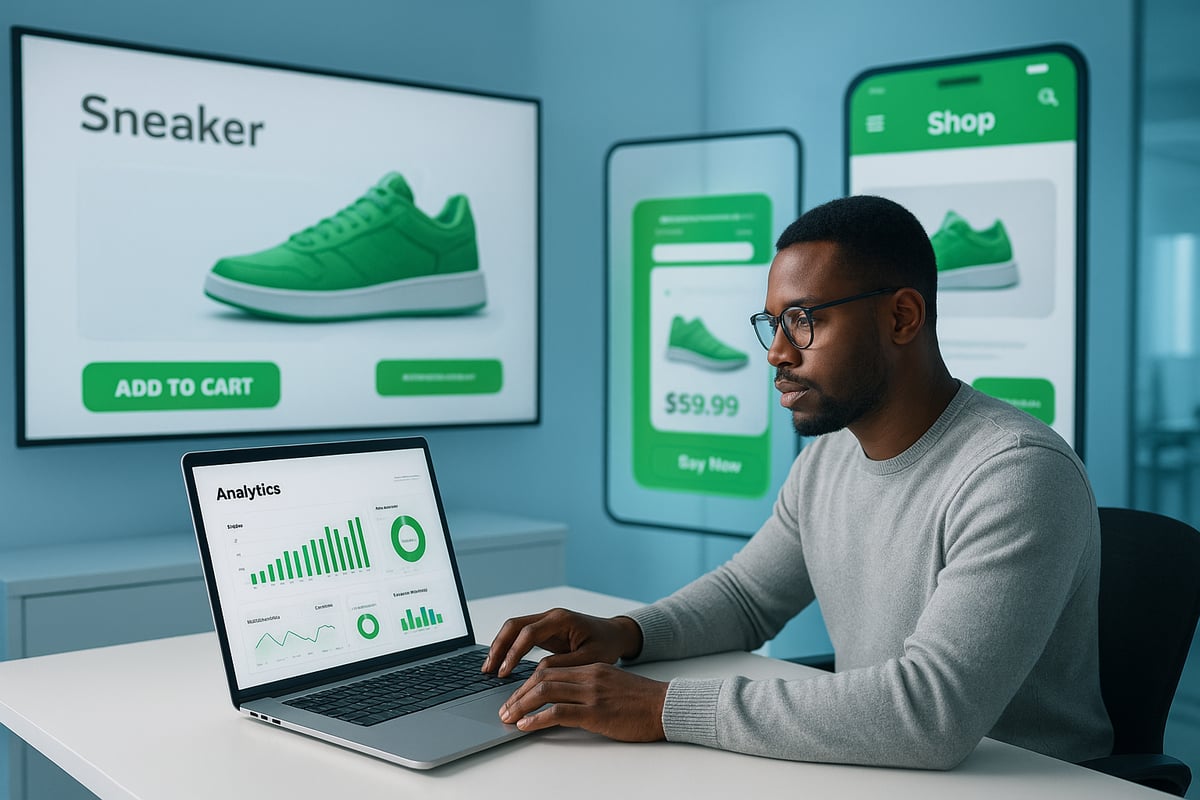
AI-Driven Personalization & Automation
Artificial intelligence is transforming ux e commerce by delivering deeply personalized shopping journeys. In 2026, AI agents will analyze real-time and historical data to recommend products, adjust content, and provide instant customer support. These smart systems can automate banners, calls to action, and offers based on individual user behavior.
Retailers are increasingly adopting predictive personalization, which anticipates needs and surfaces the right products at the perfect moment. For example, platforms like Contentsquare’s Sense Analyst enable brands to track engagement and optimize experiences dynamically. Privacy remains a top priority, so balancing relevance with ethical data use is essential.
For a comprehensive overview of upcoming innovations, see the insights on E-commerce UX/UI trends for 2026.
Voice, Visual, and AR Shopping Experiences
The rise of voice, visual, and augmented reality (AR) interfaces is reshaping ux e commerce. Voice search and conversational commerce tools are making it easier for shoppers to find products hands-free. Visual search lets users upload images to discover similar items instantly, streamlining product discovery.
AR technology enables immersive product visualization, such as virtual try-ons and interactive 3D models. Retailers leveraging AR report higher engagement and reduced returns, as customers gain more confidence in their purchases. To remain competitive, brands must optimize navigation and product pages for these multimodal interactions.
Emerging trends in immersive shopping are explored in E-commerce development trends 2026.
Sustainability and Ethical Design
Modern consumers expect brands to demonstrate environmental responsibility and ethical practices within their ux e commerce strategies. Clear communication of sustainability efforts, such as eco-friendly badges, impact calculators, and carbon-neutral shipping options, builds trust and loyalty.
Ethical design also means ensuring accessibility for all users, including those with disabilities. Incorporating accessibility features, transparent sourcing, and easy-to-find sustainable products can set your store apart. Regularly auditing your site for inclusivity is both a legal and reputational benefit.
Sustainability is no longer optional; it is central to a future-proof e-commerce experience.
Omnichannel & Cross-Device Consistency
Seamless experiences across every channel are now a cornerstone of ux e commerce. Customers expect unified shopping journeys whether browsing on desktop, mobile, or in-store. Features like cart persistence, synchronized recommendations, and integrated loyalty programs ensure continuity.
Responsive design has expanded to cover not only smartphones and tablets but also emerging devices like foldables and wearables. Brands that invest in a consistent, intuitive interface across all touchpoints foster greater loyalty and higher conversion rates.
By prioritizing omnichannel UX, retailers enhance engagement and meet customers wherever they are.
Micro-Interactions and Emotional Design
Micro-interactions play a crucial role in the evolving ux e commerce landscape. Subtle animations, instant feedback, and interactive UI elements keep users engaged and guide their actions. When executed well, these details create delight and reinforce brand personality.
Emotional design goes further by tapping into psychological triggers through carefully chosen copy, imagery, and color schemes. For instance, a playful carousel or a reassuring confirmation message can make the shopping experience more memorable. However, it is important to test these elements to avoid slowing down site speed or overwhelming users.
Smart use of micro-interactions can turn everyday browsing into an exceptional journey.
Measuring, Testing, and Optimizing Your Store’s UX
Delivering a superior ux e commerce experience requires ongoing measurement, testing, and refinement. Relying on intuition alone is no longer enough. With customer expectations rising, the ability to analyze and optimize every touchpoint can set your store apart.
Using a structured approach, you can identify what works, uncover friction points, and implement changes that drive measurable results. Let us explore how to methodically improve your ux e commerce strategy for sustained growth.

Key Metrics to Track
Tracking the right metrics is essential for understanding the effectiveness of your ux e commerce efforts. Quantitative data reveals where users engage, where they hesitate, and where they drop off.
Here are the most critical metrics to monitor:
| Metric | Why It Matters |
|---|---|
| Conversion Rate | Measures how effectively visits turn into sales |
| Bounce Rate | Indicates if users find value on arrival |
| Average Order Value (AOV) | Tracks revenue per transaction |
| Customer Lifetime Value (CLV) | Gauges long-term loyalty and revenue |
| Funnel Drop-off Points | Pinpoints where users abandon the journey |
| Session Duration | Reflects engagement and content relevance |
| Cart Abandonment Rate | Highlights checkout issues or friction |
| Accessibility Score | Ensures inclusivity for all shoppers |
| Page Load Speed | Impacts satisfaction and search rankings |
Monitoring these metrics provides a health check for your ux e commerce approach. For example, a sudden spike in cart abandonment may signal a confusing checkout, while low accessibility scores can alienate potential customers.
Tools and Techniques for UX Analysis
To gain actionable insights, leverage a mix of analytics, user feedback, and experimentation. Start with session replay and heatmap tools like Contentsquare or Hotjar to visualize real user journeys. These platforms reveal exactly where visitors click, scroll, or exit, helping you identify pain points in your ux e commerce flow.
Supplement quantitative data with direct feedback from on-site surveys or polls. Collect qualitative insights to understand why users behave a certain way. Combine this with funnel analysis to track how users progress toward conversion.
Experimentation is crucial. Use A/B and multivariate testing to compare design variations and see which performs best. Integrating advanced analytics, such as those discussed in the Augmented Web Usage Mining study, provides deeper understanding by enriching your dataset with behavioral patterns.
For a comprehensive playbook on practical strategies, refer to Mastering User Experience Design, which is tailored for modern ux e commerce optimization.
Building a Continuous Optimization Process
Optimizing ux e commerce is not a one-time project, but an ongoing commitment. Establish regular review cycles—monthly or quarterly—to evaluate performance and prioritize improvements.
Assign responsibility for ux e commerce KPIs to dedicated, cross-functional teams. Foster collaboration between designers, marketers, and customer support. Share findings and best practices across departments to ensure everyone advocates for the customer.
Encourage a culture of experimentation. Regularly run usability tests with real users, and document every learning. Use agile methodologies to iterate quickly, adapting to new trends and customer needs.
Leading brands attribute sustained growth to continuous ux e commerce improvements. By making optimization a habit, your store will not only meet but exceed customer expectations, securing long-term loyalty and higher conversion rates.