

The e-commerce landscape is changing at lightning speed, and every ecom expert needs to stay ahead to succeed in 2026. This essential handbook equips you with proven strategies, emerging technologies, and design principles that will shape the future of online business.
Within these pages, you will find actionable insights, step-by-step guidance, and expert tips to help you future-proof your e-commerce store. Discover the latest trends, learn how to harness AI, master customer experience, and unlock sustainable growth.
Are you ready to transform your business and thrive in the competitive world of tomorrow? Let’s dive in and set your path to e-commerce success.
The E-Commerce Landscape in 2026: Trends & Predictions
The e-commerce industry is on the cusp of significant transformation. Rapid advancements in technology, evolving consumer expectations, and new market dynamics are reshaping how businesses operate and compete. As an ecom expert, understanding these trends is essential to remain competitive and future-proof your digital commerce strategy.
Key Industry Shifts and Emerging Markets
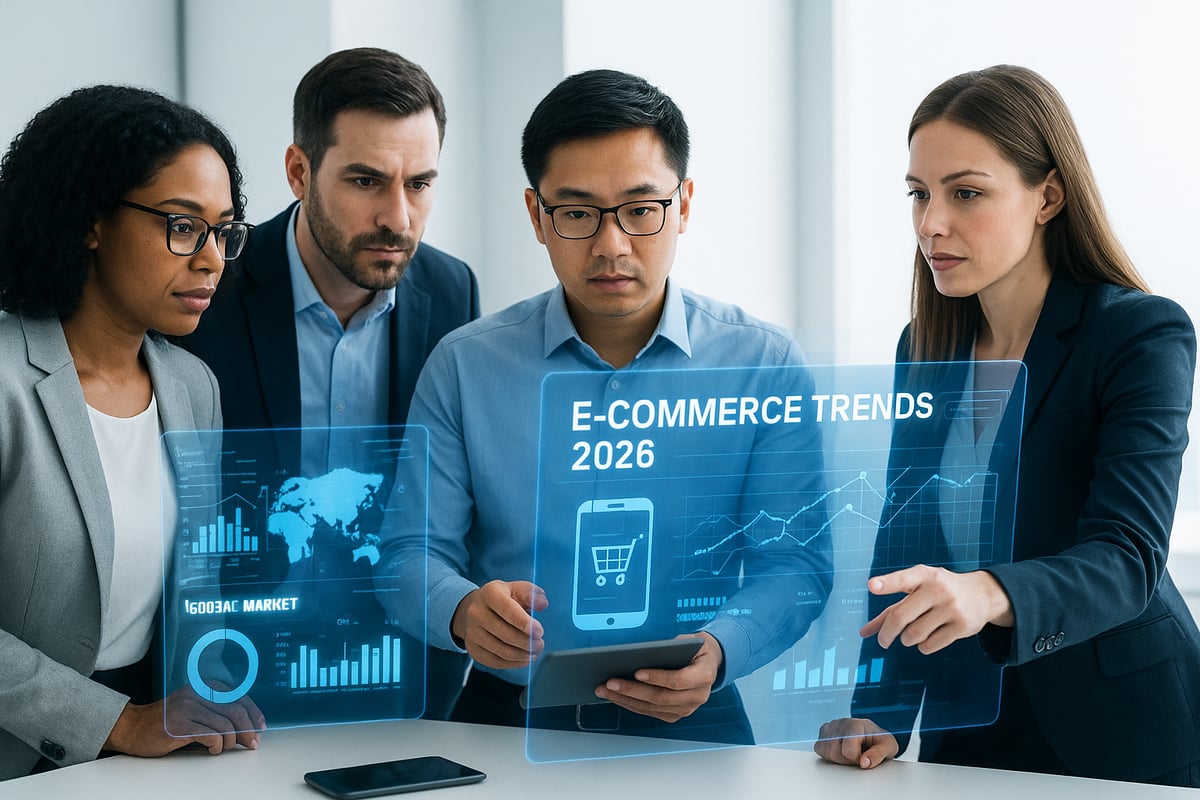
Global e-commerce sales are expected to soar, with Statista projecting $8.1 trillion in revenue by 2026. This growth is fueled by several market shifts:
- The rise of mobile commerce is making smartphones the primary shopping device for millions.
- Social shopping platforms, like Instagram and TikTok, are transforming product discovery and purchase.
- Cross-border e-commerce is expanding, increasing the need for localization and tailored experiences.
- Niche and micro-brand marketplaces are gaining traction, offering personalized alternatives to mass retailers.
- Direct-to-consumer (DTC) brands are intensifying competition, leveraging data to build loyal communities.
For an ecom expert, staying ahead means tracking these shifts and adapting quickly. The 7 E-Commerce Trends Transforming Shopping in 2026 highlight the growing convergence of online and offline retail, emphasizing the importance of agility in a fast-changing environment.
As consumer habits evolve, e-commerce businesses must innovate or risk falling behind. Every ecom expert should monitor new entrants and emerging markets to spot opportunities early.
Technology Drivers Shaping the Future
Technology is the engine powering the next phase of e-commerce growth. Mainstream adoption of AI and machine learning is enabling hyper-personalized shopping, smarter automation, and dynamic merchandising.
Augmented reality (AR) and virtual reality (VR) are making shopping more immersive, letting customers visualize products in real-world settings. Blockchain is being used for transparent, secure transactions, building trust and streamlining supply chains.
Voice commerce and conversational AI are transforming how users search for and purchase products, making shopping more intuitive. For the ecom expert, investing in these technologies is no longer optional but critical for differentiation.
Businesses that leverage these innovations will benefit from greater efficiency, improved customer satisfaction, and increased sales.
Consumer Behavior & Expectations
Consumer expectations are rising rapidly. Shoppers demand seamless omnichannel experiences, expecting to start their journey on one device and finish on another without friction. Fast, flexible, and sustainable delivery options are now the norm.
Privacy concerns are at an all-time high, with regulations like GDPR and CCPA shaping how brands collect and use data. Personalization remains a top priority, as 73% of consumers expect brands to understand their unique needs (Salesforce, 2023).
For the ecom expert, meeting and exceeding these expectations is the key to building lasting customer relationships. Brands that prioritize transparency and use data responsibly will earn greater trust and loyalty.
Sustainability and Ethical Commerce
Sustainability is no longer a differentiator but a baseline expectation. Eco-friendly packaging, carbon-neutral shipping, and ethical sourcing are top priorities for modern consumers.
Transparent supply chains and responsible labor practices are under scrutiny, with buyers willing to pay more for brands that align with their values. E-commerce businesses must communicate their commitments clearly and authentically.
For the ecom expert, integrating sustainable and ethical practices is essential for long-term growth. Companies that embrace these principles will attract conscientious customers and stand out in an increasingly crowded marketplace.
Step-by-Step: Building a Future-Ready E-Commerce Store
Succeeding in 2026 demands more than just ambition. As an ecom expert, you need a clear, actionable plan. The following framework breaks down the key steps to building a future-ready e-commerce store, ensuring your business is agile, scalable, and ahead of the competition.

Step 1: Strategic Planning & Market Research
Every ecom expert knows that success begins with a deep understanding of the market. Start by pinpointing your target audience and identifying emerging niches. Use advanced analytics tools like Google Trends and SEMrush to validate product ideas and assess demand.
Competitive analysis is crucial. Study your top competitors to uncover gaps and opportunities. Set clear, measurable business goals, such as increasing conversion rates or expanding into new regions. Break goals into actionable steps and track your progress regularly.
- Identify profitable niches with data-driven insights
- Analyze competitor strengths and weaknesses
- Set SMART (Specific, Measurable, Achievable, Relevant, Time-bound) goals
By grounding your strategy in research, you’ll build a solid foundation for long-term growth as an ecom expert.
Step 2: Selecting the Right Platform & Tech Stack
Choosing the correct platform is a pivotal decision for any ecom expert. Compare leading options like Shopify, Magento, WooCommerce, and emerging headless commerce solutions. Evaluate each for scalability, customization, and integration with your preferred tools.
| Platform | Scalability | Customization | Integration | Cost |
|---|---|---|---|---|
| Shopify | High | Moderate | Extensive | Subscription |
| Magento | Very High | High | Advanced | Variable |
| WooCommerce | Moderate | High | Good | Low |
| Headless | Very High | Very High | Advanced | Custom |
Cloud-native infrastructure offers flexibility and resilience, helping your store adapt to future demands. For a detailed process, explore the Step-by-Step E-Commerce Website Design guide, which provides expert-driven advice on building a robust online presence.
Select a tech stack that supports your growth goals and integrates seamlessly with automation, analytics, and marketing tools. This empowers you as an ecom expert to future-proof your operations.
Step 3: Designing for User Experience (UX) in 2026
User experience is at the heart of every successful ecom expert’s strategy. Prioritize mobile-first and accessibility-first design, ensuring your website is usable by all visitors. AI-driven personalization tailors the experience in real time, increasing engagement and conversions.
Focus on fast-loading pages, clear navigation, and streamlined checkout flows. For example, a direct-to-consumer brand improved conversions by simplifying its UX and reducing checkout steps.
- Implement intuitive menus and search functions
- Use high-contrast visuals for accessibility
- Test designs with real users for feedback
By embracing these principles, you create a seamless journey that sets your store apart as an ecom expert.
Step 4: Implementing Secure & Frictionless Payments
Today’s shoppers expect convenience and security. As an ecom expert, integrate digital wallets, Buy Now Pay Later (BNPL) solutions, and even cryptocurrencies to meet evolving preferences. Payment flexibility is especially important for Gen Z, with 60 percent preferring digital wallets in 2025.
Prioritize fraud prevention by using robust verification processes and complying with regulations like PCI DSS. Ensure your checkout process is quick and transparent, reducing cart abandonment.
- Offer multiple payment options
- Use secure gateways with encryption
- Display trust badges to reassure customers
A frictionless payment experience builds trust and drives repeat business, supporting your reputation as an ecom expert.
Step 5: Setting Up Logistics, Fulfillment & Customer Service
Efficient logistics and responsive support are essential for every ecom expert. Implement omnichannel fulfillment strategies like Buy Online Pick Up In Store (BOPIS) and same-day delivery. Automate order management and returns to save time and reduce errors.
Leverage AI-powered chatbots for 24/7 customer support, answering common queries instantly. Monitor performance with analytics to identify bottlenecks and optimize processes.
- Automate inventory tracking and restocking
- Provide transparent order updates
- Offer hassle-free returns
By excelling in logistics and service, you build loyalty and position yourself as an ecom expert ready for the future.
Harnessing AI and Automation for E-Commerce Growth
Artificial intelligence and automation are redefining what it means to be an ecom expert in 2026. These technologies are no longer optional—they are central to driving growth, optimizing operations, and delivering experiences that keep customers coming back. Let’s explore how forward-thinking e-commerce leaders can leverage AI and automation to stay ahead.
AI-Driven Personalization & Product Recommendations
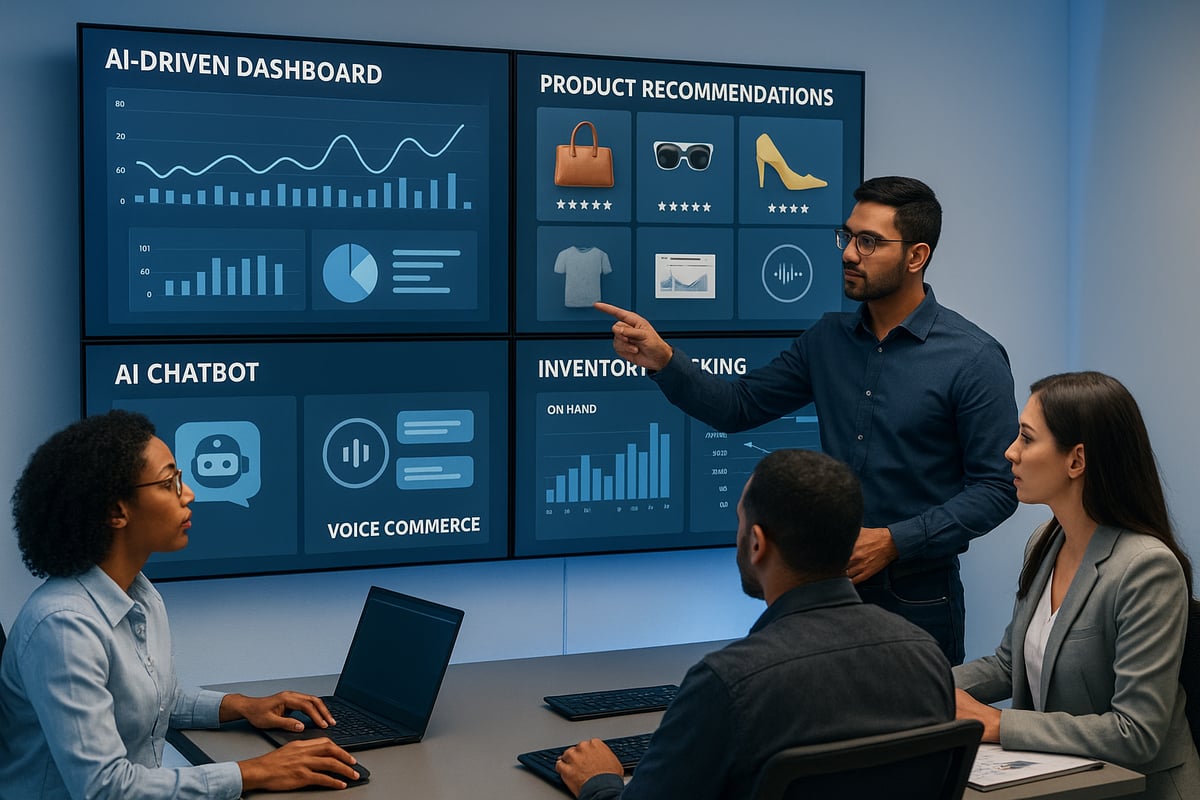
Personalization powered by AI is a cornerstone for any ecom expert aiming for growth. Today’s AI can analyze browsing history, purchase patterns, and real-time behavior to create dynamic product suggestions tailored to each visitor. This level of customization increases conversion rates and boosts average order value.
Major platforms like Amazon have shown that recommendation engines can drive up to 35% of total sales. AI also enables adaptive content, adjusting banners, offers, and messaging in real time. For an in-depth look at these techniques, see the AI-Powered Personalization in E-Commerce guide. As personalization becomes more sophisticated, brands that excel will set new industry standards.
Automated Marketing & Customer Engagement
An ecom expert uses automation to transform marketing and engagement. AI-powered email campaigns, retargeting ads, and chatbots deliver relevant messages when and where customers are most receptive. Predictive analytics segment audiences, ensuring offers align with individual preferences.
Automated chatbots now handle complex queries, offering 24/7 support that feels personal. This reduces response times and enhances satisfaction. Automated marketing tools continuously optimize campaigns, saving time while increasing ROI. As automation matures, expect seamless, data-driven engagement that builds lasting relationships.
Inventory & Supply Chain Optimization
Inventory management is a critical area where an ecom expert can leverage machine learning. AI-driven demand forecasting analyzes sales data, seasonality, and external factors to predict trends with precision. This helps reduce stockouts and overstock situations.
Automation extends to restocking and warehouse management. Smart systems track inventory in real time, triggering reorders and optimizing storage space. For global e-commerce, automated supply chains support fast, reliable fulfillment. The result is improved efficiency, cost savings, and a better customer experience.
Visual Search and Voice Commerce
Visual and voice technologies are shaping the next frontier for ecom expert innovation. Visual search tools let customers upload images to find similar products instantly. AI-powered image recognition accelerates product discovery, especially on mobile devices.
Voice commerce is also on the rise, with conversational AI enabling hands-free shopping. Optimizing product listings for voice queries and integrating smart assistants creates a frictionless experience. These tools not only enhance accessibility but also position brands to capture emerging shopping behaviors.
Risks, Challenges, and Ethical Considerations
Every ecom expert must address the risks of AI and automation. Algorithmic bias can skew recommendations, while opaque systems may undermine trust. Prioritizing transparency and explainability in AI models is essential.
Privacy is another concern, as AI relies on large volumes of customer data. Compliance with regulations like GDPR and CCPA is non-negotiable. Ethical sourcing of training data, regular audits, and clear communication build trust and safeguard reputation. Balancing innovation with responsibility defines true e-commerce leadership.
Ecom Design Pro: Your Partner in E-Commerce Optimization
Ecom Design Pro delivers actionable insights for e-commerce leaders seeking to harness AI, UX, and CRO strategies. Their expert guides help you future-proof your store, optimize user experience, and adopt cutting-edge technologies. With in-depth analysis of AI tools, design trends, and conversion tactics tailored for 2026, Ecom Design Pro is the resource of choice for ambitious brands. Tap into their expertise to unlock your e-commerce potential.
Mastering Customer Experience: Personalization, Trust & Retention
Achieving lasting growth in e-commerce requires every ecom expert to prioritize customer experience at every touchpoint. As consumer expectations rise, brands must go beyond transactions to foster loyalty, trust, and meaningful engagement. The following strategies help future-ready businesses stand out in a competitive landscape.

Advanced Personalization Strategies
In 2026, personalization is not just a trend but a necessity for every ecom expert aiming to drive conversions and customer loyalty. Hyper-personalized shopping journeys leverage real-time data, allowing businesses to adapt offers, content, and product recommendations to each visitor’s preferences.
Localization is also crucial, as global audiences expect culturally relevant experiences and tailored messaging. AI technologies play a pivotal role, enabling dynamic adjustments based on browsing behavior and purchase history. For deeper insights into how AI-driven personalization is transforming the industry, explore the AI in Retail and E-Commerce Personalization Strategies resource. Adopting these tools ensures your store anticipates and meets evolving customer needs, solidifying your position as an ecom expert.
Building Trust Through Transparency & Security
Trust is the currency of digital commerce. Customers want transparency about how their data is used and assurance that transactions are secure. Display certifications, third-party reviews, and recognizable trust badges prominently on your site.
Compliance with regulations like GDPR and CCPA is non-negotiable for any ecom expert. Clear privacy policies and easy access to data controls help reassure visitors. By openly communicating security measures and data practices, brands can build lasting relationships rooted in confidence and reliability.
Enhancing Post-Purchase Engagement
The customer journey does not end at checkout. Post-purchase engagement is vital for retention and advocacy. Automated follow-ups, personalized thank-you messages, and proactive order updates keep customers informed and valued.
Loyalty programs and subscription models further encourage repeat purchases. According to Bain & Company, brands with loyalty programs achieve 2.5 times higher repeat rates. Every ecom expert should leverage these tactics to transform one-time buyers into lifelong supporters.
Omnichannel Support & Community Building
Modern customers expect seamless support across all channels. Integrate live chat, social media messaging, and self-service portals to provide quick, convenient assistance.
Building a brand community fosters deeper connections, turning satisfied customers into advocates. Encourage discussions, host events, and leverage user-generated content. For an ecom expert, cultivating a sense of belonging can differentiate your brand and enhance long-term loyalty.
Handling Returns, Refunds & Customer Feedback
Efficient returns and refunds processes are essential for maintaining satisfaction. Streamline these experiences with clear instructions and easy-to-use online tools.
Solicit and act on customer feedback to identify pain points and areas for improvement. Implementing closed-loop feedback systems demonstrates your commitment to service excellence, helping every ecom expert adapt and innovate continually.
Sustainable & Inclusive E-Commerce Practices for the Future
Building a future-proof e-commerce business means looking beyond profit and embracing sustainability, inclusivity, and ethical responsibility. As an ecom expert, you must prioritize practices that not only meet regulatory standards but also align with shifting consumer expectations. Forward-thinking brands are integrating green strategies, accessible design, and social values at every level of their operations.
Eco-Friendly Operations & Packaging
Sustainable operations are no longer optional for the ecom expert. Customers are demanding eco-friendly packaging, minimal waste, and carbon-neutral shipping options. Brands that adopt recyclable materials and invest in energy-efficient logistics gain a competitive advantage.
Consider switching to biodegradable packaging or partnering with green logistics providers. Many e-commerce leaders are also exploring reusable shipping solutions and offsetting carbon emissions.
For actionable steps on integrating these strategies, see the Sustainable E-Commerce Website Design guide, which details eco-conscious choices for your digital storefront.
Designing for Accessibility & Inclusivity
Inclusive design is a hallmark of a true ecom expert. Meeting WCAG 2.2 standards ensures your store is accessible to all users, including those with disabilities. This involves clear navigation, alt text for images, and keyboard-friendly interfaces.
Cultural inclusivity is equally important. Offering multilingual content and considering local customs can open your brand to new markets. Inclusive design not only expands your audience but also builds brand loyalty.
Simple enhancements, such as adjustable font sizes and contrast controls, can make a significant difference in user experience and satisfaction.
Ethical Sourcing and Fair Labor
Modern consumers expect transparency about product origins and labor practices. As an ecom expert, working with suppliers who follow fair trade and ethical sourcing standards is essential. This means auditing supply chains and ensuring safe, equitable working conditions.
Display certifications and ethical commitments prominently on your store. Transparency fosters trust and demonstrates your dedication to responsible business.
Ethical sourcing can also reduce risk and improve long-term supplier relationships, supporting both brand reputation and operational resilience.
Social Responsibility and Brand Purpose
Social responsibility is now a major driver of purchasing decisions. According to the Edelman Trust Barometer 2024, 62% of consumers prefer brands that take a stand on social issues. An ecom expert should align business values with relevant causes, such as environmental protection or community support.
Engage in local initiatives, donate a portion of profits, or partner with non-profits. These actions resonate with conscious consumers and help differentiate your brand.
For more on consumer trends shaping 2026, explore The New Consumer 2026 and Five Mega-Trends, which highlights the growing importance of purpose-driven commerce.
Optimizing for Conversion: Data-Driven Strategies & Future-Proof SEO
Driving higher conversions in the evolving e-commerce landscape requires a strategic, data-driven approach. As an ecom expert, you must blend proven optimization tactics with emerging technologies to stand out in 2026.
Conversion Rate Optimization (CRO) Techniques
Conversion Rate Optimization is the backbone of every successful ecom expert strategy. Start by leveraging A/B testing to compare different page versions, identifying which drives more sales. Heatmaps and user session recordings reveal where customers engage or drop off, enabling focused improvements.
- Use personalization to tailor landing pages and checkout flows.
- Apply behavioral data to refine calls-to-action and product recommendations.
- Simplify navigation to reduce friction during checkout.
For practical guidance, the Effective E-Commerce Strategies Guide offers actionable CRO insights and best practices. By adopting these methods, an ecom expert can unlock higher conversion rates with measurable results.
Future-Proof SEO for 2026
SEO is evolving rapidly, and an ecom expert must anticipate algorithm shifts. Optimize for voice and visual search by incorporating conversational keywords and high-quality product images. Use structured data and schema markup to enhance search visibility and enable rich snippets.
Focus on E-E-A-T—Experience, Expertise, Authoritativeness, Trustworthiness—to build long-term credibility. Regularly update content to reflect user intent and industry trends.
A well-structured SEO approach ensures your e-commerce store remains discoverable as search engines advance. Future-proofing your strategy keeps your brand ahead of competitors in the digital marketplace.
Leveraging Analytics & Continuous Improvement
Data-driven decision-making is central to the ecom expert playbook. Set up advanced analytics dashboards to monitor key performance indicators (KPIs) like conversion rate, average order value, and cart abandonment.
- Use A/B test outcomes to guide iterative improvements.
- Analyze heatmaps to identify usability issues.
- Track customer journeys for deeper insights.
Brands that embrace continuous optimization often see significant gains. For example, a competitor case study revealed a 30% increase in conversions through targeted personalization and ongoing analysis. An ecom expert turns insights into action for sustained growth.
Preparing for Algorithm Changes & Search Innovations
The digital landscape is unpredictable, so agility is essential. An ecom expert remains prepared for algorithm updates by staying informed and adapting quickly. Integrate emerging technologies, such as AI-generated content and video SEO, to capture new search opportunities.
Research like Sell It Before You Make It: AI-Generated Items in E-Commerce highlights how AI can accelerate product development and personalization, giving early adopters a distinct advantage.
By anticipating change, experimenting with new tools, and refining strategies, an ecom expert ensures their business thrives despite shifting trends and technologies.